-
A home battery backup system stores energy and delivers power to essential circuits during outages.
-
The inverter, transfer switch, and energy management software optimize charging and power flow to support daily electricity use.
-
You can expect to pay between $10,000 and $25,000 for an average system or up to $50,000 for whole-home power.
A power outage can spoil your food, interrupt work, and disable important medical devices. There are many reasons to think about a home battery backup, but how does one work, and how much do they cost? We’ll consider these questions and more in our home battery backup guide.
What is home battery storage?
At a basic level, home battery storage systems capture and store electrical energy for later use. This provides two main benefits: backup power during outages and optimized energy consumption outside of power outages. These systems integrate with your home's electrical panel to deliver stored electricity when the grid fails or during peak rate periods to help you save money.
Modern residential energy storage solutions use rechargeable lithium-ion batteries housed in weatherproof enclosures. These are paired with inverters that convert stored DC power to usable AC power for household appliances.
Home battery storage system components
A complete battery energy storage system (BESS) includes multiple components working together. The battery cells store electrical energy in chemical form, typically using lithium-ion technology for its high energy density and longevity.
The inverter converts DC power from the batteries to AC power that runs household devices. A battery management system monitors charge levels, temperature, and performance to maximize lifespan and safety.
Of course, it’s more complex than that. Below are a number of components that can be part of a home battery backup system. (Not all are required for a system.)
| Component | Description | Common specifications |
|---|---|---|
| Battery pack | The core energy storage unit stores electricity in chemical form for later use. | 5 to 20 kWh capacity, LiFePO4 or NMC chemistry, 3,000 to 10,000 cycle lifespan |
| Inverter | Converts DC power from batteries to AC power for household use and manages grid connection. | 3–10 kW output, 95 to 98% efficiency, pure sine wave output |
| Battery management system (BMS) | Monitors and protects battery cells from overcharging, over-discharging, and temperature extremes. | Cell balancing, voltage/temperature monitoring, safety cutoffs |
| Energy management system (EMS) | Smart software that optimizes when to charge, discharge, and use grid power based on usage patterns. | Mobile app control, real-time monitoring, backup/self-consumption modes |
| Charge controller (for DC solar systems) | Regulates power flow from solar panels to batteries, maximizing charging efficiency. | MPPT type, 97 to 99% efficiency, 150–600V solar input range |
| Enclosure/cabinet | Protective housing that contains and secures all system components. | IP65 outdoor rating, wall or floor mounted, 600–1200mm height |
| Thermal management | Keeps batteries at optimal temperature through cooling fans or liquid cooling systems. | Active/passive cooling maintains -10°C to 50°C operating range |
| Safety components | Circuit breakers, fuses, and emergency shutoffs protect against electrical faults. | DC/AC breakers, ground fault detection, manual disconnect switch |
| Monitoring equipment | Meters and sensors that track energy production, consumption, and system performance. | Bi-directional meter, CT clamps, WiFi/cellular connectivity |
| Wiring and connections | Electrical cables and connectors that link all system components together safely. | 4–10 AWG cables, MC4 solar connectors, copper busbars |
| Automatic transfer switch (ATS)/backup gateway | Automatically detects grid outages and switches the home to battery power; may isolate essential loads via a backup panel. | 80–200A rating, 10 to 50 ms transfer time, load-shedding capability, whole-home or essential-loads configuration |
| Backup load panel | Dedicated subpanel that powers only critical circuits during an outage, reducing system size and cost. | 6–20 circuit capacity, compatible with ATS/gateway, indoor/outdoor enclosures (NEMA 1/3R) |
| Surge protection device | Protects sensitive electronics and battery hardware from voltage spikes caused by lightning or grid disturbances. | Type 1 or Type 2 SPD, 20 to 40 kA surge rating, LED status indicators |
| Generator integration module | Allows a home standby or portable generator to work alongside the battery system for extended outages. | Automatic or manual transfer capability, 120/240V support, 30 to 200A ratings, anti-backfeed protection |
| Solar inverter (for AC-coupled systems) | Handles MPPT and DC to AC conversion for existing solar arrays; the battery system charges via AC output. | 3 to 10 kW output, MPPT tracking, 97 to 99% efficiency, string or micro-inverter options |
| Main service disconnect | Provides a single shutoff point for the entire system for maintenance or emergency access. | 100 to 200A rating, lockable disconnect, NEC-compliant labeling |
Keep in mind that battery backup installers or solar with battery installers include many of these components within the installation service. So, homeowners don’t have to get all the individual components when they get a system like the Tesla Powerwall, for example. Also, some installers can charge more if you bring your own equipment, so it can be cheaper to get a whole package.
Home battery backup without solar
You don’t need solar panels to have a home battery backup system. Battery backup systems function without solar panels by charging from the grid during off-peak hours when electricity rates are lowest. This lets you do load shifting (where you use battery power during peak hours) to save on utility bills without requiring solar panel installation.
Grid-connected battery systems provide the same outage protection as solar-coupled units. They draw power from your utility connection to maintain a full charge, then automatically switch to battery power when grid failures occur.
Plus, you might assume you can have lasting power with a solar system and battery pack. But that’s not true for grid-tied solar systems, which are by far the most common. Grid-tied solar systems shut off during a power outage to keep utility workers safe. So, you can’t draw power from the sun during an outage unless you have an off-grid system.
UPS power vs home backup
Uninterruptible power supply (UPS) systems are not the same as home backup systems. The point of a UPS unit is to provide split-second backup power to sensitive electronics. They power up in under 10 milliseconds but only last for a few minutes to an hour or two. Some switch over in essentially zero milliseconds.
On the other hand, home battery systems power multiple circuits for hours or days, and modern systems can switch over in about 15 to 30 milliseconds, though some take longer. Also, home battery backup systems supply many kilowatts of continuous power. Dedicated UPS devices typically provide hundreds of watts or maybe a couple of kilowatts for computers and network equipment only.
| Feature | Ups system | Home battery backup |
|---|---|---|
| Capacity | 0.5–3 kWh typical | 10–20+ kWh typical |
| Runtime | Minutes to 1 hour | 8–24+ hours |
| Power output | 300–2000W | 5–10+ kW continuous |
| Installation | Plug-in device | Hardwired to the electrical panel |
| Coverage | Single device/circuit | Multiple circuits or whole home |
| Cost | $100 to $1,500 avg | $5,000 to $25,000+ |
Home battery backup vs. portable power station
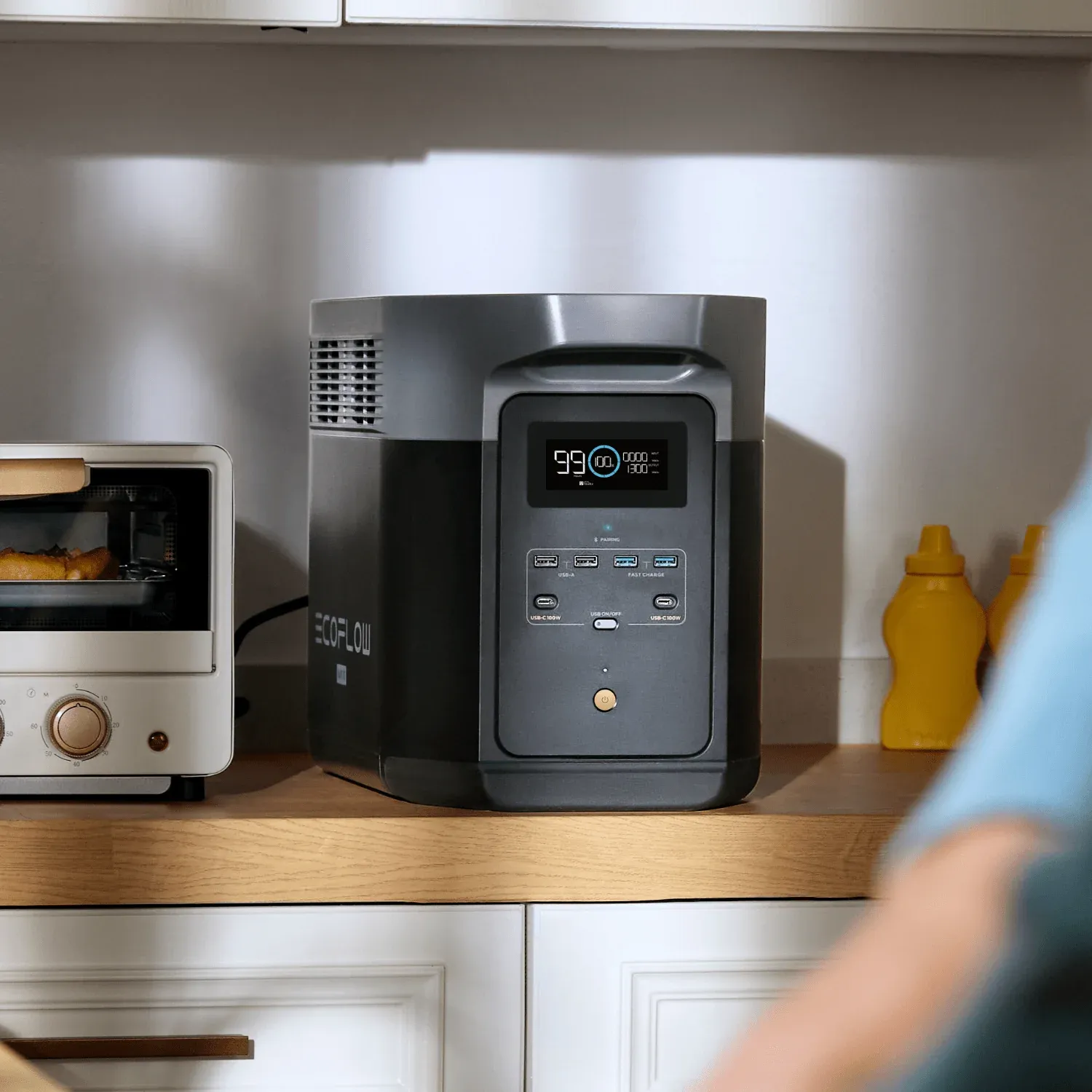
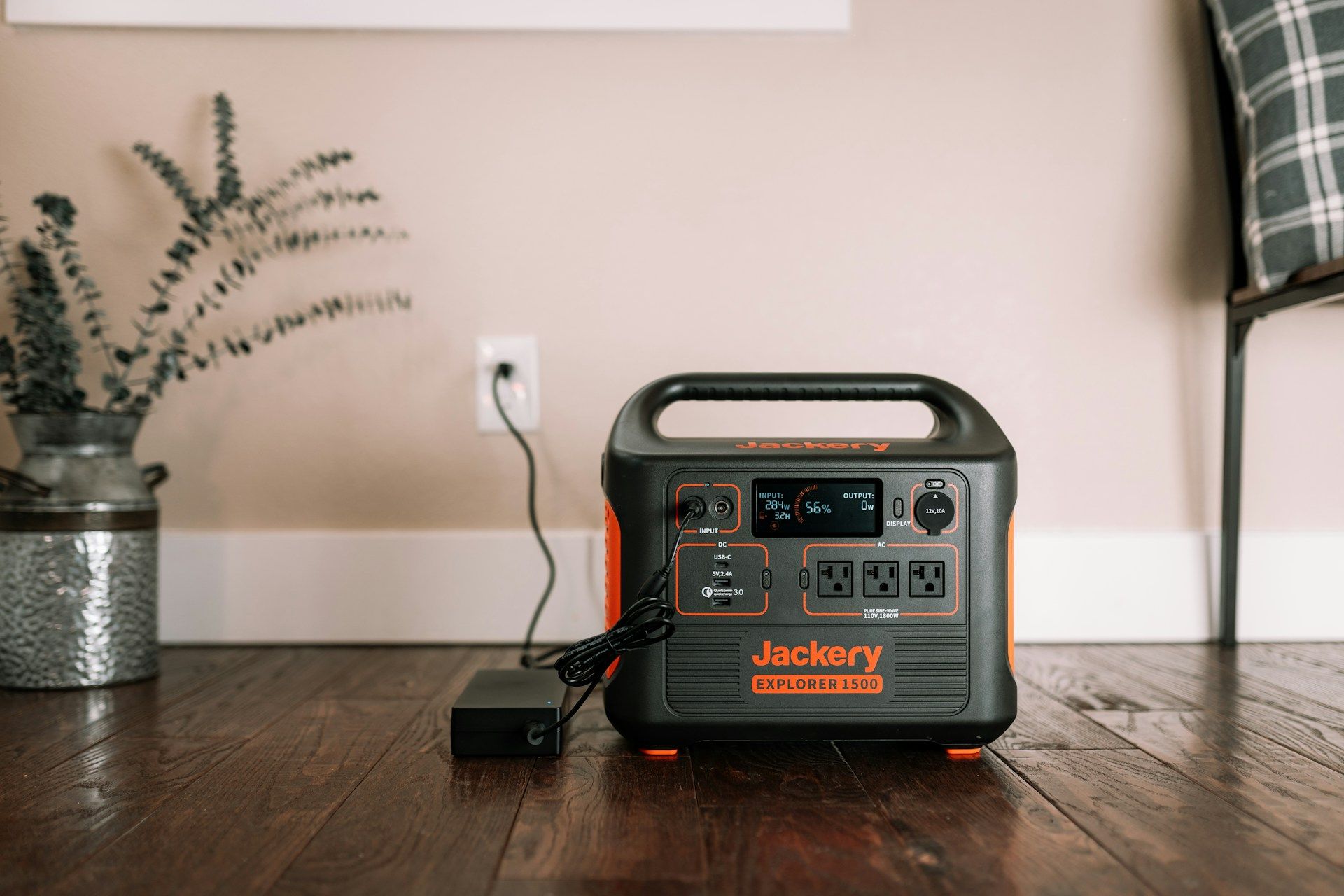
Home backup power systems create permanent backup protection, while portable units serve as convenient, temporary power solutions. A home battery backup system connects to the electrical panel, powers multiple circuits automatically during outages, and delivers long runtimes. On the other hand, a portable power station provides plug-in power for individual devices, usually offers short-term capacity, and supports mobility rather than whole-home resilience.
How does a home battery backup work?
Home battery backup systems combine all the parts we covered above to detect grid outages and automatically provide stored power. During regular use, the battery charges from grid power or solar panels while simultaneously allowing grid electricity to power your home. Below is how the system works on a basic level.
1. The system charges the battery when energy is available
The battery fills up using electricity from the grid during low-cost hours or solar power if you have it. A built-in charger or hybrid inverter manages safe charging.
2. The inverter converts stored DC energy into usable AC power
When your home needs power, the inverter turns the battery’s DC electricity into standard AC electricity that appliances can use.
3. The system automatically switches during a power outage
If the grid goes down, the backup gateway or transfer switch disconnects your home from the utility grid and switches to battery power.
4. The battery powers selected circuits or your whole home
Depending on the setup, the system can run essential loads (like lights, fridge, internet, and outlets) or your entire house.
5. The energy management system monitors and optimizes everything
Software tracks production, use, state of charge, and grid status. It automatically decides when to charge, when to discharge, and how to maximize backup time or energy savings.
Why get a home battery backup system?
With a home battery backup, you get emergency power plus other benefits like utility bill savings and energy independence.
-
Energy independence: Want to get away from relying on utility companies? Store your own power for peak rate periods or outages.
-
Grid outage protection/blackout protection: Maintain power to critical circuits within milliseconds of grid failure. Save your food, keep up work from home, and keep medical equipment running.
-
Energy resilience: You’ve probably noticed increasingly frequent extreme weather events and infrastructure failures. You can protect against that with a battery. Multiple battery units can extend outage coverage from hours to days, supporting your whole home rather than just critical loads.
-
Load shifting/time-of-use energy rate optimization: If your energy price spikes during peak hours, you can shift to using the battery instead. This can shave a significant portion off your bill. Smart battery management systems automatically optimize charge/discharge cycles based on utility rate structures.
-
Clean energy alternative to gas generators: Battery backup systems avoid the fossil fuel consumption, noise pollution, and maintenance requirements associated with backup generators.
Home battery backup vs generators for emergency power
Home battery systems and generators provide fundamentally different backup power approaches. Battery systems are best for automatic operation under 500 milliseconds. They offer zero emissions, silent indoor/outdoor operation, and maintenance-free performance. Of course, the main downside is that the battery capacity will run out unless the power comes back on.
Generators offer unlimited runtime with enough fuel. But they need 10 to 30 seconds to start and make noise (60 to 80 decibels at 23 feet). They also need to be outside because of carbon monoxide risks, and they burn fuel at $5 to $15 per hour.
With generators, the cost extends beyond the purchase price to include fuel storage, maintenance, and operational expenses. Battery systems require no ongoing fuel costs but have a finite runtime based on capacity.
| Feature | Home battery backup | Backup generator |
|---|---|---|
| Startup time | <0.5 seconds | 10–30 seconds |
| Runtime | 8–24+ hours (capacity dependent) | Unlimited with fuel |
| Fuel requirements | None (grid/solar charged) | Gasoline, propane, or natural gas |
| Noise level | Silent operation | 60 to 80 dB |
| Maintenance | Minimal | Regular oil changes, testing |
| Emissions | Zero | Carbon monoxide, exhaust |
| Installation location | Indoor or outdoor | Outdoor only |
| Operating cost | $0 per hour | $5 to $15 per hour |
| Upfront cost | $10,000 to $25,000+ | $3,000 to $15,000+ |
| Lifespan | 10 to 15 years | 10 to 20 years (2,000 to 3,000 hours) |
Solar plus storage integration
Solar plus storage systems are popular setups that combine PV panels with battery backups. You can slightly oversize a solar panel system to capture extra power, store it, then have some backup electricity for outages.
Solar battery backup systems can charge from the photovoltaic array or the grid, depending on system design and power availability. During daylight hours, solar panels supply household loads first, then charge the battery with excess production, and finally export remaining power to the grid. When the grid fails, the system disconnects from the utility and the battery powers selected circuits.
However, be aware that you’ll need a hybrid on- and off-grid setup if you want to use solar power directly during an outage. Grid-tied panels normally shut off to protect utility workers otherwise.
What battery capacity do you need?
Finding the right battery backup size depends on your home’s essential electricity load and your typical outage length. Essential loads might include the refrigerator (800 W), lights (300 W), electronics (200 W), and the garage door (300 W). To estimate capacity, multiply your hourly consumption by the number of backup hours, then divide by the battery’s usable depth-of-discharge (usually 80 to 90%).
For example, if your essential load is 2 kW and you want 12 hours of backup, you’d need around a 30 kWh battery. The math is (2 × 12) / 0.8.
Here are a few questions to ask yourself:
-
How long do I want my essential appliances to run during an outage?
-
What is my average daily electricity usage, and which portion do I need during a blackout?
-
Do I want whole-home backup or just essential-load coverage?
-
Will my backup need to support high-demand appliances?
-
How long are outages in my area, and do I want multi-day resilience?
Critical vs essential load
Compared to essential loads, critical loads include only the specific circuits required for safety, health, and key home functions. This could include the sump pump, well pump, furnace blower, security system, and medical devices, for example. It’s a bit like squares and rectangles. All critical load circuits are essential, but not all essential circuits are critical.
Using a dedicated subpanel
Using a subpanel is the standard option for most homes unless the battery capacity is large enough to power everything sufficiently. With this setup, the main service panel feeds the subpanel in normal operation, while an automatic transfer switch routes energy from the inverter during outages. This prevents overload, extends capacity, and only powers main appliances like the refrigerator, furnace blower, lighting circuits, and network equipment.
How much does a home battery backup cost?
Overall, whole-home battery backup systems can cost between $25,000 and $50,000 or more, depending on your home size and energy consumption patterns. These battery backup costs apply to installations with 20 to 40 kWh of capacity and 10 to 20 kW of power output. (You’d pay less if you can get by with lower capacity for only essential circuits.)
The Tesla Powerwall 3 is one of the most popular options, and pricing starts at around $9,300 for hardware alone, with professional installation adding $4,000 to $7,000 depending on electrical panel upgrades, mounting requirements, and local permit costs.
A Tesla Powerwall 3 costs around $11,500 to $15,000 with installation, while more units can run you $9,500 to $11,500 each when installed together. So, if you want to power a large home, three Tesla Powerwall 3 units installed together typically cost about $28,000 to $35,000, including installation and electrical work.
Solar battery storage costs
Generally speaking, complete solar panel systems cost $15,000 to $25,000 before incentives. Including battery storage with a new solar installation increases the system cost by $8,000 to $15,000, bringing total solar and storage costs to $23,000 to $40,000. It can cost a bit more to add a battery storage system to an existing solar panel array.
What home backup battery costs depend on
Home battery backup system costs can include:
-
Equipment ($7,000 to $12,000)
-
Installation labor ($2,000 to $5,000)
-
Electrical upgrades ($1,000 to $3,000)
-
Permits and inspections ($500 to $1,500)
In the end, the cost per kWh of usable capacity averages $850 to $1,200 across popular systems.
The home battery backup tax credit is ending
The federal residential clean energy credit provides a 30% tax credit for home battery systems installed through December 31, 2025. This credit applies to standalone battery installations and solar + storage systems.
To qualify, batteries must have at least 3 kWh capacity and be installed in a primary or secondary residence. The credit covers equipment and installation costs but excludes maintenance agreements and extended warranties.
Rebates for home energy storage
You might find more savings depending on state and utility rebates. For example, California's Self-Generation Incentive Program (SGIP) offers rebates of $200 to $350 per kWh for battery storage.
Massachusetts, New York, and Vermont offer similar state-level incentives ranging from $500 to $3,000 per installation. Many utility companies provide time-of-use rate structures that increase battery savings compared to flat-rate pricing.
Are home battery backups reliable?
Modern home battery backups are reliable when properly installed and maintained. Lithium-ion systems (the most popular) last 10 to 15 years with minimal performance degradation over time. These batteries typically maintain 70 to 90% of their original capacity even after 6,000 to 10,000 charge-discharge cycles, so you get consistent performance throughout their warranty periods.
What affects reliability?
Battery reliability depends on three main factors: chemistry type, thermal management, and installation quality.
Lithium iron phosphate (LFP) batteries offer better safety and longevity compared to nickel manganese cobalt (NMC) batteries, and most new systems use them. Some companies still use NMC, though, because they have higher energy density and work better in low temperatures.
Proper thermal management (through a reliable battery management system) prevents overheating and extends the life of the system. Of course, you need professional installation to put this all together in the optimal way.
How long can the backup last?
During typical power outages, a home battery system can power critical loads for 8 to 24 hours, depending on usage. For example, a standard 13.5 kWh system supporting 1.5 kW of essential loads can provide about 9 hours of power.
Top home battery systems
Below are a few of the best home battery system options available today.
| System | Usable capacity (kWh) | Continuous power (kW) | Peak/surge power (kW) | Warranty | Key features |
|---|---|---|---|---|---|
| Tesla Powerwall 3 | 13.5 | 11.5 | Not formally specified (higher with stacking) | 10 years | Integrated solar inverter, whole-home capable, outdoor-rated |
| FranklinWH (aPower + aGate) | 15 nominal | 5 per battery | 10 per battery | 12 years | Whole-home backup with smart panel; scalable via multiple batteries |
| LG Energy Solution RESU (model-dependent) | 9.8–16 | 5–7 (by model) | 7–11 (by model) | 10 years | Compact footprint; DC-coupled and AC-coupled options |
| Enphase Energy IQ Battery (5P) | 5 per unit (modular) | 3.84 per unit | 7.68 per unit | 15 years | AC-coupled, modular scaling, microinverter ecosystem |
| Sonnen eco | 10–20 (model-dependent) | 3–8 (by model) | Model-specific | 10 years | Virtual power plant capable; cobalt-free LFP chemistry |
| Generac PWRcell | 9–18 (modular) | 7.6–11 (inverter-dependent) | Higher with larger inverter | 10 years | Modular cabinets, load control, generator integration |
| Panasonic EverVolt | 11.4–17.1 | 5.5–8.2 (config-dependent) | Config-dependent | 10 years | DC or AC coupling; high usable capacity |
| EcoFlow Delta Pro | 3.6 (expandable to 25) | 3.6 (7.2 with dual units) | 7.2 surge | 5 years | Portable / semi-permanent; fast charging; expandable |
| Bluetti EP900 | 9–39.6 (modular) | 9 | Up to 18 (with multiple batteries) | 10 years | Split-phase output; home integration; modular expansion |
| HomeGrid Stack’d | 11.5–46 | 5–20 (inverter-dependent) | System-dependent | 15 years | Modular LFP stacking; high usable depth |
| SolarEdge Home Battery | 9.7 | 5 | 7.5 | 10 years | DC-coupled; tight inverter and energy-management integration |
| SunPower SunVault | 13–26 (modular) | 3.4–6.8 (config-dependent) | Config-dependent | 10 years | Integrated solar ecosystem; managed backup |
How to choose and install a backup battery system for your home
Choosing the right backup battery system depends on your energy use, the systems you want to run, whether you have solar, installation requirements, and more.
Know your energy consumption
Your home's daily energy consumption is the starting point. Most residential properties consume between 20 and 30 kilowatt-hours daily, though individual usage varies based on appliance types, climate control needs, and household size.
Be aware of the battery type
Home backup systems use lithium-ion batteries, mainly lithium iron phosphate (LFP) and nickel manganese cobalt (NMC).
-
LFP offers high safety, long cycle life, and lower cost, so it’s the best fit for most homes.
-
NMC delivers higher energy density and better cold-weather performance, helpful when space is limited or winters are severe.
-
Choose LFP for durability and safety, and NMC when compact size or low-temperature capability is the priority.
Think about power output
Figure out which appliances and systems you need to operate simultaneously during outages. Refrigerators require continuous power between 100 and 800 watts, while heating and cooling systems need much more, often 3,000 to 5,000 watts for central air conditioning.
Your battery power rating should then exceed the combined wattage of important circuits, with a little additional headroom for surge demands when motors and compressors start.
Do you have solar?
If you already have solar panels and want to add battery backup, the installer will evaluate your existing inverter, configure compatible battery equipment, and route selected circuits into a backup subpanel. Once everything’s set up, the solar array produces energy, your battery stores excess power, and the inverter delivers electricity during outages.
Look at the warranty
A strong warranty is good to have. Warranty coverage protects the battery system against capacity degradation and component failures over time. Reliable companies usually guarantee 70 to 80% capacity retention after 10 years of operation. They can also guarantee energy throughput of 20 to 40 megawatt-hours over the system’s lifetime.
Consider installation requirements
Installation requirements shape project cost and affect what’s doable on your property. Indoor installations need a climate-controlled space and provide stable temperatures for the battery system.
Outdoor-rated enclosures withstand heat, cold, and moisture, but use yard or exterior wall space. Wall-mounted units save floor area in garages or basements, while ground-level setups offer easier maintenance access and simplify service work over time.
Decide if you want expansion options
Scalability features let you increase storage capacity as your energy needs grow. Maybe you’ll switch from a gas furnace to an electric heat pump. A heat pump is more efficient overall, but it increases your electricity usage.
Modular battery systems let you add without replacing existing equipment, though manufacturer limits define how far a system can expand (often up to 40 kilowatt-hours in residential setups). Planning for future growth avoids costly replacements and keeps the system aligned with evolving household demand.
Get quotes from installers
Getting multiple quotes helps you compare pricing, warranties, and installer experience. Ask for itemized breakdowns that cover equipment, labor, permits, and electrical upgrades to get a sense of the scope of everything. Take some time to read company reviews to find the best installation provider.
Bottom line on home battery backup systems
To sum up, a home battery backup system stores energy, delivers power during outages, and supports essential circuits with safe, efficient technology. Integrated inverters and smart management software optimize daily use, while strong warranties and professional installation support long-term reliability. Together, these components allow you to power your home during outages and save money during peak rate times.
Home battery backup FAQ
Below are a few frequently asked questions about home battery backup systems.