


Tesla Powerwall and solar panels are worth it depending on three measurable outcomes:
- Bill outcome: Your battery reduces kWh purchased during expensive hours.
- Backup outcome: Your battery covers critical loads for a meaningful number of outage-hours.
- Control outcome: Your battery increases self-consumption when export credits are low.
Electricity prices are rising in many markets, utilities are changing net metering rules, and outage patterns are getting less predictable. In 2024, U.S. customers experienced about 11 hours of electricity interruptions on average, with most outage-hours driven by major events. Those conditions push homeowners toward solar plus storage instead of solar-only.
A Tesla Powerwall home battery backup looks “worth it” most often when your utility uses time of use rates, your export credits are well below retail (as under California’s Net Billing Tariff), or your household has meaningful outage risk. PowerOutage.us tracks outage history across 96% of U.S. customers since 2016, covering the grid data that shapes whether a Powerwall makes financial sense. Let’s break it down here.
What does “worth it” actually mean with solar and a Tesla Powerwall?
A practical definition of whether it’s worth getting a Powerwall if you have solar includes three pass/fail checks:
- Financial payback check: The system pays back within the period you realistically plan to own it (many homeowners use 8 to 12 years as a planning target because batteries carry a 10-year warranty).
- Backup justification check: your outages and your critical loads create a clear annual “avoided loss” value (work-from-home, refrigeration, medical devices). U.S. “non-major-event” interruptions often average around 2 hours per year, while major-event years can be far higher.
- Export-credit gap check: The value of a stored kWh is meaningfully higher than the value of an exported kWh. For example, California’s Net Billing Tariff credits exports using Avoided Cost Calculator values, which are usually lower than import rates.
Energy independence is also important to define. A Powerwall system provides partial independence when the battery covers essential circuits and short outages. A Powerwall system provides higher independence when the system supports whole-home loads for longer events, which often requires multiple batteries and load management.
How solar panels and a Tesla Powerwall work together
On a basic level, a Tesla Powerwall stores electricity, while solar panels generate electricity. A combined solar-plus-storage system shifts self-generated electricity usage into the evening and night.
How much power and surge capacity does the Powerwall have? Well, Powerwall 2 provides 13.5 kWh usable energy and 5 kW max continuous power with 7 kW peak (10 seconds) for backup starts. Powerwall 2 also lists 90% round-trip efficiency (AC-to-battery-to-AC, beginning of life).
Powerwall 3 lists 13.5 kWh nominal battery energy and a nominal output power range up to 11.5 kW. Solar to battery to home efficiency is 89%, while solar to home efficiency is 97.5% with the Powerwall 3.
Why solar shuts off during outages without a battery
Grid-tied solar systems normally stop producing during outages because interconnection rules require anti-islanding protection. NREL states that most distributed PV systems automatically shut off during a grid outage, which produces “zero resilience benefits” unless the system is designed to operate without the grid.
A Tesla Powerwall system adds the isolation hardware that makes backup legal and functional. This includes either the Gateway or the Backup Switch. Either system disconnects the home from the grid when an outage is detected and shifts loads to Powerwall power.
Can Tesla Powerwall work with other solar panels?
Powerwall can integrate with many existing solar systems because the battery system connects at the electrical service level, not at a “panel brand” level. Compatibility usually depends on the inverter architecture, interconnection requirements, and installer design.
A retrofit can trigger extra work to balance the system, though. It might require Tesla Gateway switching equipment, rewiring for backup loads, and sometimes an electrical panel upgrade.
Is solar with Tesla Powerwall worth it financially?
Installed costs vary widely, but a typical system runs about $30,000 for a 12 kW solar array plus $12,000 to $16,500 for a Powerwall. Savings are strongest under TOU or low-export-credit tariffs (like California’s Net Billing Tariff) and weakest under flat rates, generous net metering, or heavy financing. This is especially true considering the 30% federal battery credit is not available for installations completed after 2025.
Tesla solar panels and Powerwall cost
Installed cost varies by region, roof complexity, and electrical scope. An average 12 kW solar installation costs around $30,000 to $35,000 before incentives. The Department of Energy also cites an all-in residential solar cost range of $2.74 to $3.15 per watt, which would make a 12 kW system about $32,900 to $37,800. For solar battery storage cost, Powerwall 3 costs about $12,000 to $16,500 installed. The DOE says a solar panel plus battery system can cost $4.50 to $5.19 per watt installed.
Note: IRS FAQs tied to legislation enacted July 4, 2025, state that the Section 25D Residential Clean Energy Credit is not allowed for expenditures made after December 31, 2025. The IRS clarifies that an expenditure applies when installation is completed.So, for new installs, assume no 25D credit is available.
When the numbers work
A Powerwall creates savings when it moves energy from a low-value state to a high-value state:
- A battery turns cheap midday solar into expensive evening usage under TOU rates.
- A battery turns low export credit energy into avoided retail purchases under net billing.
- A battery reduces peak imports when peak pricing is severe.
A simple “battery value” equation helps:
Stored kWh value = (retail import rate during discharge) − (export credit you would have earned) − (efficiency losses).
Here’s an example. If your peak retail import rate is $0.45/kWh, your export credit is $0.08/kWh, and your battery round-trip efficiency is 90% (so efficiency losses are 10%), then:
- Your fficiency loss cost per delivered kWh = 10% × $0.45 = $0.045/kWh
- Your stored kWh value = $0.45 − $0.08 − $0.045 = $0.325/kWh
So, each kWh you store and later use during peak saves about $0.33 per kWh versus exporting the energy and buying it later.
California’s Net Billing Tariff increases this gap because export credits are based on avoided cost values that are usually below import rates.
When the math doesn’t work out
A battery is less likely to pay back when:
- Your tariff is flat, and your peak/off-peak spread is small.
- Your export credits approach retail (legacy net metering behavior).
- You rarely cycle the battery (low self-consumption opportunity).
- Your financing cost eats into the avoided-bill savings.
Price out a Powerwall 3
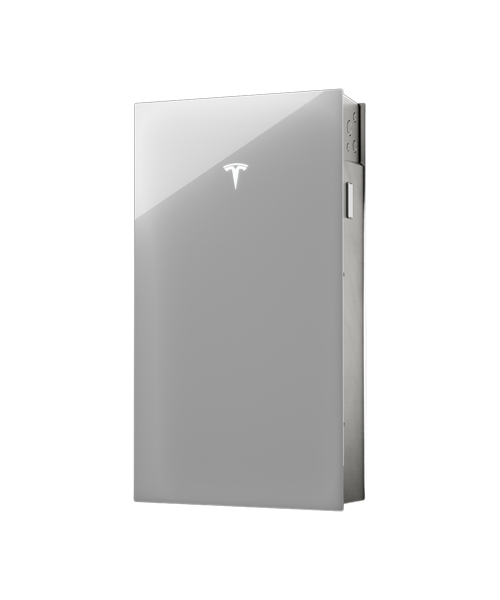
Tesla Powerwall 3 is a home battery system that stores 13.5 kWh of energy and delivers 11.5 kW of continuous power. Check current pricing to see if it makes sense paired with your solar panel setup.
Is Tesla Powerwall worth it under California NEM 3.0?
California moved new customers from retail-credit net metering to a net billing framework where exports earn avoided-cost-based values. The CPUC summarizes this shift by stating that NBT export credits use Avoided Cost Calculator values (usually lower than import rates).
This change makes timing matter more than total production. Midday solar exports can pay far less than evening imports.
Why batteries matter more than panels under NEM 3
A battery captures midday generation and uses it on-site during higher-cost hours. That ability increases self-consumption and reduces low-value exports.
Market behavior reflects this. Berkeley Lab notes that storage attachment rates for systems installed under the new net billing tariffs strongly increased, reaching roughly 60% by year-end (reported for California in their distributed solar pricing/design trends update).
A Powerwall becomes less compelling if export credits rise toward retail again or if a household cannot shift meaningful kWh into evening peaks. It’s not worth it if (retail import rate minus export credit) stays below the battery’s effective cost per delivered kWh for most days.
How many Tesla Powerwalls do you need?
As a homeowner, you should size your system for power (kW) and energy (kWh).
- Powerwall 3 provides 11.5 kW continuous (with 185 locked rotor amps to start electric motors)
- Powerwall 3 capacity is 13.5 kWh usable
A simple sizing rule is:
Required kWh = (critical load kW) × (backup hours)
Let’s consider an example. A home that has 1.5 kW of critical loads for 10 hours needs 15 kWh. One Powerwall 3 delivers 13.5 kWh, so the home needs either load reduction or additional battery capacity.
If your critical load is 3 kW and you want 24 hours of backup, you need about 72 kWh of storage, which can be achieved with configurations like two Powerwall 3 units paired with four Expansion units, or three Powerwall 3 units with three Expansion units, since each unit adds 13.5 kWh.
HVAC and EV charging change the answer because HVAC draws sustained kW and EV charging draws very high kW.
Why one Powerwall is rarely a true whole-home backup
Whole-home backup requires both adequate kWh and adequate kW. One battery often can’t cover all loads simultaneously. A whole-home design often requires:
- Multiple batteries (more kWh and more kW)
- A backup load panel strategy (load shedding)
- A switching system (Tesla Gateway/Backup Switch)
Tesla’s warranty also defines long-run expectations. Tesla states that Powerwall retains 70% capacity at 10 years, and Tesla lists operating limitations by application.
How many solar panels are needed to charge a Tesla Powerwall?
Solar panel count to charge a Powerwall depends on panel wattage, peak sun hours, and system losses.
A working formula is:
Panels needed = 13.5 kWh ÷ (panel kW × peak sun hours × system efficiency).
Powerwall 3 lists an 89% solar-to-battery-to-home efficiency at the beginning of life, but when planning real-world performance, homeowners typically assume a 0.75 to 0.85 end-to-end system efficiency to account for PV losses, wiring, operational behavior, and long-term degradation.
Here are some examples:
- A 400 W panel in 4 peak sun hours at 0.80 efficiency yields 0.4 × 4 × 0.8 = 1.28 kWh per day per panel, so one Powerwall charge needs about 11 panels.
- A 500 W panel in 5 peak sun hours at 0.80 efficiency yields 0.5 × 5 × 0.8 = 2.0 kWh/day per panel, so one Powerwall charge needs about 7 panels.
Seasonal variation changes peak sun hours, so winter recharge speed is slower.
Can you use a Tesla Powerwall without solar panels?
Yes, you can use a Powerwall as a grid-charged battery for backup and load shifting, even when your home has no PV system. However, utility policy can limit grid charging for arbitrage, so some areas don’t let homeowners just buy power cheaply and resell or avoid higher rates later.
Cost of Tesla Powerwall without solar panels
Battery-only installs often show a high cost per kWh because fixed costs remain. Our research shows Powerwall 3 costs between $12,000 and $16,500, depending on location and incentives. Battery-only economics usually work best if you value backup highly, not when you expect large bill savings.
Can solar panels with Tesla Powerwall lower your electric bill?
A Tesla Powerwall with solar panels could lower your electric bill, but it depends on your utility's electricity tariff.
Self-powered mode vs time-based control
A Powerwall can prioritize self-consumption, or it can prioritize time-based control (TOU shifting). The economic winner depends on the tariff.
A homeowner should match battery behavior to tariff structure:
- Time-based control improves value when peak pricing is high.
- Self-consumption improves value when export credits are low.
Why some homeowners still see high electric bills
Your electricity bill could still be high when:
- Winter production drops, and electric heating increases usage.
- EV charging adds a large kWh demand.
- You have a rate plan that doesn’t reward shifting.
- The household exports power at low credit values and imports at high retail values.
Battery losses also matter. Powerwall 3 lists 89% round-trip efficiency, so about 11% of cycled energy doesn’t return as usable AC energy.
Is Tesla Powerwall worth it for backup power alone?
Between generators and a Powerwall, a battery provides quiet backup and fast transfer, while a generator provides long-duration power if fuel is available.
Tesla states that Powerwall can be added to systems with a backup generator when the generator uses an external transfer switch, and Tesla notes that Powerwall does not directly charge from the generator in that arrangement.
A homeowner should match the tool to the outage profile: batteries fit short-to-moderate outages; generators fit extended outages.
Outage frequency is the deciding factor
EIA reports that non-major-event interruptions often average about two hours per year, while major event years can drive much higher totals (11 hours average in 2024). One homeowner with repeated multi-hour outages can justify more storage. Another homeowner with rare brief outages may struggle to justify storage on backup value alone.
Is solar with Tesla Powerwall worth it if you finance?
Financing solar with a Powerwall increases the effective cost per kWh delivered. It becomes less worthwhile, especially if you use a power purchase agreement or lease. Since you have a higher cost per kWh, you’ll need a larger TOU spread or a larger export-credit gap to make it worth it.
A practical example:
- Assume one Powerwall 3 cycles once per day for 10 years.
- Assume Powerwall 3 round-trip efficiency is 89%.
- Assume usable energy is 13.5 kWh.
This yields about 44,000 kWh delivered over 10 years at beginning-of-life efficiency (13.5 × 365 × 10 × 0.89 = 43,854). A homeowner can divide their installed cost by delivered kWh.
Using a common “installed” cost estimate of $15,500 for Powerwall 3 as an example, the implied cost is roughly $0.35 per kWh delivered before degradation and financing. If financing over 10 years raises the total paid to $21,000, the effective battery cost becomes $21,000 ÷ 43,854 kWh = $0.48/kWh, meaning peak electricity prices must exceed $0.48 per kWh for the battery to break even.
Normally, power purchase agreements and leases don’t actually include battery backup systems. If they do, the company owns the battery, not the homeowner. Plus, the battery can be restricted to only work as backup power, not for TOU optimization.
To summarize, financing increases the overall cost, so you need better utility incentives. And power purchase agreements and lease customers can’t access arbitrage at all.
When financing can still make sense
Financing can make sense when retail rates are high, TOU spreads are large, outages are costly, and the homeowner expects to stay in their home long term.
A financed system isn’t worth it when the loan payment exceeds the realistic bill savings created by load shifting.
Bottom line: Are solar panels with Tesla Powerwall worth it?
A Tesla Powerwall becomes worth it when the battery converts low-value energy into high-value avoided imports or when the battery avoids meaningful outage losses. You can also say it’s worth it if one of the following is true:
- Your electricity tariff gives a large import/export gap under net billing.
- Your home can use a meaningful share of solar after sunset.
- You have significant outages (multi-hour events or repeated events).
- Your design matches your goal (partial backup vs whole-home backup) using real kW and kWh constraints.
At the end of the day, adding a Powerwall to solar panels can make a difference in the right conditions.