

Tesla Powerwall 3 is a high-capacity home backup battery with enough power output for heavy loads. Plus, you can scale the system with additional Powerwall 3 and Expansion units. Exactly how long it lasts depends on household load, while its output and starting capability determine what it can run at any moment.
PowerOutage.us tracks 950+ utilities serving over 200 million U.S. customers with outage data refreshing every 10 minutes during live events. Powerwall buyers sizing capacity can use that reach to pull actual outage timing and duration for their specific utility. Let’s take a closer look at its capacity specs.
How long does the Tesla Powerwall capacity last?
Tesla Powerwall 3 has a usable capacity of about 13.5 kWh. That means you could use 1 kW for about 13 hours or 13 kW for about one hour. How long it lasts depends on how you use it. If the battery supplies low-draw essentials like lighting, refrigeration, and some electronics, you could get half a day out of a single battery.
At a 3 to 5 kW load, which is common in whole-home backup, the runtime drops to 3 to 5 hours. This is where many people choose to get multiple Powerwall 3 units or add a Tesla Expansion pack or two.
How battery backup capacity is measured
Battery capacity is measured in kilowatt-hours (kWh), which represents stored energy over time. Tesla Powerwall capacity is the usable energy delivered at rated voltage. A battery management system included in the unit regulates the depth of discharge to protect its lifespan.
Lithium‑ion battery capacity reflects usable, not theoretical, energy output. There are instances where Powerwall owners report slightly higher capacity than advertised, but we’ll stick with the advertised capacity in this article.
Tesla Powerwall 3 capacity vs. power output
Capacity isn’t the same as power output. The Powerwall 3 offers 13.5 kWh of capacity with a maximum continuous output of 11.5 kW. 11.5 kW is enough to power most systems of a modern home at once, which makes Powerwall 3 a good option for whole-home backup. Tesla Powerwall 3 can run central HVAC, kitchen appliances, laundry, lighting, and electronics simultaneously, assuming loads are managed, and large motors use soft-start.
Tesla Powerwall 3 start capacity
Speaking of starting power, Tesla Powerwall 3 has a high starting capacity (185 LRA), meaning it can deliver short bursts of power above its continuous rating. This allows the inverter to start large electric motors without voltage collapse.
The 185 LRA rating refers to Locked Rotor Amps, which is the inrush current required to start motors like air conditioners and well pumps. High LRA lets the battery reliably start motors for different appliances and systems.
For example, central air conditioners and heat pumps use compressor motors with high starting current. Well pumps and sump pumps use induction motors, which require heavy starting current. Pool pumps, HVAC air handlers, and air compressors also draw large inrush power when starting.
The Powerwall 3’s LRA and 11.5 kW output are enough to power many of those loads, but not always all at once. Running multiple large motors simultaneously depends on load management, motor size, and soft-start devices. One Powerwall 3 is often sufficient for a typical home, but multiple units improve reliability.
How to get more Powerwall 3 capacity
There are two ways to get more Powerwall capacity: add Powerwall 3 units or add Expansion units to the main Powerwall 3. Powerwall 3 and Expansion units each provide an additional 13.5 kWh of capacity. You can have four Powerwall 3 units maximum, and you can add three Expansion units to the lead Powerwall unit for a total of seven units overall.
If you go all out with four Powerwall 3’s and three Expansions, you’ll get 94.5 kWh of storage in total. Below you can see how capacity scales with different Powerwall 3 and Expansion configurations.
| Configuration | Total units | Total capacity (kWh) |
|---|---|---|
| Tesla Powerwall 3 (1) | 1 | 13.5 |
| 2 × Powerwall 3 | 2 | 27 |
| 3 × Powerwall 3 | 3 | 40.5 |
| 4 × Powerwall 3 | 4 | 54 |
| 1 × Powerwall 3 + 1 expansion | 2 | 27 |
| 1 × Powerwall 3 + 2 expansions | 3 | 40.5 |
| 1 × Powerwall 3 + 3 expansions | 4 | 54 |
| 2 × Powerwall 3 + 3 expansions | 5 | 67.5 |
How many Powerwall 3 units can you have?
According to Tesla documentation, you can have a maximum of four Powerwall 3 units plus three Expansion units attached to the leader Powerwall 3 unit. Since Expansion units add capacity but don’t increase the power output, the maximum capacity and output are:
- 94.5 kWh of capacity
- 46 kW of AC output
Technically, if you are using Powerwall 3 units off-grid with solar and bump up the maximum output to 15.4 kW, you can get 61.6 kW of output with four units. Either way, you can get enough to power everything in a large all-electric home at once.
Price out a Powerwall 3
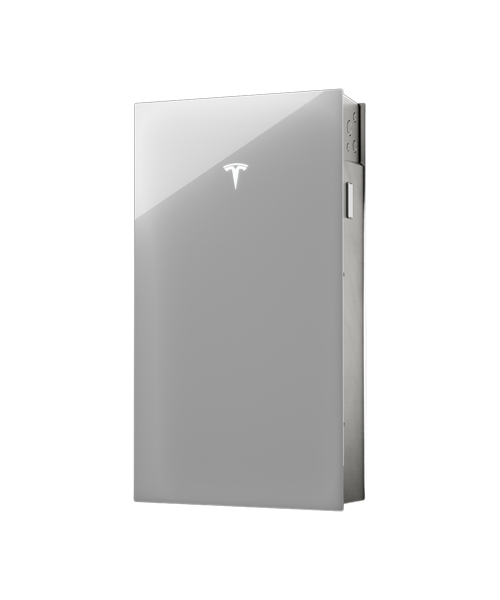
Tesla Powerwall 3 is a fully integrated home battery and solar system storing 13.5 kWh of energy, delivering 11.5 kW continuous power, whole home backup, and seamless outage protection all managed via the Tesla app.
Tesla Powerwall 3 vs. other battery capacities
Considering the Powerwall price and capacity, Tesla Powerwall 3 is a frontrunner in the market. The FranklinWH aPower 2 system offers similar capacity and is slightly more expensive, though FranklinkWH is a close competitor in functionality. Other battery systems are more modular, like the Enphase IQ or Generac PWRcell 2. We compare Tesla with a few other options below.
| Battery system | Capacity (usable) | Continuous power (AC) | Typical installed cost range (before incentives) | Scalability |
|---|---|---|---|---|
| Tesla Powerwall 3 | 13.5 kWh | Up to 11.5 kW | $13,000–$16,500 | Up to 4 Powerwall 3 units plus up to 3 expansion units (13.5 kWh each) for a maximum of 7 total units |
| FranklinWH aPower 2 | 15 kWh | 10 kW | $17,500–$20,000 | Up to 15 units per aGate (up to 225 kWh) |
| Enphase IQ Battery 5P | 5.0 kWh | 3.84 kW | $7,500–$17,000 (varies heavily with 1–2+ units and site work) | Up to 40 kWh (8 × 5P) on one controller configuration |
| SolarEdge Home Battery 400V (Energy Bank) | 9.7 kWh | 5 kW | $12,000 installed (often lands around $10k–$13k depending on installer and site) | Stack up to 3 batteries per inverter (larger systems typically require more equipment) |
| Generac PWRcell 2 | 9–18 kWh per cabinet (3 kWh modules) | Up to 11.5 kW (with PWRcell 2 inverter) | $14,000–$25,000 | Up to 72 kWh in a single installation (2 cabinets per inverter; 2 inverters) |
| Panasonic EVERVOLT Home Battery | Up to 18 kWh per cabinet; up to 72 kWh (4 cabinets) | 7.6 kW per cabinet; up to 30 kW (4 cabinets) | $15,000–$20,000 | Up to 4 cabinets (capacity and power scale together) |
Bottom line on Tesla Powerwall capacity
To sum up, Tesla Powerwall 3 offers 13.5 kWh of usable capacity per unit, and the runtime is determined by your household load. Capacity is how long energy lasts, while power output defines what can run at once. Powerwall 3 delivers 11.5 kW continuous output (up to 15.4 kW off-grid) and high starting capability at 185 LRA, allowing it to run most home systems, including large motors. You can scale capacity by adding Powerwall 3 or Expansion units up to 94.5 kWh total, while output scales only by adding Powerwall 3 units.