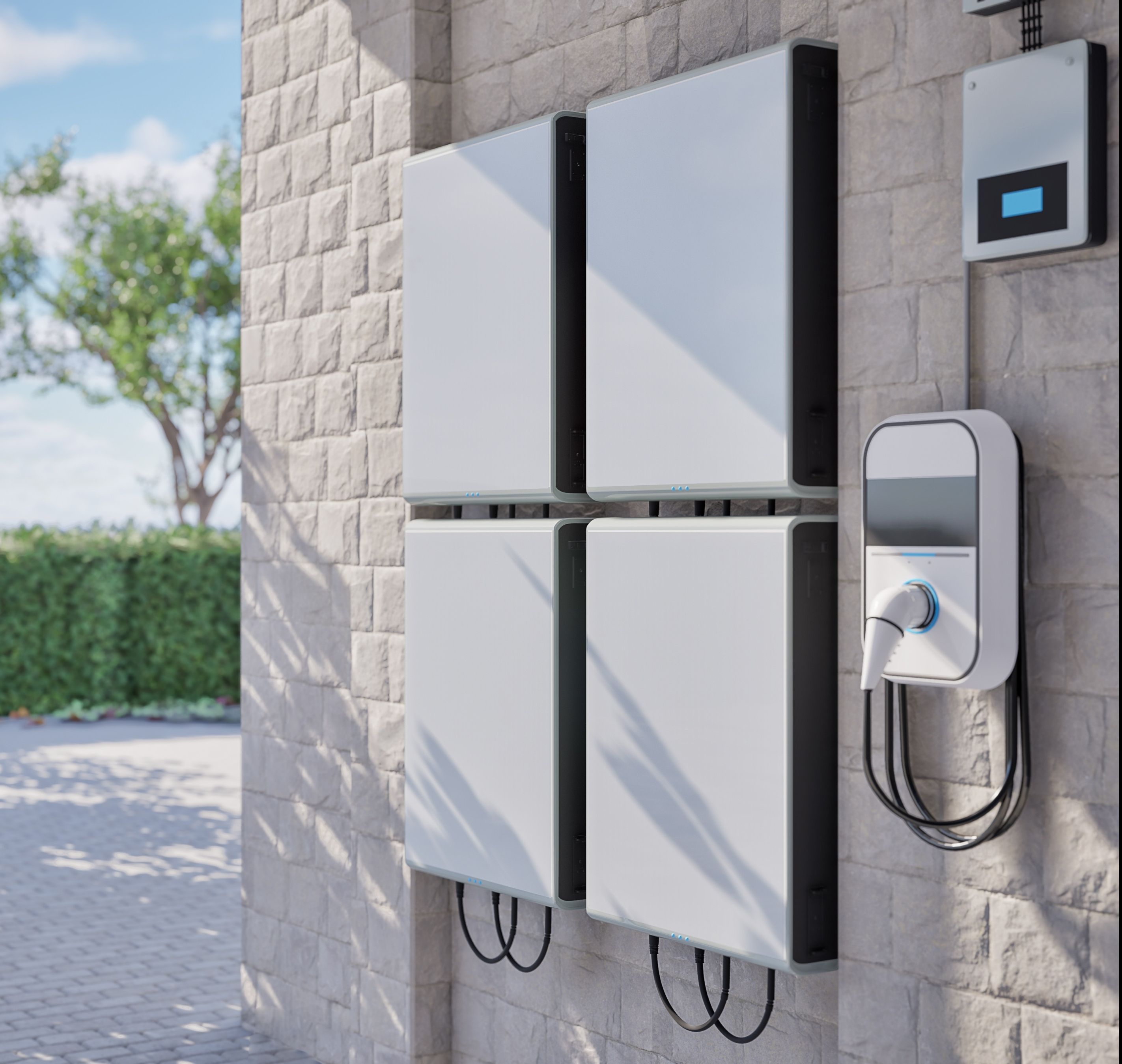


Solar battery storage is a tricky subject since most quotes blur together hardware, electrical construction, software, and risk into a single number. When homeowners compare proposals as if they were buying a single appliance, the mat doesn’t really make sense. We’ll consider home backup battery pricing as a system upgrade and explain why two quotes for “the same kWh” can be tens of thousands of dollars apart.
Our article focuses on U.S. grid-tied homes, with California IOU territory (PG&E, SCE, SDG&E) under NEM 3/the Net Billing Tariff used as the clearest example of how utility rules can dominate economics. (NEM 3/NBT has applied to new interconnection applicants since April 15, 2023.)
PowerOutage.us has recorded millions of outage events since 2016, logging exact timing and duration across 950+ utilities and 96% of U.S. customers. Solar battery storage cost only makes sense weighed against real outage frequency, so consider tracking outages with our platform.
Why installed solar battery storage costs much more than the battery
A battery cell stack is only one component in a larger power system. What homeowners actually purchase is the ability to store energy safely, meet electrical code, interconnect with the grid, and deliver power during specific conditions (rate periods, outages, or both). That’s not just a few hours of labor; it can require permitting and upgrading your electrical box or even wiring.
In practice, the battery hardware (like a Tesla Powerwall unit) often represents roughly one-third to under one-half of total installed cost. The rest pays for making that hardware legal, reliable, and insurable inside a particular house.
Electrical upgrades
Electrical work is the first major driver. Many homes require a critical loads subpanel, service or panel upgrades, longer conduit runs, or fire-code spacing adjustments. These tasks don’t scale with battery size, which is why a “small” battery can look disproportionately expensive. Even when installers advertise a one-day install, that day compresses design work, skilled labor, and future inspection risk into a short window.
Hardware costs
Then there is the balance-of-system hardware: gateways, backup controllers, meters, inverters, and communications equipment. These pieces are easy to overlook because they don’t store energy, but without them, the battery cannot legally disconnect from the grid, coordinate with solar, or report performance. Different ecosystems bundle these functions differently, which is why two batteries with similar kWh ratings can require very different supporting gear.
Permits and inspections
Finally, soft costs and liability matter more than most buyers expect. Permits, inspections, commissioning, and utility interconnection expose installers to delays and rework. That exposure shows up as overhead, insurance, and warranty reserves. When you see installed prices that seem disconnected from the battery’s sticker price, risk management is a big part of it.
Solar battery storage cost per kWh: Why quotes vary so widely
“Cost per kWh” sounds objective, but in residential storage, it’s highly context-dependent. Installers aren’t pricing electricity alone; they are pricing projects.
Regional labor rates and local code interpretations can swing pricing materially. A battery installed next to an existing panel in a garage is a different job from one that requires trenching, long conduit runs, or a service upgrade. These factors explain why two homeowners in different cities can receive quotes that differ by thousands of dollars for the same product.
Retrofits also tend to cost more than solar-plus-storage built together. Adding storage to an existing system can require inverter changes, additional controllers, or rewiring that would have been simpler if planned from day one. That complexity shows up as a higher installed cost per kWh even when the battery itself is identical.
Brand reputation plays a role, but it is often confused with installer margin. A brand premium reflects warranty terms, software quality, and ecosystem integration. Installer margin reflects business realities: backlog, service obligations, and exposure to inspection or interconnection risk. Treating those as the same thing leads to bad comparisons.
Average solar storage cost per kWh
Homeowner-reported quotes (often discussed on forums) help illustrate the spread of costs. Installed projects for mainstream batteries frequently land between $12,000 and $20,000, depending on size and backup scope. Premium battery systems can exceed that, while grid-tied, no-backup configurations can come in lower. These reports align with marketplace medians around $1,000 to $1,600 per usable kWh installed, while also showing the wide range that averages hide.
Examples within this average include systems from:
- Tesla Energy (Powerwall and Powerwall 3)
- Enphase Energy (IQ Battery)
- FranklinWH Energy (aPower)
- SolarEdge (Home Battery)
- LG Energy Solution
- Sonnen
Across these brands, pricing differences usually reflect project scope and constraints more than raw battery chemistry.
Financing, dealer fees, and the hidden cost of “affordable” monthly payments
Financing is one of the most misunderstood parts of battery economics. A financed project can seem cheaper because the monthly payment is manageable, even though the total installed cost is higher. This eats into your ROI and can require much better state and utility energy economics.
The main mechanism is the dealer fee. In many solar and storage loans, the installer pays an upfront fee to the lender, and that fee is embedded into the financed principal. From the homeowner’s perspective, the APR looks low, like 0% or 5%, but the starting balance is inflated. Over the long term, interest is paid on that inflated amount.
This is why homeowners sometimes notice that a “cash price” changes when financing is selected. The installer is adjusting the cost for loan economics, not arbitrarily raising prices. This means ROI calculations based on monthly payments can be misleading.
Financing might still make sense in some cases. Liquidity constraints, inflation hedging, or putting more value on resilience can justify paying more over time. The important part is transparency. A useful mental check is to compare cash installed cost with total financed repayment, then evaluate both on a per-kWh-shifted basis rather than on the monthly payment alone.
Fewer incentives are around to lower battery cost
At the federal level, the Residential Clean Energy Credit administered by the Internal Revenue Service is no longer available for homeowners in 2026. Previously, this 30% tax credit provided a nice ROI boost for installed solar and battery systems.
State and utility programs add another layer of complexity. In California, incentives overseen by the California Public Utilities Commission (most notably SGIP) can help out, but savings aren’t 100% certain. Eligibility tiers, documentation requirements, and waitlists mean that modeled savings don’t always translate into realized savings. Incentives lower cost in theory, but execution determines whether they lower cost in practice.
ROI is about utility rules, not just battery price
Having a battery gives you freedom to use grid energy at specific times (and not at others). That makes utility rate design the main factor in financial return.
Time-of-use arbitrage depends on the spread between off-peak and peak prices, not on average rates. If the spread is small, shifting energy provides little value, no matter how cheap the battery is. If the spread is large and constant, even an expensive battery can make sense.
For example, if your utility charges 18¢/kWh off-peak and 22¢/kWh at peak, a battery only saves about 4¢ per shifted kWh, so even a cheap system struggles to pay back.
On the other hand, if off-peak power costs 15¢/kWh and peak power costs 55¢/kWh every weekday evening, that 40¢ spread can justify an expensive battery because each shifted kWh reliably replaces very costly grid energy.
California’s Net Billing Tariff illustrates this. Reduced export compensation pushes homeowners toward self-consumption, making batteries more attractive while often extending simple payback periods. Utilities like Pacific Gas and Electric, Southern California Edison, and San Diego Gas & Electric all shape outcomes through rate structures rather than through battery pricing itself.
A practical way to think about ROI is to divide the installed cost by the lifetime shifted kWh. This reframes the purchase as buying a stream of avoided expensive electricity rather than buying hardware.
Power resilience provides value beyond plain ROI
Batteries degrade (slowly, but they do). When you buy one, you are paying today for energy capacity that will slowly decline over time. Warranties specify minimum retained capacity and throughput limits, which matter more to long-term value than nameplate kWh. For example, the Tesla Powerwall capacity of 13.5 kW will be at least 70% of that in 10 years.
This is why purely financial ROI can sometimes disappoint. Soft costs (inspection, utility interconnection) are significant, tariffs change, and actual usage rarely matches idealized models. That said, many homeowners still judge batteries as “worth it.”
That judgment usually comes from energy resilience rather than arbitrage. Backup power during outages, continuity for medical needs or remote work, and the psychological value of independence are real benefits. They are just not captured by a utility bill spreadsheet. Economic ROI, resilience ROI, and peace-of-mind value are all related in the picture of battery value.
How to use homeowner quotes when shopping
When you’re doing research, it’s best to consider online discussions and shared quotes as case studies, not benchmarks. Their value lies in revealing what questions to ask.
Before comparing numbers, clarify whether a quote includes backup capability or is grid-tied only, whether panel upgrades are required, whether the system is a retrofit, and whether financing is embedded. Ask for the installed cost per usable kWh, warranty assumptions, and the rate structure used in any ROI estimate.
If a proposal can’t clearly explain those elements, it’s just a sales number, not a financial model.
Bottom line on solar battery storage costs
To wrap up, residential battery prices vary because homeowners are buying a full electrical and regulatory system, not just a battery. Installed cost is driven by labor, permitting, risk, financing, and utility rules, while financial ROI depends more on rate design than hardware price. In the end, batteries often make the most sense for resilience, not pure bill savings.