

Nothing beats a whole home generator in an emergency situation. A standby generator keeps the electricity flowing when the grid goes down and can power your home for extended periods of time to keep you and your family safe, comfortable, and even entertained. When Winter Storm Fern knocked out power to more than 1 million customers across the South in January 2026 (including 306,700 in Tennessee alone, with some households dark for six or more days) the difference between a home with a standby generator and one without was stark.
This guide to whole house generators provides the key information you should consider before making a purchase. You'll learn what types of generators are available, how much they cost, and how to find the right make and model for your home. We've also included a few of the best generators for home backups to give you a starting point.
PowerOutage.us tracks outages across 950+ utilities serving more than 200 million customers, giving our team near-national visibility into when, where, and how long Americans lose power. That real-world outage data informs every product recommendation in this guide.
What is a whole house standby generator?
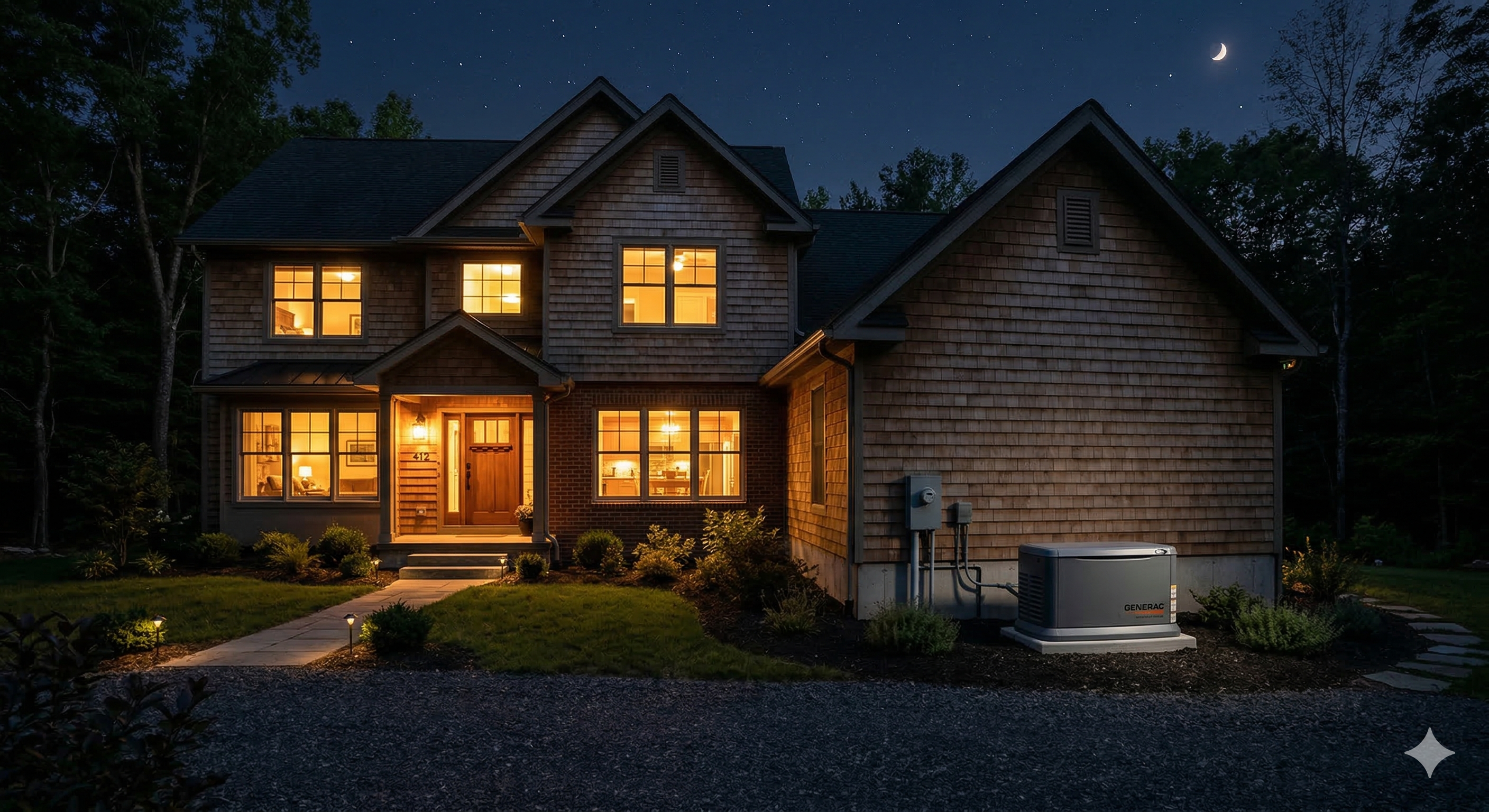
A whole house standby generator is a residential generator designed to provide backup energy for an entire home. These generators are typically permanently installed on site at residential properties. They feature transfer switches that enable them to automatically turn on when grid power is interrupted, providing uninterrupted electricity.
Whole-house standby generators commonly fall in the 15 kW to 25 kW range of output power for many single-family homes, but sizes can be smaller or larger depending on household load and appliance requirements. If you're not sure what size your home needs, our generator sizing guide walks through the calculation step by step.
How automatic standby generators work
Whole house generators are integrated into a home's electrical wiring through what's known as an automated transfer switch. This electronic unit safely connects the generator to a home's circuitry to let the generator provide electricity through normal outlets. Here's how this process works:
- The transfer switch disconnects the circuit breaker from the main electric line when it detects a service interruption.
- After disconnecting the home from the utility, the switch starts the generator, then connects the generator to the main panel.
- The standby generator provides power through the home's existing infrastructure while the grid is down.
- Once grid power is restored, the process reverses to re-establish normal electrical service.
Types of whole house backup generators
Standby generators for homes typically run off fossil fuel energy. The most common fuel sources are natural gas, propane, and diesel. We compare the main considerations for each type below.
| Type of whole home standby generator | Energy density | Average fuel cost | Maintenance needs | Ideal use case |
|---|---|---|---|---|
| Natural gas | Lower energy density | Least expensive fuel where available | Low (burns clean, needs few oil changes) | Homes with existing natural gas lines and service |
| Propane | Average energy density | Average to high (more than natural gas per unit) | Low-average (clean burning but needs more frequent maintenance) | Homes without natural gas access and plenty of room for fuel storage |
| Diesel | Highest energy density | High (highest operating cost per unit) | High (needs frequent oil changes and burns less clean) | Homes with limited access to other fuel sources (like rural or off-grid homes) |
For a broader look at how fuel-type generators compare in real-world home backup scenarios, see our guide to gasoline generators for houses.
Why install a whole home backup system?
Standby generators offer a number of benefits for homeowners who want uninterrupted backup energy. When PowerOutage.us tracked Hurricane Helene in September 2024, restoration times ranged from roughly 24 hours in urban Charlotte to 14 or more days in western North Carolina mountain counties. (It was the largest outage event we recorded that year, with 4.79 million customers affected across multiple states.) Events like that illustrate exactly why each of the benefits below matters in practice:
- Preventing shutdown of important home infrastructure like HVAC systems, WiFi networks, and sump pumps
- Reducing the risk of water and plumbing damage from frozen pipes during cold-weather storms
- Keeping medical devices fully powered during outages
- Preventing power interruptions to refrigerators and freezers to reduce food spoilage
- Facilitating peace of mind by providing power for comfort and entertainment devices and appliances
Since whole house generators are installed on the home site, they become part of the property. This can increase a home's value and curb appeal if the home is in an outage-prone region.
Top whole house generator picks
Before getting into full sizing and installation detail, here are the standout models we recommend for different home backup needs. These selections reflect our team's real-world assessment of generator performance across the outage events we track.
| Category | Best pick |
|---|---|
| Best battery overall | EcoFlow DELTA 2 Max |
| Best budget battery | Jackery Explorer 1000 |
| Best budget high-watt fuel | WEN TF-1450X |
| Best mid-range home backup | Westinghouse WGen7500c |
| Best serious whole-home | DuroMax XP13000HXT |
For a comprehensive breakdown of the best generators for home backup, including detailed head-to-head comparisons, visit our dedicated guide.
Sizing, installation, and maintenance
Finding the right size generator, having it installed properly, and keeping up with regular maintenance are all critical to getting the maximum value out of your energy investment.
How to size a whole house generator
Which size generator you need depends primarily on your home's energy usage. There are two key figures to consider: total household load and starting watts.
Total household load represents the combined wattage of all the appliances running in your home at one time. Starting watts calculates the maximum energy spike that occurs when devices are first started — often two to three times higher than the running wattage.
You can consult your energy bill to get an average daily usage rate for your home, but it's also good to break down the energy usage of your appliances individually. This gives you a reference point if you need to decide which systems are essential and which are non-essential in an emergency. The table below provides average running and starting wattage for key appliances.
| Appliance | Running wattage | Starting wattage |
|---|---|---|
| HVAC system (central AC) | 3,500 W | 10,500 W |
| Washer | 1,000 W | 2,200 W |
| Dryer (electric) | 4,000 W | 6,000–7,500 W |
| Sump pump | 900 W | 1,800 W |
| Well pump | 1,500 W | 3,000 W |
| Electric stove/oven | 3,000 W | 3,200 W |
| WiFi modem/router | 10 W | 15 W |
| Home lighting (can vary widely) | 500 W | 600 W |
Home generator installation process
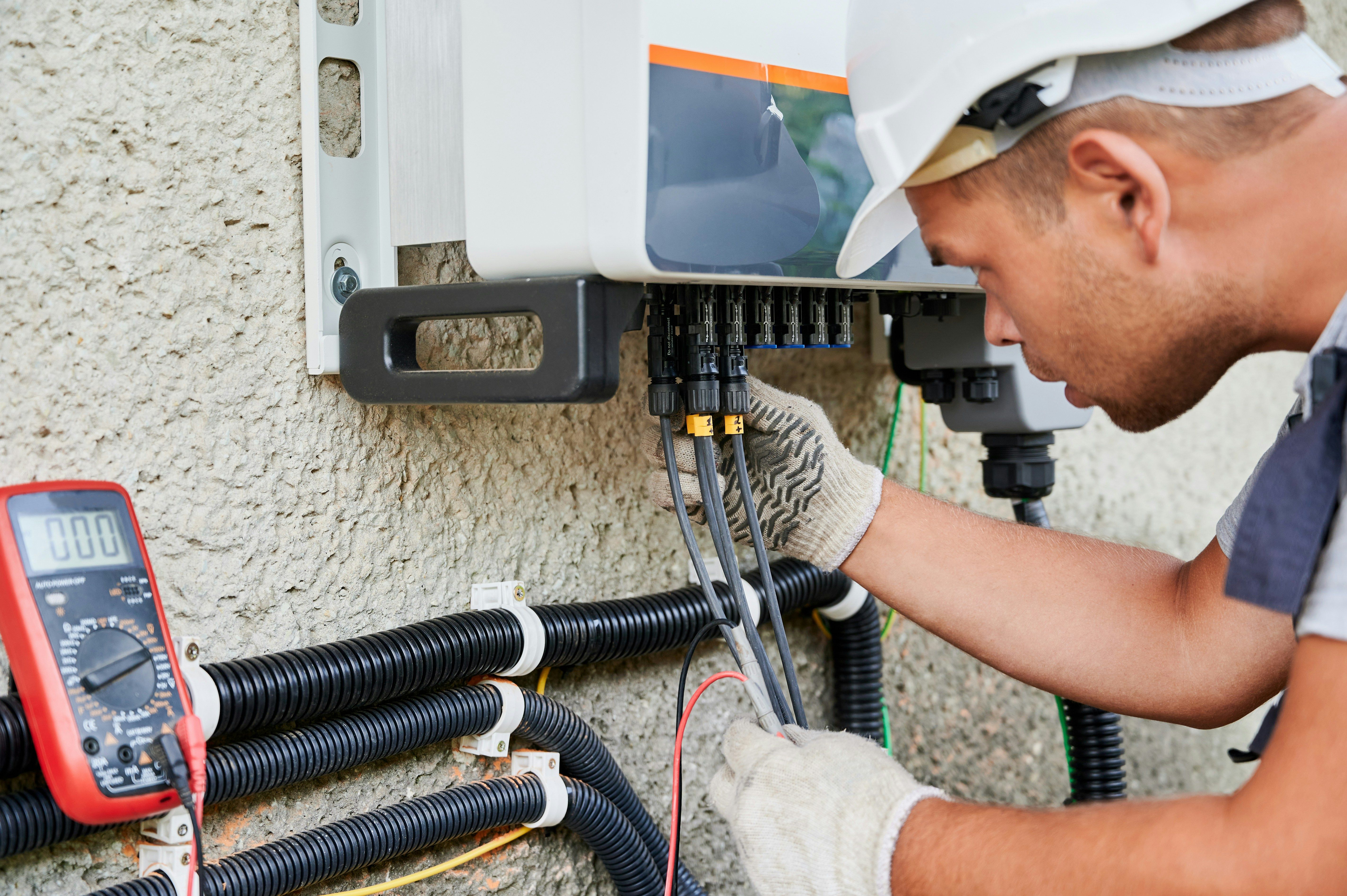
Unless you are a professional electrician, we strongly advise hiring professional help to connect a standby generator to your home. Connecting a generator to your home's circuitry involves working with high-voltage electricity, which can be extremely dangerous. A professional electrician can also help ensure that the following are handled properly:
- Permitting
- Site preparation
- Code compliance
- Safety testing
Whole house generator installation costs can vary significantly by region. You can find average costs for installers in your area online, or get a few quotes from licensed electricians near you.
Maintenance and operation
Maintaining your generator is essential to maximizing its efficiency and longevity. While maintenance schedules vary between different types and models, you'll typically need to conduct regular services like changing the oil and replacing the air filters. Consult your owner's manual for recommended service intervals.
Many standby generators feature advanced connectivity technology that allows you to monitor their health and performance remotely, often through mobile apps. These apps can send maintenance reminders when it's time to perform a service or notify you of any drops in efficiency or issues that arise.
Whole house generator costs
There is a wide range in the price of whole home standby generators, which typically run anywhere from $4,000 to over $20,000. Variations in price are driven by a few influential factors: energy output, cost of installation, and type of fuel. The table below provides sample installed costs for different generator sizes as well as use cases for each range.
| Output power (kW) | Estimated total installed cost | Notes/examples |
|---|---|---|
| 7–10 kW (essential + partial loads) | $4,000–$5,000 | Entry-level standby units. |
| 10–14 kW (moderate home, maybe HVAC) | $5,000–$8,000 | Many mid-sized homes fall here. |
| 18–24 kW | $10,000–$15,000 | For full homes with central HVAC, pumps, etc. |
| 24–30 kW+ | $10,000–$20,000+ | For larger homes or heavy loads. Some installations quoted as high as $20–25k. |
Whole house generator cost by make and model
To give a more detailed picture of costs, we've listed the estimated equipment cost of several popular home standby generators below. Note that prices vary by dealer and region and may change.
| Model | Power (kW) | Approx. equipment cost before installation |
|---|---|---|
| Briggs & Stratton PowerProtect 13 kW | 13 kW | $4,283 |
| Cummins 13 kW QuietConnect | 13 kW | $4,282 |
| Generac 14 kW | 14 kW | $5,839 |
| Kohler 20 kW | 20 kW | $6,149 |
| Cummins 20 kW QuietConnect | 20 kW | $5,897 |
| Generac 24 kW | 24 kW | $7,100 |
| Generac 26 kW | 26 kW | $6,299 |
| Generac 48 kW | 48 kW | $24,679 |
Whole house generator installation costs
Installation costs (separate from equipment costs) vary by region and also depend on the model of generator you choose. In 2025, installation costs for whole house generators typically range from $2,000 to $4,000. Generally speaking, the cost of installation increases along with the size of the generator being installed.
Real-world outage context: Why a standby generator matters
The case for a whole house standby generator isn't theoretical; it's supported by the outage data that PowerOutage.us has tracked across every major event since 2016. When Winter Storm Fern swept a 2,000-mile arc from New Mexico to New England in January 2026, our platform tracked more than 1 million customers at peak impact. Tennessee was hardest hit, with 306,700 customers losing power (many in the Nashville metro) as ice accumulation brought tree after tree down onto power lines faster than crews could respond. Duration in the hardest-hit areas stretched beyond six days.
That event followed a devastating hurricane season the year before. During Hurricane Helene in September 2024 — the largest single outage event PowerOutage.us tracked in 2024 — 4.79 million customers lost power across the Southeast. South Carolina saw an average outage duration of 53 hours (the worst in the nation per EIA data), while western North Carolina mountain communities faced a complete infrastructure rebuild rather than simple repairs, leaving some residents without power for 14 days or more.
We also tracked Hurricane Milton's 3.4 million Florida customers (October 2024), where cycling grid failures (power briefly restored, then lost again) meant homeowners needed backup systems capable of handling intermittent restoration windows. During Milton's landfall, PowerOutage.us handled 1.8 million site requests per hour as people across the country searched for real-time outage data.
Is a standby generator worth it for your home?
A whole house standby generator can be a worthwhile investment in many cases. They provide significant value as a reliable source of backup energy that can replace grid power during outages without an interruption in service. Having a home backup generator is especially valuable for the following groups:
- People who live in regions with frequent power outages due to weather
- Senior citizens
- People with mobility issues
- People who depend on medical devices
Having a permanently installed backup generator at your home can also add to its overall value. That means at least some of what you spend on a standby unit is likely to come back to you if you sell your home in the future.
If you can't afford to pay the entire cost of a generator and installation at once, you likely have other options. Many manufacturers, retailers, and installers offer financing and payment plans. Some lenders may also be willing to finance your standby generator purchase through various types of loans.
Bottom line on whole home generators
If you can afford one, a whole house generator is one of the most practical purchases you can make for your home. A standby generator can provide safety, comfort, and peace of mind during emergencies. The outage data PowerOutage.us has collected since 2016 — spanning events from Winter Storm Uri's near-collapse of the Texas grid to Hurricane Helene's 14-day mountain outages — consistently confirms that the question isn't whether you'll eventually experience a serious outage, but when.
Take the time to find the size and type of standby generator that best suits your needs, and make sure to leave room in the budget for a professional installation. You're likely to get the best deal if you're willing to shop around for both the generator and the team to install it. Browse the full for additional resources, comparisons, and guidance.