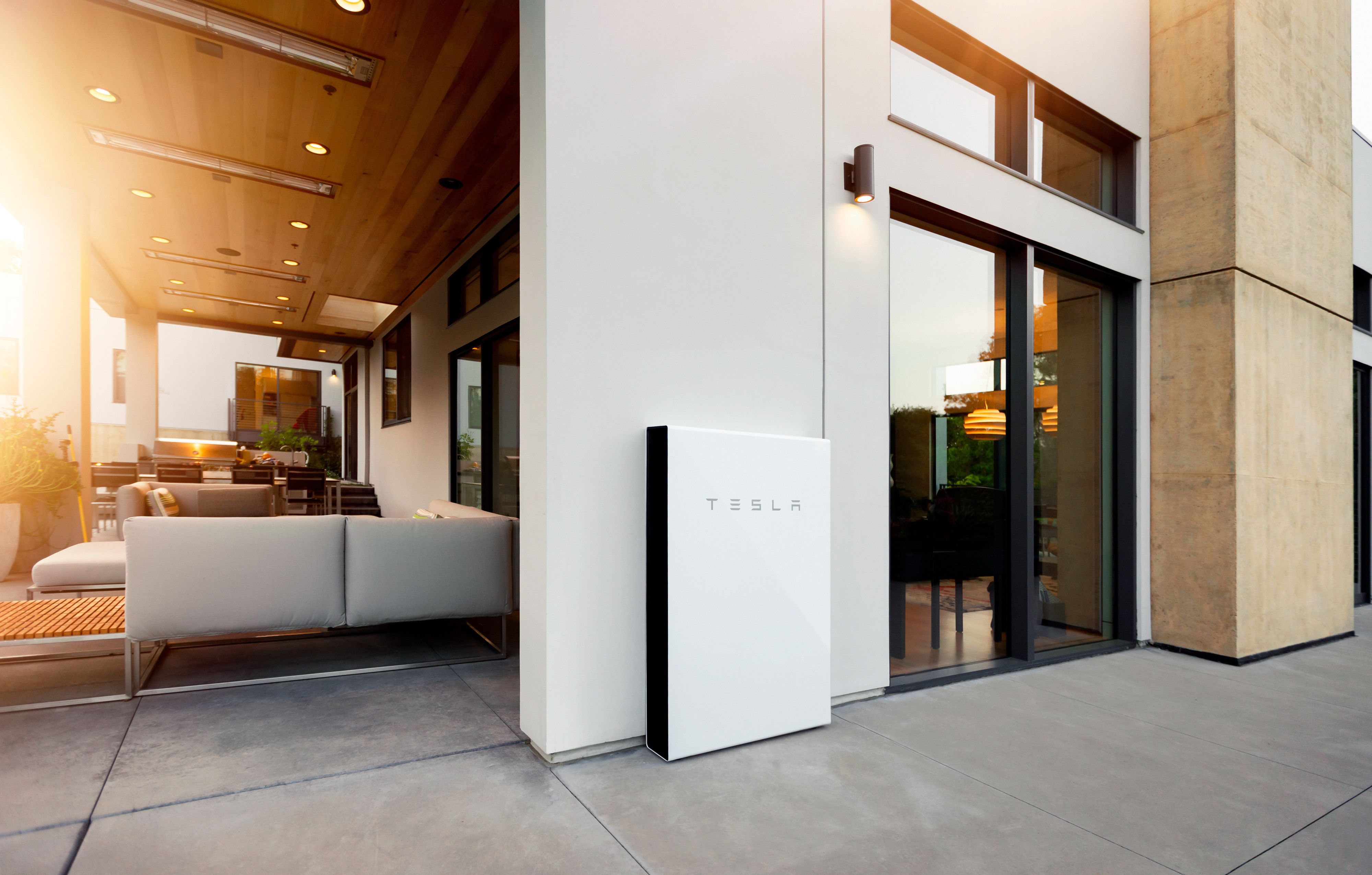


Considering its large capacity and peak power output, the Tesla Powerwall 3 is worth the cost as a home battery backup even after being on the market for a couple of years. In this article, we’ll break down costs into battery and installation components.
Ultimately, whether it’s worth it is up to you. PowerOutage.us recorded Winter Storm Uri cutting power to 4.8 million U.S. customers with Texas enduring multi-day rolling blackouts across the state. Powerwall buyers can use that kind of outage data to size their system around real storm durations instead of best-case estimates.
How much does Tesla Powerwall cost?
While it’s a nuanced question, you can expect to pay about $13,000 to $16,500 for a Tesla Powerwall installed. That equals about $963 to $1,222 per kWh of energy storage. “Powerwall cost” usually means the fully installed Tesla Powerwall system, not just the battery unit, which this cost includes.
The total depends on the installer, the electrical scope, and whether the project targets whole-home backup or a critical loads setup. Powerwall installation varies because the home’s electrical design varies. For example, your home might have 100A, 200A, or 400A electrical service. Electrical panel space, big loads to support (HVAC, EV), solar panels, meter/disconnect layout, conduit distance, trenching needs, and more can all affect installation costs.
Residential Clean Energy Credit has expired
Also, note that the Residential Clean Energy Credit is no longer available for homeowners in 2026. Previously, homeowners could count on a 30% tax credit for installing clean energy systems, which include battery storage. This is no longer the case. Keep that in mind if you read Powerwall cost articles that include the tax credit.
Tesla Powerwall battery cost
The battery is the biggest chunk of the Tesla Powerwall installation cost. We’ll cover Powerwall 3 battery costs along with Powerwall+ and Powerwall 2 below.
Tesla Powerwall 3 cost
A standalone Tesla Powerwall 3 battery usually costs between $8,200 and $10,000, depending on the provider and any promotions they have. Battery prices can vary slightly based on the distributor and market demand.
An expansion pack costs about $6,200. It’s cheaper because it doesn’t have an inverter built in, since it uses the main Powerwall 3 inverter. However, since the expansion pack is a simple battery that runs off the Powerwall 3’s controls, you get twice the Powerwall capacity but not more continuous power. In other words, a Powerwall 3 plus expansion pack provides 27 kWh of storage but the same peak output of 11.5 kWh as a Powerwall 3. If you need the extra output for heavy loads, you might want to consider adding a full Powerwall 3 instead of the expansion.
| Configuration | Estimated installed cost |
|---|---|
| Powerwall 3 (base unit) | $13,000 to $16,500 |
| Powerwall 3 + 1 expansion | $19,000 to $22,500 |
| Powerwall 3 + 2 expansions | $25,000 to $28,500 |
| Powerwall 3 + 3 expansions | $31,000 to $34,500 |
These are ballpark planning ranges. Final pricing varies with labor, electrical scope, permitting, and site conditions.
Tesla Powerwall+ cost
Tesla Powerwall+ is essentially a Powerwall paired with a Tesla solar inverter, and it has typically sold as a solar-plus-storage package rather than a battery-only product. It costs about $11,500 installed when purchased alongside Tesla solar, with the important note that Tesla doesn’t offer it as a standalone battery.
In current market practice, Powerwall+ quotes usually come from existing inventory or legacy system configurations rather than new Tesla-direct offerings. As a result, installed pricing often falls into the same general range as other Powerwall installations, because labor, electrical upgrades, and permitting remain the primary cost drivers regardless of the specific Powerwall model used.
Tesla Powerwall 2 cost
Installed Powerwall pricing is usually around $12,000 to $16,500 because labor, electrical work, and permits drive most of the cost.
Powerwall 2 can still be a good fit for homes with an existing solar inverter or microinverter system, since its AC-coupled design avoids reconfiguring solar equipment, unlike Powerwall 3’s integrated inverter, which favors new installs.
It also supports larger multi-battery systems (up to 10 units) and has a longer installer track record. In some cases, older Powerwall 2 inventory can cost less upfront than Powerwall 3 hardware, even though total installed pricing still depends mainly on labor.
Other Powerwall hardware cost
Besides the battery, you’ll probably need a Gateway or Backup Switch along with some hardware odds and ends.
Tesla Gateway cost
You’ll often see different pricing tiers for the Tesla Gateway 3, depending on where the number comes from. In many installer cost breakdowns, the Gateway is commonly estimated at around $900 to $1,100. Tesla generally doesn’t publish a simple consumer MSRP for individual system components.
This is really a planning placeholder figure rather than a fixed retail price, since the Gateway is included in an installation and you wouldn’t normally buy one separately. However, be aware that online retail and secondary-market listings can be significantly higher: sometimes $1,700 or more.
Tesla Backup Switch cost
A commonly published distributor price for the Tesla Backup Switch is around $450, based on listings from solar equipment distributors.
According to Tesla, the Backup Switch functions as a system safety component that disconnects a home from the utility grid during an outage, allowing the Powerwall system to provide backup power.
You can use a Tesla Backup Switch instead of a Tesla Gateway when a simpler, lower-cost, utility-approved disconnect can provide outage isolation without the added complexity of full gateway-based control. The Backup Switch is a meter collar that installs directly between your meter and meter socket. Note that the Backup Switch is not approved by all utilities. In that case, you’ll need to use a Gateway.
Cables, odds and ends
Installers typically roll cables, conduit, and small hardware into a general materials line item. When it’s broken out separately, some published cost breakdowns place basic accessories at around $200.
In real-world installs, that number often increases. Longer conduit runs, additional disconnects, a critical loads panel, CTs, breakers, exterior-rated hardware, or trenching all expand the materials scope, which raises total installation cost beyond the baseline estimate.
Tesla Powerwall installation cost
For most homeowners, the clearest benchmark is the installed cost. A Tesla Powerwall fully installed commonly falls in the $13,000 to $16,500 range, based on typical U.S. installer pricing.
When costs are broken out, labor is often a major line item. A commonly cited “typical labor” figure in installer breakdowns is around $6,100, reflecting electrical work, system integration, and commissioning.
Certain upgrades can also have a big impact. A main electrical panel upgrade, like going from 100 amps to 200 amps, can add $1,300 to $3,000 to the cost. It could even be more depending on service equipment, utility requirements, and site conditions.
Another common upgrade is a subpanel or critical loads panel, which can be priced around $400 to $1,750, depending on circuit count, layout, and installation complexity.
How much does a Powerwall with solar cost?
When thinking about solar plus storage pricing, the basic idea is that solar is priced per watt, the Powerwall is priced per unit, and the combined system is simply the sum of both, adjusted for any electrical scope changes required at the home.
Typical solar pricing is in the range of $2.74 to $3.30 per watt, with an example 8 kW solar system costing roughly $21,900 to $26,400 before incentives. The cost is tied directly to the size of the system.
Adding Tesla Powerwall 3 typically contributes another $13,000 to $16,500 of solar battery storage cost installed, depending on labor, permitting, and electrical configuration.
Put together, an 8 kW solar system paired with one Powerwall 3 comes out to approximately $34,900 to $42,900 before local rebates or utility programs. Final pricing depends on site-specific electrical requirements.
Can you save on an energy bill with Powerwall?
It’s possible to save on your electric bill with a Powerwall, but the savings depend on how the system is used and the rate structure from your utility. The Powerwall offers backup value first, and energy savings are icing on the cake if they’re available.
Saving with just a Powerwall by time-of-use optimization
Tesla offers Time-Based Control, which charges the battery during off-peak rates and discharges during peak rates. This shifts energy use away from expensive hours and lowers effective electricity costs.
A simple way to estimate savings is:
(peak rate − off-peak rate) × kWh shifted × efficiency
For this calculation, let’s assume 90% efficiency, which is a conservative assumption for real-world losses.
Say you shift 10 kWh per day with a $0.25/kWh rate spread and 0.90 efficiency. This would yield about $2.25 per day, or $821 per year. Saving this money is great, but many people view Powerwall as backup first, savings second. That said, a Powerwall can save you more money if you face large TOU spreads or paid grid programs like virtual power plants.
Saving with solar panels
Of course, if you install solar to use with a Tesla Powerwall, you unlock a huge potential to save money on electricity. Solar reduces grid purchases directly, and adding a Powerwall can allow you to export power at the right times.
Say a home installs 8 kW of solar and a Tesla Powerwall, and generates about 10,500 kWh per year. Instead of exporting midday power at $0.05 per kWh, the battery stores 10 kWh per day and offsets evening peak rates of $0.35 per kWh, saving roughly $1,100 to $1,300 per year.
Combined with daytime solar offsetting grid power at $0.18 to $0.22 per kWh, total annual bill savings are around $1,800 to $2,500. This, of course, depends on rates, exports, and usage patterns.
Powerwall can increase your solar system’s value where export compensation is low during the day or strategic exporting during high-cost periods is allowed.
Bottom line: Is the Tesla Powerwall cost worth it?
The Tesla Powerwall is worth the cost if your goal is automatic whole-home backup with a reliable system. The battery still offers great capacity and power output compared to other options on the market.
The EG4 Wallmount Indoor Battery is a similar alternative, since both offer roughly 14 kWh of usable storage. But EG4 systems typically appeal to homeowners or installers comfortable designing a more modular system.
Against larger systems like the EcoFlow Delta Pro Ultra, FranklinWH, and the MeterHome Stackable LiFePO4 Home Battery Backup System, Powerwall offers simplicity rather than huge scalability. EcoFlow emphasizes high power output and multi-use flexibility (solar, generator, mobile use), while MeterHome targets homes that need to stack capacity over time for extended outages. In contrast, Powerwall prioritizes simple whole-home backup and long-term reliability, making it a better fit if you want a set-and-forget battery system.