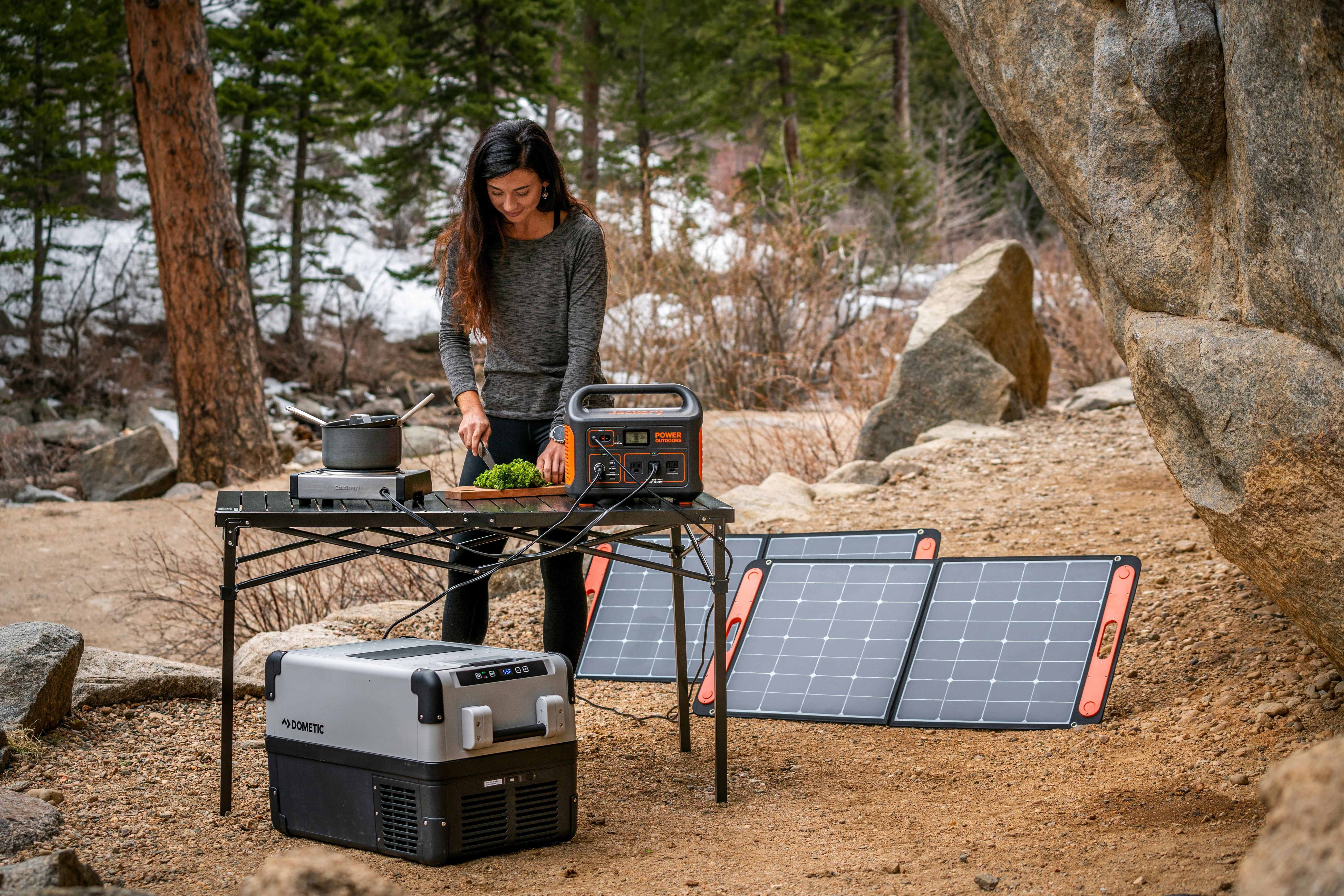

Don’t assume a winter wonderland is a bad climate for solar. Solar panels work well in winter, with cold temperatures actually increasing efficiency by about 20%. The tradeoff is seasonal: shorter daylight hours and possible snow coverage may cut overall output. Most modern panels and racking systems operate reliably in severe cold (down to about -40°F), and snow often slides off when panels are installed at appropriate angles. Read on to see what actually changes (and what you can do) so your solar panels work well in winter.
PowerOutage.us monitors 950+ utilities covering about 96% of U.S. customers, creating one of the most comprehensive outage datasets available for energy resilience planning. During major events like Hurricane Milton, when demand surged to 1.8 million requests per hour, homeowners and solar adopters relied on its outage intelligence to assess real-world grid reliability and manage backup energy.
How solar panels work in winter temperatures
Solar panels work efficiently in winter because of the temperature coefficient effect. This means colder temperatures boost efficiency by about 0.4% to 0.5% per degree Celcius below 25°C (or 77°F).
For example, at freezing temperatures of 0°C, efficiency increases by 10% to 12.5% compared to 25°C. And if the temperature drops to -20°C, your panels could convert energy 20% to 25% better.
This is all because solar panels work by moving charged electrons between semiconductor materials. Higher temperatures let more electrons recombine without contributing to the current, while low temperatures keep electrons moving forward.
You can read more about the science behind the phenomenon in this study from the Nanyang Technological University in Singapore.
What about sunlight availability in winter?
Even though solar panels can run more efficiently in cold weather, winter sunlight is the limiting factor for most homes. When people search “do solar panels work in winter,” they usually mean “will I still get enough energy,” and that depends on day length, sun angle, and weather.
Daylight hours directly affect winter solar production. In northern regions, peak sun hours can drop by as much as 50%, and the winter sun can deliver lower intensity at the surface. With both fewer hours and weaker angles, your system may generate noticeably less electricity in the winter months.
The sun also travels a lower path across the sky in winter. A lower solar angle increases the chance of shading from trees, chimneys, and nearby buildings, and it reduces how directly sunlight strikes the panel face—both of which reduce winter output even when solar panels still work.
If you live at higher latitudes, you’ll see stronger seasonal swings in solar generation than homes closer to the equator, where day length changes less throughout the year.
One winter-specific benefit is albedo: sunlight reflecting off bright snow can bounce additional light onto panels. In some locations, snow reflection can partially offset reduced direct sunlight, helping solar panels work in winter on clear days.
Impact of snow and ice on performance
Winter creates a simple tradeoff: solar panels can operate very well in cold air, but snow and ice can reduce production by blocking sunlight. So if you’re evaluating “do solar panels work in winter,” the key question becomes whether your panels stay exposed to light during and after storms.
You can still get some power when snow or ice only partially covers the array. Many modern systems (especially those using module-level power electronics like microinverters or DC optimizers) limit the impact of partial shading so other panels keep producing. But if a panel is fully covered, that panel may produce little to no power until light reaches the cells again.
Panels installed at steeper angles (often 30° or more, depending on roof design and latitude) tend to shed snow faster. As the dark glass warms slightly in sunlight, a thin melt layer can form under the snow, helping it slide off—so the right tilt and mounting often matter as much as the weather when you want solar panels to work in winter.
How much snow can a solar system handle?
Solar panels are typically engineered to handle snow loads between 60 and 120 pounds per square foot (check your specific model’s datasheet). For homeowners asking “do solar panels work in winter storms,” the bigger concern is usually racking and roof structure: the panels may be rated for heavy snow, but the mounting method, roof condition, and local snow load codes determine how the full system performs over time.
How to clean snow from solar panels
If snow does not slide off quickly enough and you need production restored, clear panels carefully so they keep working through winter. A soft snow rake, roof rake designed for solar, or a leaf blower can remove light, dry snow without scratching the glass. If ice forms, you can use lukewarm water in limited amounts, but avoid hot water to reduce thermal stress and the risk of cracking. When in doubt, hire a professional, especially on steep or icy roofs.
Frameless panels are better for snowy regions
In heavy-snow climates, frameless solar panels can shed snow more easily because they lack raised metal edges where snow can catch. Framed panels may hold a small ridge of snow along the bottom edge, which can delay full clearing after storms. If your main concern is whether solar panels work in winter with frequent snowfall, the panel frame style (plus tilt and racking) can influence how quickly the array returns to normal production.
Cloudy vs. clear winter days
Wintertime in your region may also bring more clouds. When heavy clouds blanket the sky, your system might produce a fraction of its clear-day capacity. Lighter cloud cover is less problematic.
Overall, cloudy days can reduce output by 23% to 67%. If you add a lower sun angle and fewer sun hours to the equation, your solar panels might not output much power on some days.
Battery storage and grid connection in winter
For safety reasons, your standard grid-tied solar panels will automatically shut down during power outages. You’ll be without power unless you've invested in battery backup systems.
By adding battery storage to your solar setup, you gain crucial resilience during winter's unpredictable weather patterns. Not only can you maintain power during snowstorms and outages, but you can also capture excess energy on bright winter days to use during evening hours when utility rates typically peak or during extended cloudy periods.
That said, solar batteries don’t like the cold. Freezing temperatures can reduce storage capacity, so you'll want to locate your batteries indoors to provide a constant temperature.
Are solar panels worth it for wintry regions?
At the end of the day, solar panels can still be a good investment even if you have a long winter. Cold regions that are higher in elevation still get plenty of sunlight throughout the winter. Solar panels can also be worth it when comparing your electric bill to the cost and payback period of panels on your home. That said, solar isn’t best for everyone, so take time to calculate your expected return on investment.