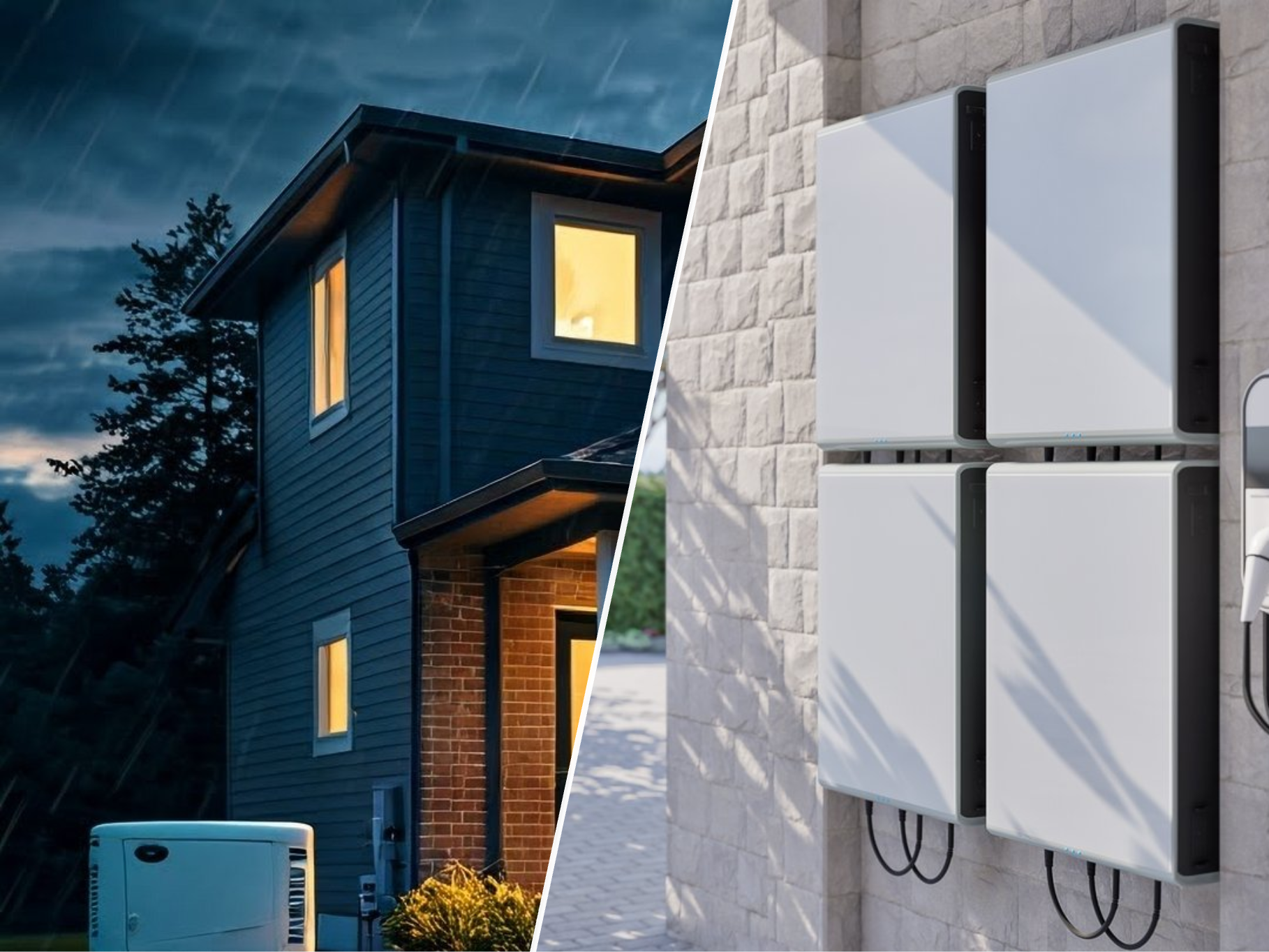


For most homes, the battery backup vs generator decision comes down to three factors:
- Outage duration: Standby generators typically support longer outages because runtime depends on fuel supply, while solar-paired battery systems can extend multi-day capability with grid islanding enabled.
- Load size: Generators handle heavy loads (central AC, electric ranges, well pumps) more easily, while batteries may need load management or multiple units.
- Everyday value: Backup battery systems can deliver quiet, automatic backup and may cut bills when paired with solar or time-of-use rates.
PowerOutage.us tracks outages across 950+ utilities covering about 96% of U.S. customers, and that real-world data shapes how homeowners should think about battery backup vs generator choices. During Winter Storm Fern in January 2026, our platform tracked 1,005,641 customers without power, with some areas remaining dark for six days or more as ice-covered trees repeatedly damaged lines.
Events like Fern illustrate one recurring pattern in outage data: restoration timelines regularly exceed initial estimates, particularly when physical infrastructure like poles and lines must be repaired.
Homeowners choosing between a home battery backup vs whole house generator should match equipment to realistic restoration timelines. FEMA and the U.S. Department of Energy have both noted that major weather events can leave some communities without power for days to weeks, which is consistent with what PowerOutage.us data shows across multiple storm seasons.
Battery backup vs generator at a glance
A home battery backup stores electricity (capacity measured in kWh) for later use, while a whole-house generator produces electricity (output power measured in kW) by burning fuel during an outage.
For homeowners comparing battery backup vs generator, the practical question is: which system matches your outage length, critical loads, budget, and willingness to handle maintenance, fuel, and noise?
A quick battery backup vs generator comparison helps clarify where each system fits.
| Feature | Home Battery Backup | Whole House Generator |
|---|---|---|
| Upfront cost (typical installed) | $10,000–$20,000 per battery installed | $7,000–$15,000 typical installed |
| Runtime | Hours to overnight per battery (longer with multiple batteries and load control, or with solar recharge) | Days or weeks depending on fuel supply |
| Whole-home capability | Possible with multiple batteries + load management | Designed for whole-home loads when properly sized |
| Central AC support | Possible with multiple batteries and soft-start/load control | Common with properly sized units |
| Maintenance | Low: periodic checks, firmware updates, possible inverter service | Regular: oil/filters, inspections, exercise runs |
| Fuel dependence | None during discharge; can recharge from solar or grid | Natural gas, propane, diesel, or gasoline |
| Noise | Nearly silent | Often ~65–90 dB during operation |
| Installation location | Wall-mounted indoors/garage (per code and manufacturer requirements) | Outdoor pad with required clearances |
| Transition speed | Instant or milliseconds | Seconds to start and transfer |
| Daily bill impact | Possible with solar + storage or time-of-use shifting | Typically none (backup-only use) |
This battery backup vs generator overview highlights a core tradeoff: batteries solve short-to-medium outages cleanly and quietly, while generators solve long outages and big loads with continuous production as long as fuel is available.
When a home battery is the better choice overall
A home battery backup system often wins the battery backup vs generator decision when outages are shorter, you want silent operation, or you want backup that also serves daily energy goals.
Batteries fit homeowners who want:
- Quiet operation (and no exhaust)
- Minimal maintenance
- Automatic switchover during outages and grid flicker
- Solar energy storage
- Electricity bill savings with time-of-use rates (where available)
Solar integration can keep batteries charging during daylight hours, which improves resilience when the grid stays down but the sun is available. However, this requires grid islanding functionality.
When a whole-house generator is the better choice overall
A whole-house generator is often the better choice in the battery backup vs generator matchup for long outages and high electrical demand, especially when you expect to run HVAC and many household circuits without strict limits.
Generators fit homeowners who need:
- Multi-day runtime
- Whole-home backup without constant load monitoring
- Reliable central AC operation during heat waves
- Power for larger homes, well pumps, or high-starting-surge equipment
Fuel access matters in any battery backup vs generator decision.
Generators connected to natural gas lines or large propane tanks can run for extended periods without manual refueling, which can be critical when roads are blocked or fuel deliveries slow down.
Real outage patterns reinforce this use case. During Hurricane Helene, some mountain communities remained without electricity for two weeks, demonstrating why sustained generation capacity matters for certain regions.
How home batteries and generators work
A home battery backup vs generator system differs most in how it supplies power: batteries discharge stored energy, while standby generators create power on demand.
Home battery backup mechanics
Battery systems store energy from:
- The electric grid
- Solar panels
- Occasionally other approved charging sources
When the grid fails, an automatic transfer switch, hybrid inverter, or smart panel isolates the home from the utility and switches selected loads to battery power almost instantly. In a battery backup vs generator comparison, this fast switchover is one reason batteries feel seamless for short outages and brief flickers.
Key characteristics:
- Runs silently
- Requires minimal routine maintenance
- Delivers stored electricity until depleted (runtime = kWh stored divided by average kW load drawn)
- Recharges from solar or the grid when available
- With solar and grid islanding mode, you can extend runtime through multi-day outages if solar production is sufficient
Whole-house generator mechanics
A whole-house generator uses an internal combustion engine and alternator to generate electricity.
Typical systems connect to:
- Natural gas lines
- Propane tanks
- Diesel or gasoline tanks (less common for permanent standby systems)
During an outage, an automatic transfer switch signals the generator to start, then transfers the home's loads to generator power once stable.
In battery backup vs generator terms, this is the key advantage: as long as fuel is available and the unit is maintained, the generator can keep producing electricity.
Key characteristics:
- Runs as long as fuel remains available
- Produces engine noise and exhaust
- Requires routine maintenance and periodic testing
- Handles large electrical loads more easily than most battery-only setups
This operational difference explains why battery runtime depends on stored energy (and solar recharge availability), while generator runtime depends on fuel logistics and refueling access.
Cost comparison: battery backup vs generator
Typical installed costs:
- Battery backup cost: $10,000–$20,000 per unit installed
- Whole house generator cost: $7,000–$15,000 installed
These ranges reflect industry estimates and vary by region, system size, and installation complexity. Whole-home battery backup often requires multiple batteries plus a compatible inverter and/or smart load panel, which can push the total higher than a single standby generator.
In many battery backup vs generator quotes, installation complexity (electrical work, permitting, panels, trenching, gas plumbing) explains a large share of the final price.
Battery backup makes more sense when you want:
- Bill savings via time-of-use shifting (especially in California, Hawaii, or New York)
- Solar integration and self-consumption
- Quiet operation in dense neighborhoods
- Fast, automatic switchover for short outages
A generator wins on cost when you need:
- Multi-day runtime
- Whole-home coverage without load limits
- Heavy HVAC performance
- Simple, single-device backup
Financing scenarios to consider
A homeowner financing a $15,000 battery system at 7% over 10 years would pay roughly $174/month. If the system reduces grid electricity purchases through solar self-consumption or time-of-use shifting by $50–$80/month, the net carrying cost drops meaningfully. Some utilities and states offer rebates or incentives that can reduce upfront costs.
A homeowner financing a $10,000 generator at the same rate would pay roughly $116/month with no offsetting bill savings during normal operation. Natural gas models avoid ongoing fuel costs except during actual outages, while propane models require budgeting for tank refills.
Operating and maintenance costs
Battery operating costs depend on how they charge—grid rates or solar. Solar charging can cut peak-rate purchases, though savings vary by utility policy.
Generators burn fuel like natural gas or propane. At 50% load, expect 1–2 gallons of propane per hour.
Battery maintenance is minimal (inspections, firmware updates), while generators need regular oil changes, spark plugs, and exercise runs—typically $150–$300/year in service contracts.
Replacement timing
Typical lifespans:
- Battery systems: 10–15 years depending on chemistry, temperature, and cycle count (manufacturers like Tesla and Enphase publish warranty terms that specify capacity retention thresholds—typically 70–80% of original capacity over 10 years)
- Standby generators: 15–25 years with proper maintenance, per manufacturer guidelines (though most warranties last from three to five years, like Generac’s)
Battery capacity also declines over time, so "replacement timing" can mean adding capacity later rather than swapping the entire system at once.
Runtime and what each option can actually power
The most important factor in the battery backup vs generator decision is runtime versus load size: batteries are energy-limited (kWh), while generators are fuel-limited and power-limited (kW) but can run continuously.
A simple way to estimate battery runtime: divide usable kWh stored by the average kW load. For example, a 13.5 kWh battery powering a 1 kW essential load (refrigerator, lights, router) could run about 13 hours. Add a 3 kW AC load, and that same battery supports roughly 3–4 hours of combined use. These are estimates—actual runtime depends on load cycling, battery temperature, and system efficiency.
| Backup Level | Typical Loads | Battery | Generator |
|---|---|---|---|
| Essentials only | Refrigerator, internet, medical devices, phone charging | Single battery covers 8–24 hours; quiet, automatic | Capable but oversized for this use case |
| Partial home | Freezers, lighting, security, well pump (depending on surge) | Multiple batteries + smart panel for automatic load shedding | Handles these loads easily with proper sizing |
| Whole home | All circuits including central AC and high-watt appliances | Requires multiple batteries, solar charging, and load management; feasible with sufficient solar | Preferred option—runs continuously while fuel is available |
Central AC and electric heat
Large HVAC systems change the battery backup vs generator math.
A central air conditioner's power draw depends on its size (tonnage) and efficiency rating. A 2-ton unit might draw 2–3 kW while running; a 4-ton unit might draw 4–6 kW or more. Startup surge can briefly spike 2–3x the running draw without a soft-start kit.
A single 13.5 kWh battery powering a mid-size AC system plus basic loads might last 2–4 hours. Multiple batteries, soft-start kits, and careful load control can help, but HVAC remains one of the hardest loads for battery-only backup.
Generator output is rated in kW (continuous), and a properly sized standby unit can sustain central AC operation indefinitely while fuel is available.
Why outage length matters
PowerOutage.us data shows outages can extend well beyond typical expectations.
During Hurricane Helene in 2024, our platform tracked 4.79 million customers without power, with 14-day outages in western North Carolina mountain counties as infrastructure required rebuilding. During Hurricane Milton in 2024, 3.4 million Florida customers lost power. During Winter Storm Fern in January 2026, more than 1 million customers lost power, with some areas dark for six or more days.
These aren't isolated data points. They reflect a consistent pattern across multiple storm seasons: some percentage of affected customers always face extended outages, even when median restoration times are shorter. That's why outage duration often decides the battery backup vs generator question more than brand, marketing, or nameplate specs.
Example scenarios
- Essentials-only outage (overnight): A battery system powers the refrigerator, lights, and internet through the evening and overnight with no fuel, noise, or exhaust.
- One-day outage: Two batteries or solar recharge can maintain essential loads, especially if you avoid HVAC and resistive heating.
- Multi-day outage with solar: A solar-plus-storage system with sufficient battery capacity can extend coverage significantly if conditions allow daily recharge, but this depends on panel output, battery size, and load management, plus the ability to go in off-grid mode.
- Multi-day summer outage with AC demand and no solar: A generator often becomes the practical solution because fuel supports extended runtime and continuous AC operation.
Pros and cons: home battery backup
Pros
- Silent operation—no exhaust or engine noise
- Instant or near-instant switchover during outages
- Low maintenance (no oil, filters, or fuel logistics)
- Can reduce electricity bills when paired with solar or time-of-use rates
- Eligible for federal tax credits when paired with solar (30% ITC under current law—verify eligibility)
- Indoor/garage installation; no outdoor pad or clearances needed
Cons
- Runtime is energy-limited; heavy loads (central AC, heat) reduce hours of backup significantly
- Whole-home backup typically requires multiple units and load management
- Higher upfront cost per unit compared to a single generator
- Capacity degrades over time (typically 10–15 year lifespan before replacement or augmentation)
- Solar recharge is weather-dependent; cloudy multi-day outages limit recharge potential
- Extended outages without solar require conserving load carefully
Pros and cons: whole-house generator
Pros
- Continuous runtime as long as fuel is available
- Handles whole-home loads including central AC without strict management
- Lower upfront installed cost in most scenarios
- Long lifespan (15–25 years with proper maintenance)
- ven for multi-day and multi-week outage scenarios
- Natural gas models avoid refueling during outages (where gas service continues)
Cons
- Engine noise (typically 65–90 dB) and exhaust—can affect neighbors in dense areas
- Requires regular maintenance: oil changes, filter replacements, exercise runs
- Fuel supply can be disrupted during regional disasters (propane delivery delays, gas pressure drops)
- No daily bill savings—backup use only
- Seconds of delay at switchover (not instant like batteries)
- Outdoor installation requires pad, clearances, and local permitting
Powerwall vs generator
A Tesla Powerwall stores 13.5 kWh-enough to run essentials (fridge, lights, router) for 40+ hours, or essential loads plus central AC for just 2-4 hours. A properly sized standby generator (14-22 kW) can power whole-home loads for days on fuel. Powerwalls fit solar owners wanting quiet, low-maintenance backup; generators fit homes expecting multi-day outages with heavy HVAC demand.
In reality, many homeowners get multiple Powerwall units to extend runtime.
Should you buy a portable power station instead?
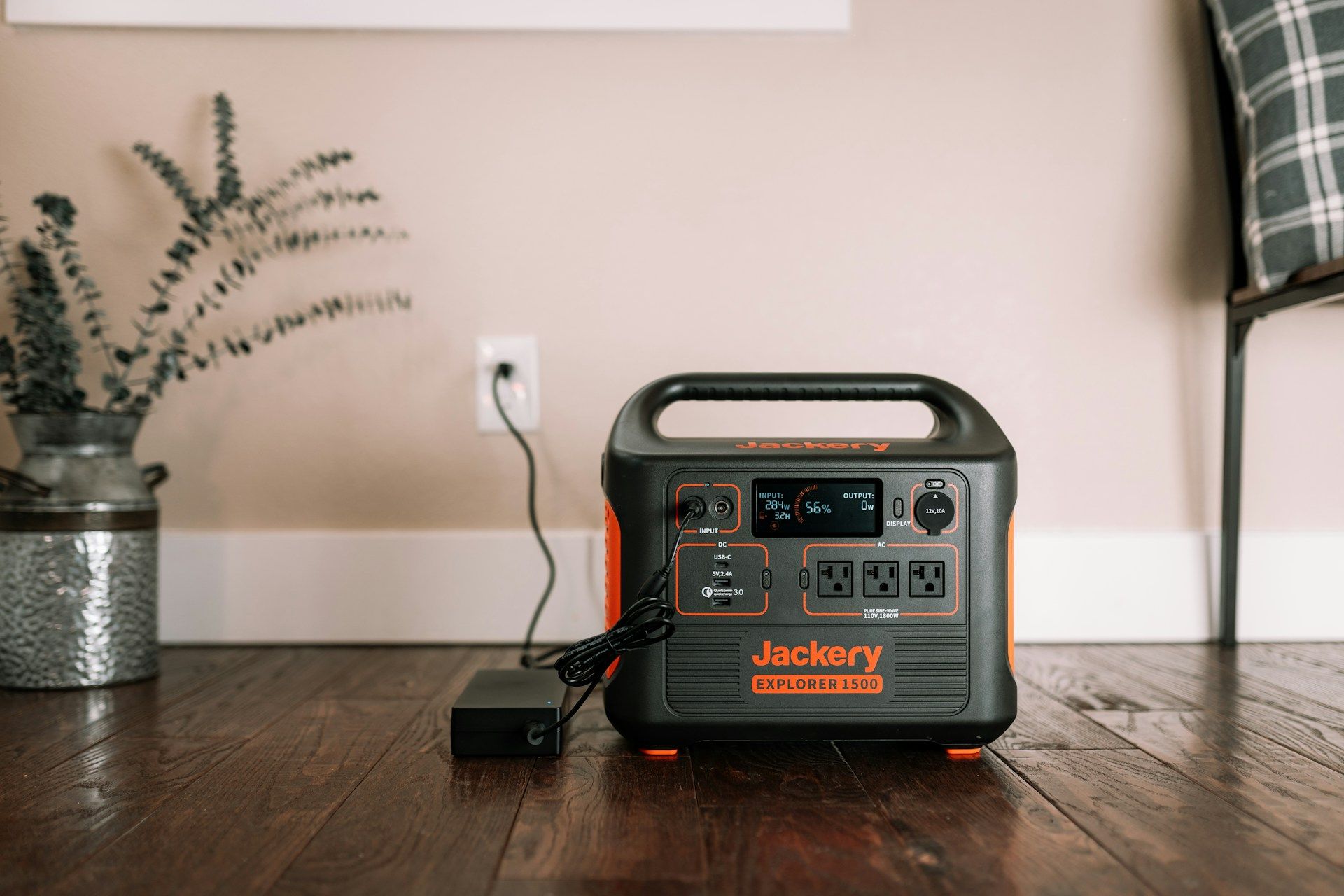
Portable power stations (self-contained units with a built-in battery, inverter, and charging ports) work well for phones, internet equipment, and short-term refrigerator backup, but don't connect to home wiring or provide automatic transfer.
They're best for essentials-only use. Limitations include short runtime on high-watt appliances, slow recharging, and no whole-home wiring support without a properly installed transfer switch.
So, if you’re looking for whole-home backup, a power station might not cut it (unless you stack multiple units).
Portable power station brands include:
- Jackery
- EcoFlow
- BLUETTI
- Goal Zero
Can you combine batteries and a generator?
Yes. Many homeowners install hybrid backup systems to cover the weaknesses of each side of the battery backup vs generator tradeoff.
In a hybrid setup:
- Batteries handle short outages silently with instant switchover
- Generators carry the home through long-duration outages
- Solar panels (if installed) recharge batteries during daylight
How to choose between a home battery or generator
To decide between a battery backup vs generator based on your needs, ask yourself:
- How long are outages in your area typically (hours, days, or a week+)?
- Do you need central AC, electric heat, or a well pump during outages?
- Do you want whole-home backup or critical-load backup?
- Do you have solar panels or plan to install them? (Solar significantly changes the battery runtime equation for extended outages.)
- Do you have access to natural gas or propane storage for a standby generator?
- Do you want a backup that can also reduce electricity bills?
- Are you comfortable with generator maintenance, periodic testing, and noise?
- What is your utility's net metering or time-of-use rate structure? (This affects whether daily battery use delivers real savings.)
Checking outage patterns on PowerOutage.us can help you evaluate risk. The platform tracks outages across states, counties, and individual utilities, giving homeowners a realistic view of restoration timelines—useful context for any battery backup vs generator decision.
Bottom line: Is a battery or a generator better?
Both are better for different situations. A generator handles long outages and heavy loads; a battery backup suits shorter outages, quiet operation, and solar pairing. Match your choice to the expected outage length and load size.