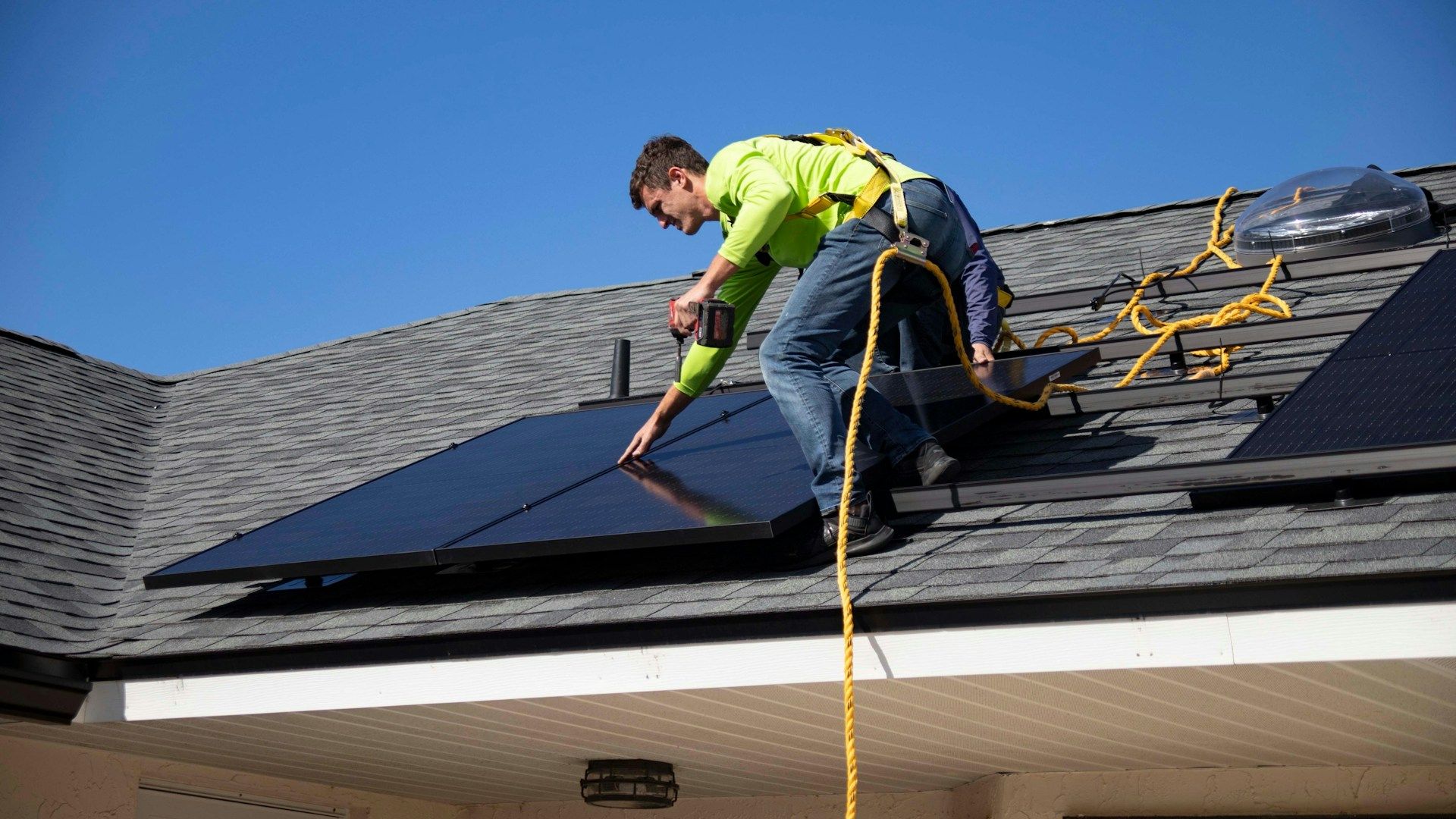

The U.S. government offered a federal solar tax credit that can helped reduce the cost of going solar, but it expired for homeowners at the end of 2025. We’ve created this brief guide to help you understand what this tax credit was and who still may benefit. Read on to see how the tax credit affects solar panel costs.
PowerOutage.us tracks outages from 950+ utilities serving more than 200 million customers. This nationwide coverage helps homeowners compare solar costs with real outage exposure and resilience needs.
What was the federal solar tax credit?
The federal solar tax credit—known officially as the Residential Clean Energy Credit (RCEC)—was an incentive provided by the U.S. government to offset some of the cost of investing in solar energy equipment. This program, run through the IRS, allowed homeowners to claim a portion of the solar panel cost to reduce income tax liability.
How much was the federal solar tax credit?
The RCEC allowed homeowners to claim 30% of the cost of a new solar energy system. However, this credit expired at the end of 2025. No residential solar expenditures after December 31, 2025 will qualify for the credit. This is according to the One Big Beautiful Bill Act, which was signed into law on July 4, 2025. Previously, the credit would have phased out and expired at the end of 2034.
Crucially, anything you spend on solar on January 1, 2026 or later isn't eligible. Solar installers often break up the cost over time (you might pay $1,000 at signing, 30% on permit approval, 30% on installation, and the rest after it passes inspection). So, you could pay more ahead of time to get a bigger tax credit if solar installation will extend through the new year.
What about partially-paid systems?
The particular wording of the bill excludes any "expenditures made" after 2025. The IRS later clarified that it considers expenditures "made when the original installation of the item is completed. If installation is completed after December 31, 2025, the expenditure will be treated as made after December 31, 2025, which will prevent the taxpayer from claiming the section 25D credit."
In other words, if you put a deposit down for a solar system in 2025 and complete the payment in 2026, the IRS considers that entire process an expenditure fully "made" in 2026. These do not qualify for the tax credit.
Similarly, if you took out a loan to pay for solar, the solar project must have been fully installed before 2026. You can claim the credit for your loan payments after that each year until the full credit is used up. So, say you installed a $30,000 system and qualified for $9,000 in tax credits. If you pay $2,500 per year toward the loan, you can claim $2,500 for three years and $1,500 in year four.
How does the federal solar tax credit work?
The RCEC, while it's still available, helps pay for solar equipment through a tax credit. Say you paid $30,000 for a new home solar system in 2025 and are entitled to a $9,000 credit. When you file your taxes for 2025, you can claim $9,000 to reduce the amount you owe.
If you owe less than $9,000 in this example, you can claim up to the amount you owe in taxes and roll over the remaining credit to next year. You can keep rolling over the unused portion of the credit. The new bill didn't change this carryforward provision.
The credit can also count toward a tax refund if you already paid taxes that year. Say you paid $9,000 through your employer throughout the year. You can receive a refund up to the credit amount in this case.
Legislation behind the residential clean energy credit
The FY2025 reconciliation law, P.L. 119-21, commonly called the One Big Beautiful Bill Act, ends the Residential Clean Energy Credit (RCEC) for expenditures made after December 31, 2025. The RCEC provided a 30% federal income tax credit for qualifying residential renewable energy systems. This applied to more than just solar panels and included geothermal heat pumps, solar water heaters, and small wind systems installed at a taxpayer’s home.
The credit is nonrefundable, meaning it can reduce a taxpayer’s federal income tax liability to zero but can't produce a refund beyond taxes owed. If the credit exceeds the taxpayer’s liability, the unused portion can be carried forward indefinitely and applied to future tax years until fully used.
The law created confusion around the phrase “expenditures made.” However, the timing rule already existed in Internal Revenue Code Section 25D(e)(8). Under this rule, an expenditure is treated as made when the original installation of the qualifying equipment is completed, not when a deposit or payment occurs. Therefore, systems completed after December 31, 2025 do not qualify, even if work or payments began earlier.
Importantly, P.L. 119-21 did not change the carryforward rules. Taxpayers who install qualifying systems before the end of 2025 may continue using unused credit amounts in future tax years until the credit is fully applied.
What are qualified installation costs?
Qualified installation costs are renewable-energy-related expenses that are eligible for federal tax credits under the RCEC. These include equipment and installation services for a variety of types of renewable energy and exclude expenses that may be related to but are not necessary for using the equipment.
Qualified installation costs (eligible for tax credit when paid before 2026)
The list of solar energy equipment and services that can be covered under the RCEC includes:
- Solar panels
- Solar energy support equipment (e.g. wiring, inverters, etc.)
- Mounting and installation hardware
- Energy storage systems (i.e. batteries with a capacity of 3kWh or more)
- Assembly and installation labor costs
- Permit fees
- Consulting fees
- Sales tax
Non-qualified costs (not eligible for tax credit)
You don’t get to claim every expense related to installing solar for the tax credit. Some examples include:
- Off-site energy storage
- Remote solar energy subscriptions
- Extended warranties or service contracts
- Roof repairs or replacements other than those necessary for solar panel installation
- Cosmetic repairs other than those necessitated by solar installation work
- Solar energy systems and installation for properties other than a primary or secondary residence such as rental properties
TL, DR: Based on IRS regulations, the RCEC only covered expenses directly related to the purchase and installation of solar panels and other renewable energy systems for a primary or secondary residence.
Eligibility: How does the IRS verify the solar credit?
If you completed a solar install before 2026, you can file IRS Form 5695 to claim the credit. The IRS doesn’t automatically require further documentation to verify eligibility when you or your tax preparer files your return. But we strongly recommend that you keep and file all receipts related to expenses you claim under the RCEC.
Who knows if you’ll be audited at some point in the future? You may need to provide documentation so the IRS can verify that the expenses you claimed are real, accurate, and eligible for the tax credit. The IRS can also request to see documentation in some cases.
Steps to claim the federal solar tax credit
Claiming a federal solar tax credit under the RCEC program is relatively simple. There are just a few steps you’ll need to follow to ensure you do it properly.
Determine whether your property is eligible. In order to be eligible for the RCEC, your home must meet the following criteria:
- Is a new or existing home
- Located in the United States
- Your primary or secondary residence
Find out if the equipment you want to install is eligible for tax credits. The list of eligible equipment includes:
- Solar electric panels
- Battery storage technology (capacity of 3 kWh or higher)
- Solar water heaters (certified by the Solar Rating Certification Corporation or a comparable entity)
- Wind turbines
- Geothermal heat pumps (complies with Energy Star requirements in effect at the time of purchase)
- Fuel cells
Purchase your equipment. Make sure to keep all receipts—including those for wiring, supplemental equipment, and hardware—in a place where you can easily find them if needed.
Have your equipment installed. Request a formal, itemized invoice from your contractor and keep a copy with your equipment receipts.
Claim your expenses on Form 5695 with your tax return. This is the form the IRS provides specifically for RCEC claims. Be sure to double-check your math before carrying the amount of your claim over to your primary tax form.
Income limit and tax liability factors
There’s no income limit for claiming the federal solar tax credit, or RCEC. Your eligibility depends on the type of solar equipment you purchase and whether it’s installed on a residential or business property—not your annual income. So, homeowners of any income level can claim the RCEC for qualifying solar panel systems and related equipment (fully installed before 2026).
The only way your income matters is when it comes to your federal tax liability. The RCEC works as a tax credit, which means it directly reduces the amount of federal income tax you owe to the IRS. If you owe taxes for the year—whether those are withheld from your paycheck or paid when you file—you can use the RCEC to lower your tax bill. If the credit is larger than what you owe, you can carry forward the unused portion to future tax years.
However, if you owe $0 in federal income tax—for example, if you’re retired and your only income comes from Social Security or tax-exempt investments—you won’t benefit from the RCEC. The credit isn’t refundable, so you can’t use it to get a payment back from the IRS if you don’t owe any taxes.
Other financial considerations
In addition to the federal tax credit, there are other financial incentives and cost factors to consider when going solar:
- Net metering: Many states offer net metering programs that let you earn energy bill credits for excess electricity your solar panels send to the grid. These credits can lower your monthly utility costs and shorten your solar payback period.
- Solar energy rebates: Some local governments, utilities, or state energy offices provide cash rebates for installing qualifying solar photovoltaic systems. These rebates can lower your upfront installation costs by hundreds or even thousands of dollars.
- Solar panel financing: Solar loans with good interest rates allow homeowners to install solar with little or no money down. However, we recommend avoiding loans with high rates, along with power purchase agreements and solar leases.
Bottom line: Only installs prior to 2026 qualify
The Residential Clean Energy Credit expired at the end of 2025. If you start or finish a solar panel installation in 2026, your expenditures won't qualify for the credit. However, homeowners who completed installs before 2026 can claim the credit to reduce taxes owed. The tax credit was a big reason many homeowners chose to go solar, but some states have other incentives that make it worthwhile. Consider all financial angles when deciding if solar is right for you or not.