

The best backup battery for a refrigerator provides a pure sine wave inverter and can cover the surge and wattage of your fridge for the length you need. We rank six LiFePO4 home battery power stations below by output, capacity, and switchover speed.
PowerOutage.us tracks 950+ utilities serving 94% of U.S. customers with real-time outage maps during blackouts. This data can help you make a decision on which type of battery makes sense for outage frequency and duration in your region. Read on to learn about the best fridge battery backups.
6 Best battery backups for refrigerators in 2026
Each unit below is matched to a specific refrigerator type and outage duration based on continuous AC output, LiFePO4 capacity, and uninterruptible power supply (UPS) switchover speed. Note that some offer true UPS switchover times under 15ms, which can keep computers running, while others are still fast enough to keep the refrigerator running with no problem.
1. EcoFlow DELTA Pro 3
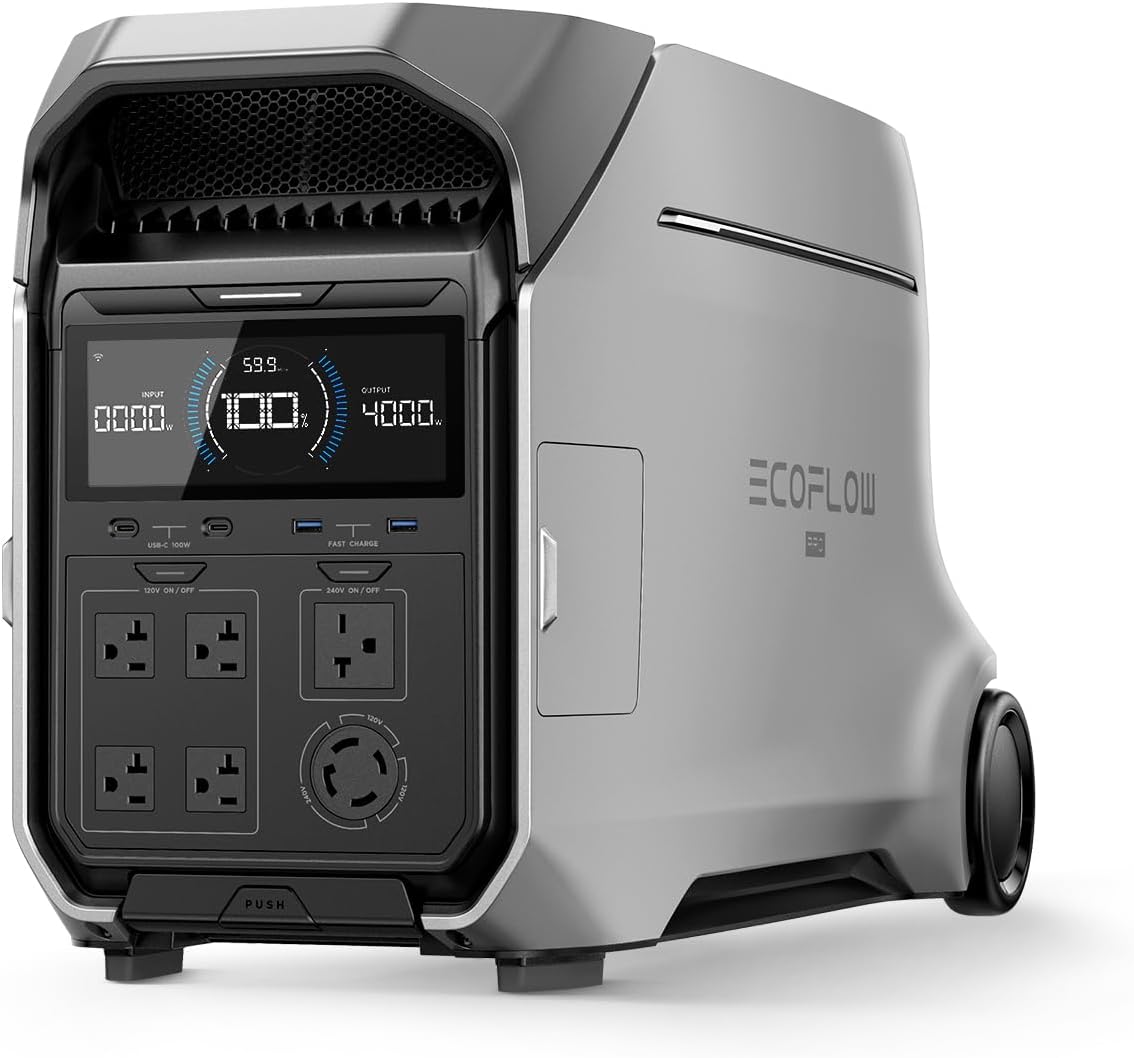
The EcoFlow DELTA Pro 3 is a 4,000W LiFePO4 portable power station built for extended refrigerator operation. Its high solar input supports sustained use after a storm clears. Expandable capacity via Smart Extra Battery modules makes it the top choice for multi-day grid failures.
What are the EcoFlow DELTA Pro 3's key features?
The EcoFlow DELTA Pro 3's specs reflect a portable power station engineered for multi-day refrigerator operation in hurricane-prone states where restoration timelines exceed 72 hours.
- Approximately 4,000Wh base capacity, expandable with Smart Extra Battery modules
- 4,000W continuous AC output handles compressor surge on any residential refrigerator, including large bottom-freezer models
- LiFePO4 battery chemistry rated for 3,000+ charge cycles to 80% capacity
- High solar input (up to 1,600W+) for post-storm recharging with a multi-panel array
- UPS mode with under 10ms switchover prevents compressor stall on grid cut
- Compatible with EcoFlow Smart Home Panel 2 for hardwired circuit integration
What are the pros and cons of the EcoFlow DELTA Pro 3?
The DELTA Pro 3 leads this roundup in output and expandability, but its weight and cost define clear boundaries for which households it serves best.
Pros
- 4,000W continuous output covers virtually every residential refrigerator type, including large French-door models
- Modular expansion allows capacity upgrades without replacing the base unit
- Fast AC input and solar recharging minimize downtime between outage cycles
- LiFePO4 chemistry maintains safe cell temperatures in warm garage or utility room environments
- The EcoFlow app provides remote monitoring during live outage events
Cons
- High upfront cost compared to mid-range portable power stations
- Base capacity requires expansion for 5 to 7-day scenarios without solar access
- Heavy at approximately 55 to 60 lbs; not suited for frequent relocation
2. Anker SOLIX F3800
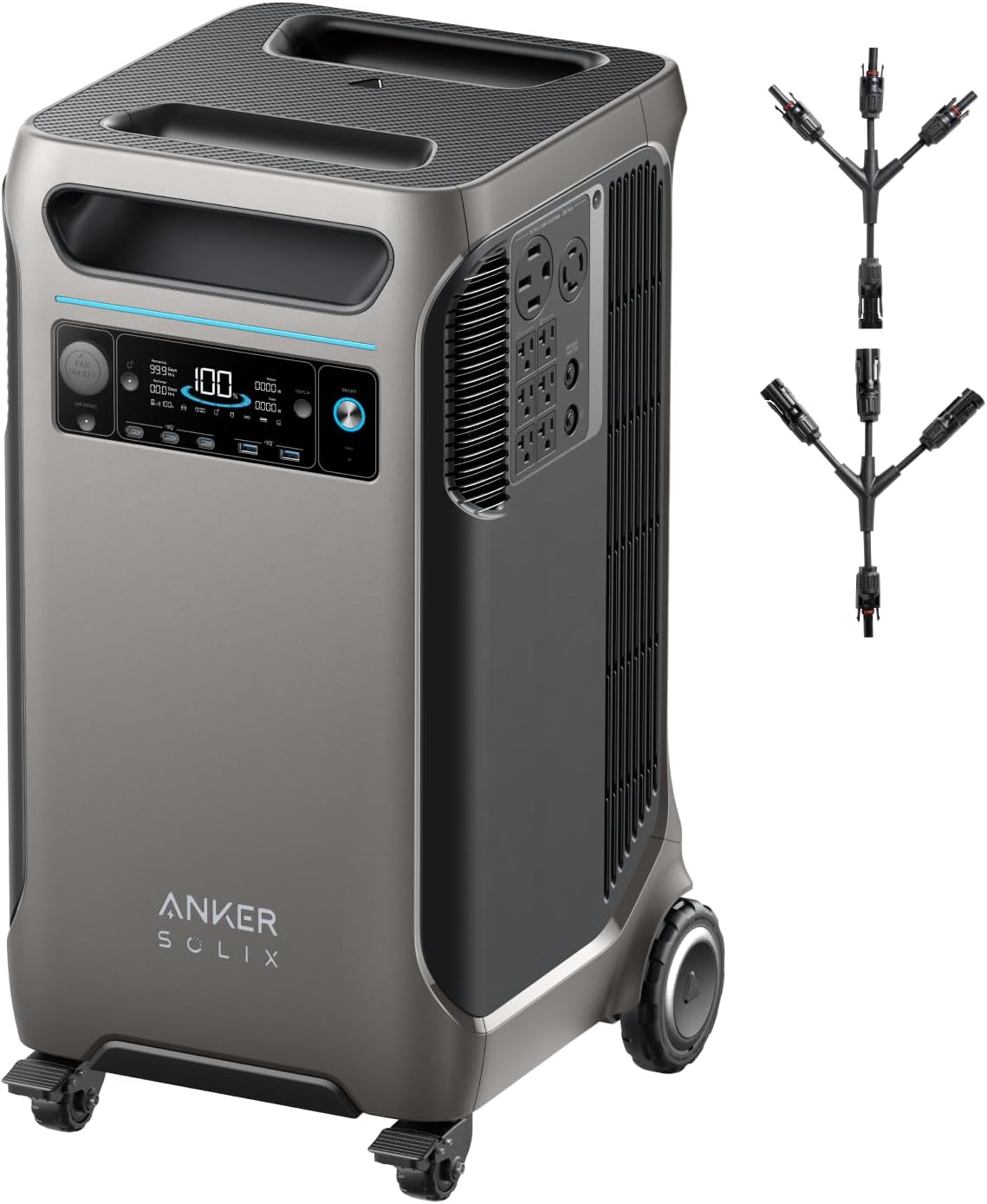
The Anker SOLIX F3800 packs 3,840Wh of LiFePO4 capacity with 3,840W continuous AC output rated for large side-by-side compressor loads. Its expandable battery system and 2,400W solar input make it practical for extended multi-day operation. It handles two major refrigeration appliances simultaneously.
What are the Anker SOLIX F3800's key features?
The Anker SOLIX F3800's specifications are built around parallel appliance operation, with output and solar input rated for running a side-by-side refrigerator and chest freezer simultaneously.
- 3,840Wh LiFePO4 base capacity, expandable with Anker BP2000 battery packs
- 3,840W continuous output handles a side-by-side refrigerator and chest freezer running at the same time
- Up to 2,400W solar input for recharging with a multi-panel array during post-storm daylight
- UPS mode with fast switchover protects compressor-based appliances from power interruption
- Dual-unit parallel operation available for expanded output and whole-home circuit coverage
- Compatible with Anker's home backup ecosystem, including solar panel arrays
What are the pros and cons of the Anker SOLIX F3800?
The SOLIX F3800 delivers the strongest multi-appliance capacity in the portable station category, but its footprint and price make it a better semi-permanent installation than a mobile backup for fridges.
Pros
- Strong capacity and output for running multiple refrigeration appliances in parallel
- BP2000 modular battery packs allow incremental capacity expansion
- 2,400W solar input is among the highest in the portable power station category
- LiFePO4 chemistry delivers long cycle life and thermal stability in permanent installation environments
Cons
- Large physical footprint; not designed for frequent repositioning
- High price point sits closer to home energy storage systems than portable stations
- Parallel setup for expanded output requires a second unit, which adds cost
3. BLUETTI EP900 + B500 Home Battery Backup
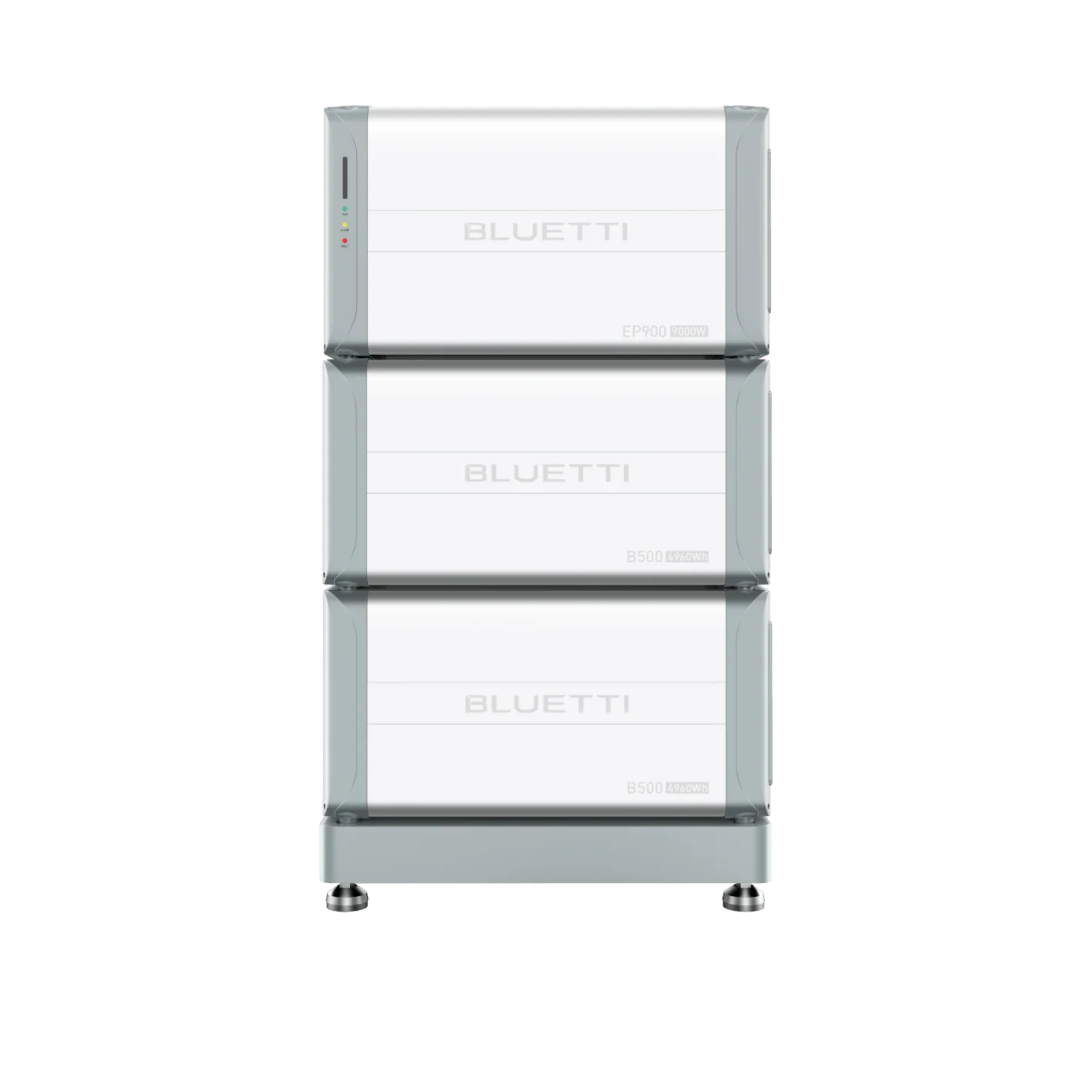
The BLUETTI EP900 + B500 pairs a wall-mounted EP900 inverter (7,600W) with two B500 LiFePO4 battery modules totaling 9,920Wh of base capacity. Its 120V/240V split-phase output powers a refrigerator and electric range simultaneously. IP65 weatherproofing supports permanent outdoor installation.
What are the BLUETTI EP900 + B500's key features?
The BLUETTI EP900 + B500's specs place it in the home energy storage system category rather than the portable power station category, with split-phase output and outdoor-rated hardware that distinguishes it from every other unit in this roundup.
- 9,920Wh base capacity (2x B500 at 4,960Wh each), expandable to 19.8kWh with additional B500 units
- 7,600W continuous AC output with 120V/240V split-phase support for large appliances
- Under 20ms UPS switchover time protects refrigerator compressors and sensitive medical equipment
- Up to 9,000W solar input supports full off-grid operation and rapid daytime recharging
- IP65-rated enclosure for garage, exterior wall, or carport installation
- The BLUETTI app provides real-time monitoring and remote control during active outages
What are the pros and cons of the BLUETTI EP900 + B500?
The EP900 + B500 BLUETTI battery covers the widest range of loads and the longest outage durations in this roundup, but its installation requirements and cost eliminate it as an option for renters or households with limited grid failure risk. (Costs as much as a Tesla Powerwall)
Pros
- Highest capacity and output in this roundup by a significant margin
- True 240V split-phase output covers whole-home loads beyond refrigerators and freezers
- IP65 weatherproofing enables permanent outdoor mounting without enclosure modifications
- Under 20ms switchover is the fastest in this roundup for critical appliance protection
- Expandable to 19.8kWh for estates, large homes, or multi-day off-grid scenarios
Cons
- Highest cost of any system in this roundup; comparable to a Tesla Powerwall 2 installation
- Requires professional installation and likely a permit for hardwired circuit integration
- Overkill for households that only need refrigerator protection during short outages
4. EcoFlow DELTA 2 Max
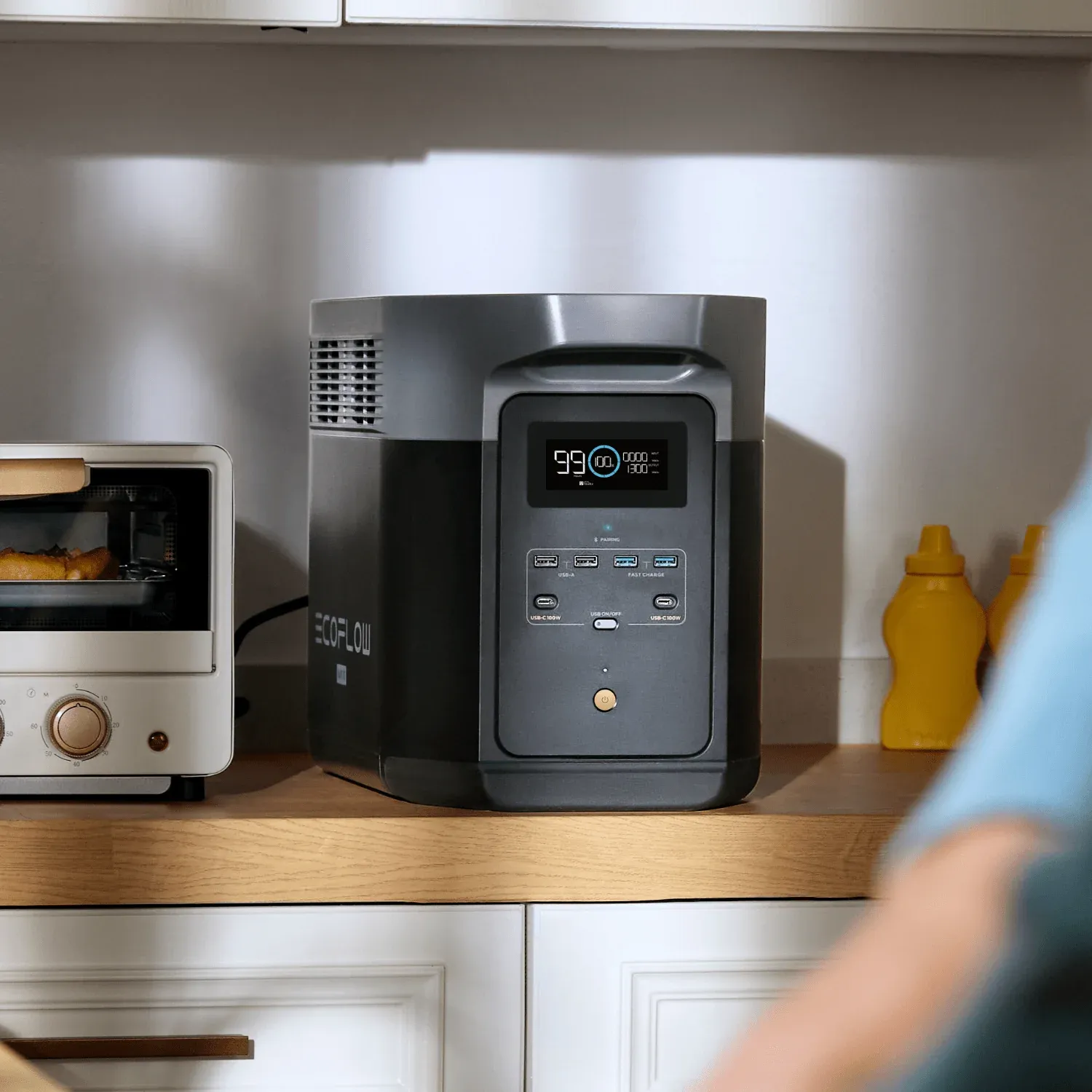
The EcoFlow DELTA 2 Max holds 2,048Wh of LiFePO4 capacity in approximately 47 lbs with a 2,400W continuous AC output. That output handles any top-freezer refrigerator and most compact bottom-freezer refrigerators. An optional DELTA 2 Max Extra Battery doubles capacity when needed.
What are the EcoFlow DELTA 2 Max's key features?
The EcoFlow DELTA 2 Max's specifications prioritize low weight and fast recharging, making it the most practical option for apartment-dwellers protecting a top-freezer refrigerator or compact bottom-freezer refrigerator during short outages.
- 2,048Wh LiFePO4 base capacity, expandable with DELTA 2 Max Extra Battery (adds 2,048Wh)
- 2,400W continuous AC output covers compressor startup surge on top-freezer refrigerators
- Up to 1,000W solar input for assisted recharging during post-storm daylight periods
- Under 30ms UPS switchover time for seamless compressor protection
- Dual AC input charging reaches 80% in approximately 50 minutes
- Compact enough to store under a kitchen counter or in a closet between uses
What are the pros and cons of the EcoFlow DELTA 2 Max?
The DELTA 2 Max EcoFlow Battery balances portability and output more effectively than any other unit in this roundup for top-freezer refrigerator protection, though its base capacity limits performance for larger refrigerator types.
Pros
- Lightest LiFePO4 unit in this roundup at approximately 47 lbs
- 2,400W output handles all top-freezer and most compact refrigerator models without issue
- Fast AC charging minimizes downtime after grid restoration
- Expandable capacity via a single extra battery module for longer outage preparation
Cons
- 2,048Wh base capacity falls short for French-door refrigerators during 72+ hour outages without expansion
- 2,400W output cannot simultaneously run a top-freezer refrigerator and a window air conditioner
- The missing 240V output limits its use to single 120V appliance loads
5. Jackery Explorer 2000 Plus
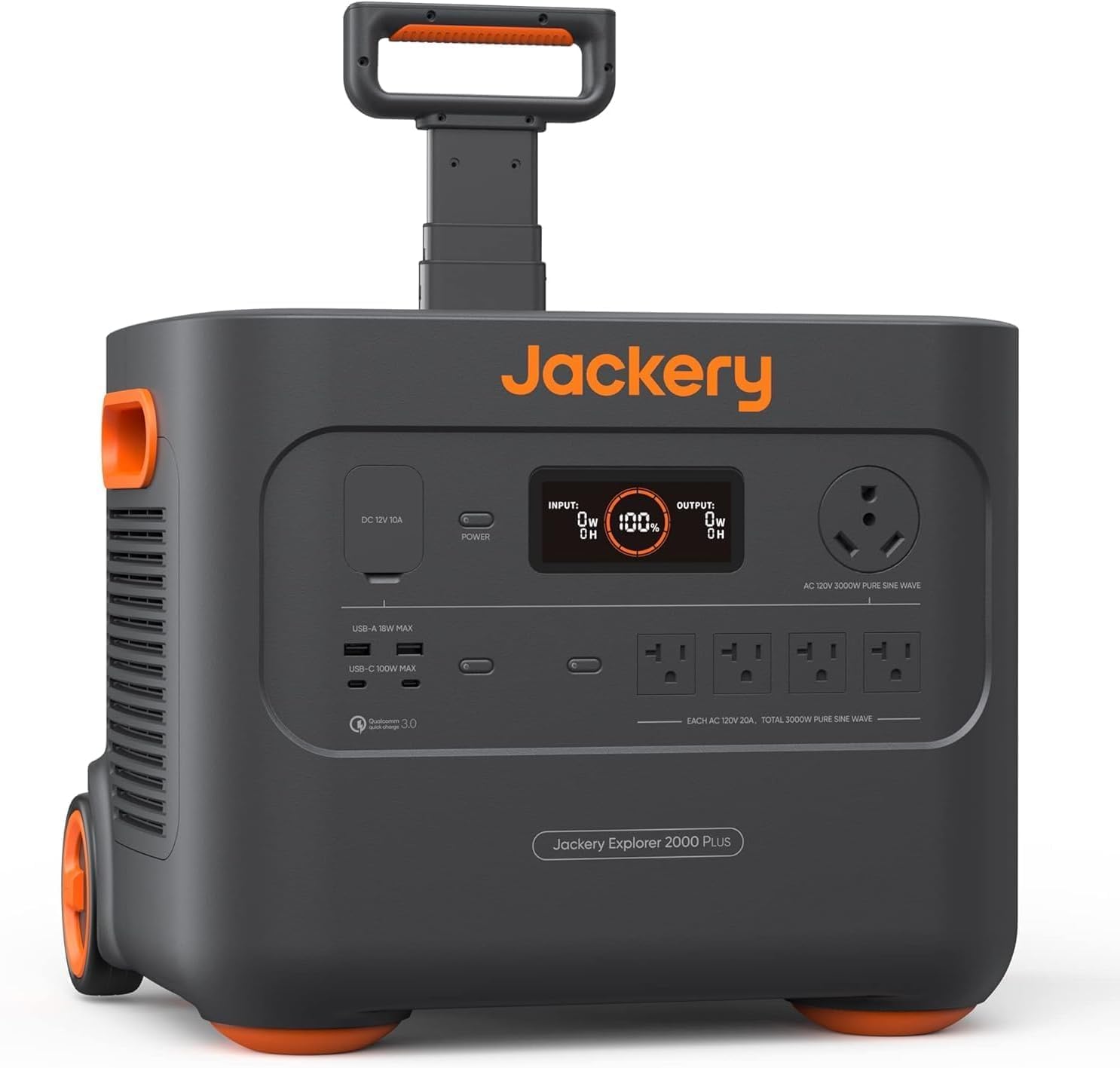
The Jackery Explorer 2000 Plus offers 2,042Wh of LiFePO4 capacity with 3,000W continuous output and a modular expansion system. Battery Pack 2000 Plus add-ons let you grow capacity incrementally. Strong output at a competitive price makes it the top value pick for short outages.
What are the Jackery Explorer 2000 Plus's key features?
The Jackery Explorer 2000 Plus's specifications highlight a strong output-to-price ratio and a modular expansion system that makes it the most cost-accessible entry point for refrigerator backup in this roundup.
- 2,042Wh LiFePO4 base capacity, expandable with Battery Pack 2000 Plus modules (up to roughly 12kWh total)
- 3,000W continuous AC output with high surge tolerance for compressor startup loads
- LiFePO4 chemistry rated for 4,000+ charge cycles to 80% capacity
- Up to 1,400W solar input via Jackery SolarSaga panels for assisted recharging
- Jackery app with outlet timer controls and monitoring during outage events
- Modular expansion means you can add capacity in future years without replacing the base unit
What are the pros and cons of the Jackery Explorer 2000 Plus?
The Explorer 2000 Plus delivers the best value per watt as a battery to run a fridge for short outages, but its base capacity requires an expansion battery investment to match the runtime of larger units during extended grid failures.
Pros
- 3,000W continuous output handles virtually all top-freezer and compact French-door refrigerator models
- Modular battery pack system spreads upfront cost across multiple purchases
- Competitive price-to-capacity ratio compared to other 2,000Wh class portable power stations
- Established brand with accessible customer service and a strong user community
Cons
- Base 2,042Wh capacity is tight for 48+ hour outages without an expansion battery
- Heavier than the EcoFlow DELTA 2 Max at approximately 61 lbs
- UPS pass-through may not function in all configurations; confirm switchover time with specific firmware version before relying on it for sensitive older refrigerators
6. Goal Zero Yeti 3000X
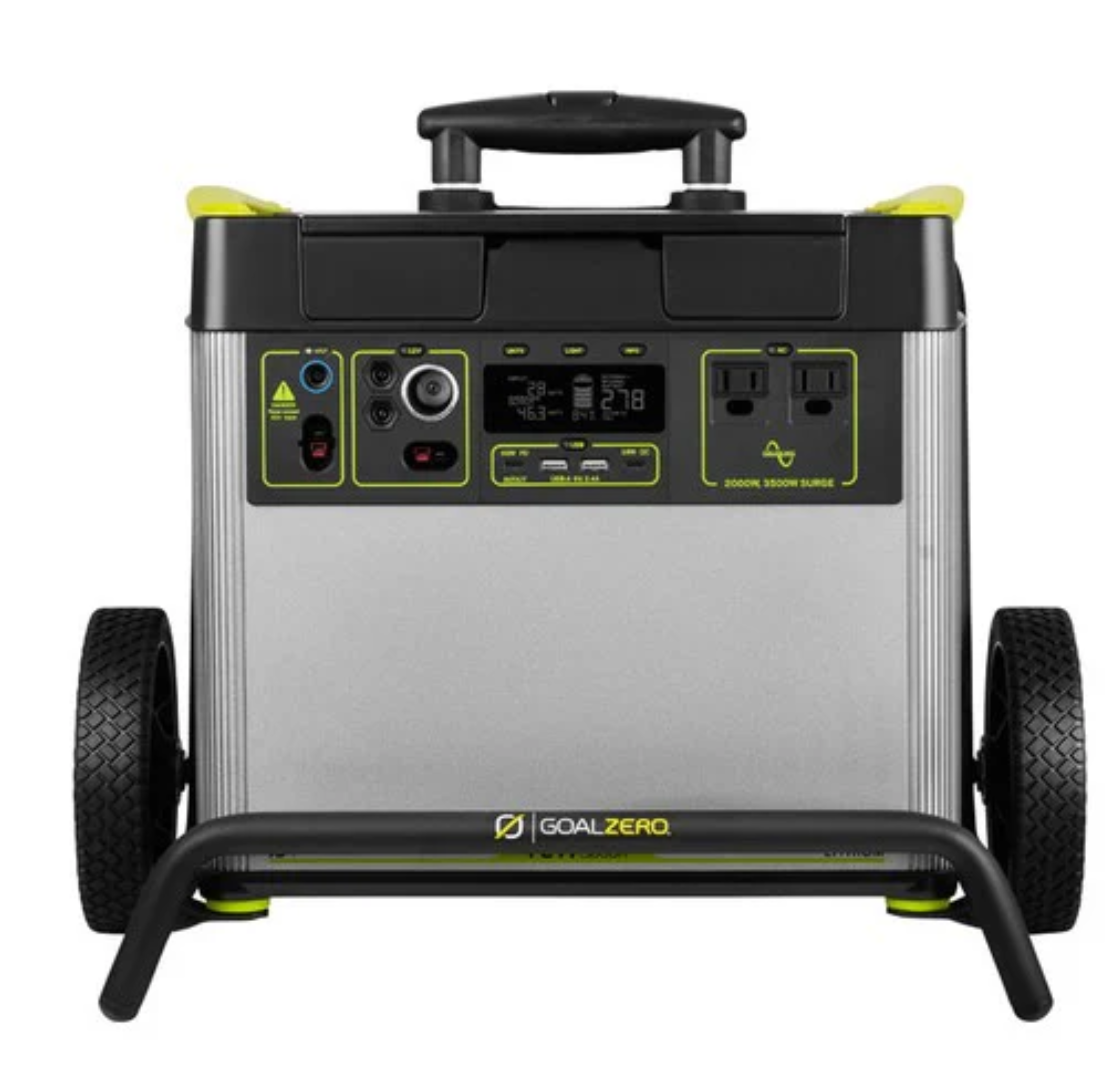
The Goal Zero Yeti 3000X stores 2,982Wh in an NMC lithium-ion battery with 2,000W continuous output and a 3,500W surge rating. It integrates with Goal Zero's Boulder and Nomad solar panel lineup for a complete solar recharge ecosystem. NMC chemistry limits cycle life compared to LiFePO4 alternatives at the same price range.
What are the Goal Zero Yeti 3000X's key features?
The Goal Zero Yeti 3000X's specifications reflect a solar-first design philosophy, with an MPPT charge controller and broad solar panel compatibility as its primary differentiators from the LiFePO4 alternatives in this roundup.
- 2,982Wh NMC lithium-ion capacity
- 2,000W continuous AC output and 3,500W surge cover top-freezer and most French-door refrigerator models
- Up to 600W solar input via Goal Zero Link Multi-Port module and Goal Zero Boulder or Nomad panels
- MPPT charge controller for efficient solar panel power conversion
- Wi-Fi and Bluetooth monitoring via the Goal Zero app
- Expandable with Goal Zero Tank PRO 4000 for additional stored capacity
What are the pros and cons of the Goal Zero Yeti 3000X?
The Yeti 3000X benefits from one of the most mature solar recharging ecosystems in this category, but its NMC lithium-ion chemistry and limited solar input define meaningful long-term tradeoffs versus LiFePO4 alternatives.
Pros
- Mature solar panel ecosystem with well-documented compatibility across Goal Zero Boulder 200 and Nomad 400 panels
- 2,982Wh covers most top-freezer refrigerators for 2+ days at average draw
- 3,500W surge rating handles compressor startup reliably across all standard top-freezer models
- Strong third-party accessories and a broad user support community
Cons
- NMC lithium-ion chemistry has lower thermal stability than LiFePO4 alternatives at comparable price points
- 600W maximum solar input is the lowest in this roundup, limiting recharge speed during extended outages
- 2,000W continuous output cannot run a large side-by-side refrigerator alongside other loads
- Heaviest portable unit in this roundup at approximately 70 lbs
How do you find the right fridge battery backup?
Choosing the wrong unit means under-buying (running out of capacity mid-outage) or over-buying (paying for whole-home battery storage cost when only refrigerator protection is needed). Know your wattage and necessary runtime to pick the right option.
How many watts does your refrigerator draw?
To find your specific refrigerator's average draw, divide the total annual kWh listed on your refrigerator’s yellow EnergyGuide label by 8.76.
The wattage label on a refrigerator door jamb is the compressor's startup surge, not its average operating draw. A 150W-rated top-freezer refrigerator draws 35 to 55W on average because the compressor cycles on and off throughout the day.
Approximate watt ranges by refrigerator type:
- Top-freezer refrigerators (14 to 20 cu ft): 100 to 150W peak, 35 to 55W average
- Bottom-freezer refrigerators (18 to 22 cu ft): 150 to 200W peak, 55 to 75W average
- French-door refrigerators (22 to 28 cu ft): 150 to 250W peak, 60 to 90W average
- Side-by-side refrigerators (20 to 26 cu ft): 200 to 400W peak, 80 to 130W average
- Mini fridges (1.7 to 4.5 cu ft): 50 to 100W peak, 15 to 35W average
The surge figure determines which inverter output rating you need. The average draw determines how long the battery will last.
How long will a battery backup actually run your refrigerator?
Runtime depends on three variables: battery capacity, average refrigerator draw, and inverter efficiency.
Runtime formula: Battery capacity (Wh) x inverter efficiency (typically 0.85) / average refrigerator draw (W)
Applying that formula with a modern top-freezer refrigerator drawing 45W on average:
- 2,000Wh portable power station: approximately 37 hours
- 3,000Wh portable power station: approximately 56 hours
- 4,000Wh portable power station: approximately 75 hours
- 9,920Wh home energy storage system (like BLUETTI EP900 + B500): approximately 187 hours
A French-door refrigerator drawing 80W on average cuts those figures by roughly 44%.
Does LiFePO4 vs NMC battery chemistry last longer in a home backup role?
LiFePO4 (lithium iron phosphate) and NMC (nickel manganese cobalt) are the two lithium battery chemistries used in backup power stations for refrigerators. They differ in three ways: temperature tolerance, cycle lifespan, and energy density.
LiFePO4 cells tolerate higher ambient temperatures without entering thermal runaway, making them safer in garages and utility rooms. They support 3,000 to 6,000+ charge cycles before reaching 80% capacity, versus 500 to 1,000 cycles for most NMC cells.
NMC batteries offer higher energy density per kilogram, which is why older Goal Zero units and early-generation portable power stations use them. The cycle life difference makes LiFePO4 the better chemistry for a unit expected to discharge and recharge dozens of times per year.
What is UPS switchover speed, and why does it matter for refrigerator compressors?
A UPS (uninterruptible power supply) switchover is the time a battery backup takes to transition from pass-through grid power to battery output when the grid drops. Most refrigerator compressors tolerate switchover times under 30ms without stalling.
These often include a short-cycle protection feature that delays restart by a few minutes to balance pressure in the cooling system. Older units with weaker start capacitors may trip on disruptions above 20ms.
Switchover thresholds by compressor age:
- Under 20ms: protects virtually all compressor-based refrigerators, including units older than 10 years
- 20 to 30ms: safe for most Energy Star refrigerators produced after 2015
- Over 30ms: may trigger compressor restart errors in pre-2010 refrigerators with degraded start capacitors
If the refrigerator is more than 10 years old, prioritize units rated under 20ms. The EcoFlow Delta Pro 3 and BLUETTI EP900 + B500 are both rated under 20ms.
Does solar input make sense as a recharge strategy during multi-day outages?
Battery backups are effective without solar panels, but tying in solar can keep them going longer. However, solar recharging is practical only after the storm has passed and sunlight is available. During an active hurricane or a sustained ice storm, cloud cover reduces a 400W solar panel array to 40 to 80W of actual output. That is insufficient to meaningfully recharge a 3,000Wh battery within a useful window.
One more thing to note is that permanent solar systems usually shut off during an outage unless you have islanding capabilities to keep producing off-grid. You can use portable arrays with portable battery units, on the other hand.
Plan for solar as a day 3+ recharge strategy, not a first-day solution. Size solar input to at least 400W of panel capacity per 2,000Wh of battery to make post-storm recharging practical. The EcoFlow DELTA Pro 3 and Anker SOLIX F3800 both accept 1,600W+ of solar input, meaning a four-panel solar power bank array can restore most of the battery within 3 to 4 hours of direct sunlight.
Does running a refrigerator off a portable power station damage the compressor?
Running a refrigerator off a pure sine wave inverter produces the same AC output waveform that the grid delivers. All six portable power stations and home energy storage systems in this roundup produce pure sine wave output, which is safe for compressor-based refrigerators.
Modified sine wave inverters found in cheaper backup devices can cause compressor overheating and premature motor failure.
Do power outages actually last long enough to spoil food?
The 4-hour food safety window sounds like a generous buffer, but that’s not long in real life, as our data on events like Hurricane Helene shows.
During Hurricane Helene in September 2024, western North Carolina mountain counties went 14 days without power. South Carolina averaged 53 hours per affected customer across the event, the worst average restoration time in the nation per EIA data.
Hurricane Milton, the following month, left 3.4 million Florida customers without power, with many experiencing cycling grid failures: brief restoration windows of 30 minutes followed by repeat outages. Winter Storm Fern in January 2026 cut power to over 1 million customers across Tennessee, Mississippi, and Louisiana, with Nashville-area households going 6 days without grid power.
Across the events tracked by PowerOutage.us, multi-day outages affecting hundreds of thousands of customers are not rare outliers. They are the pattern in major hurricane seasons and during significant winter ice storms.
Quick recap
The right refrigerator backup battery matches the compressor surge wattage and expected outage duration. The EcoFlow DELTA Pro 3 covers most hurricane-zone scenarios. The BLUETTI EP900 + B500 handles whole-home 240V loads. For apartment top-freezer models, the EcoFlow DELTA 2 Max or Jackery Explorer 2000 Plus are the most practical options.