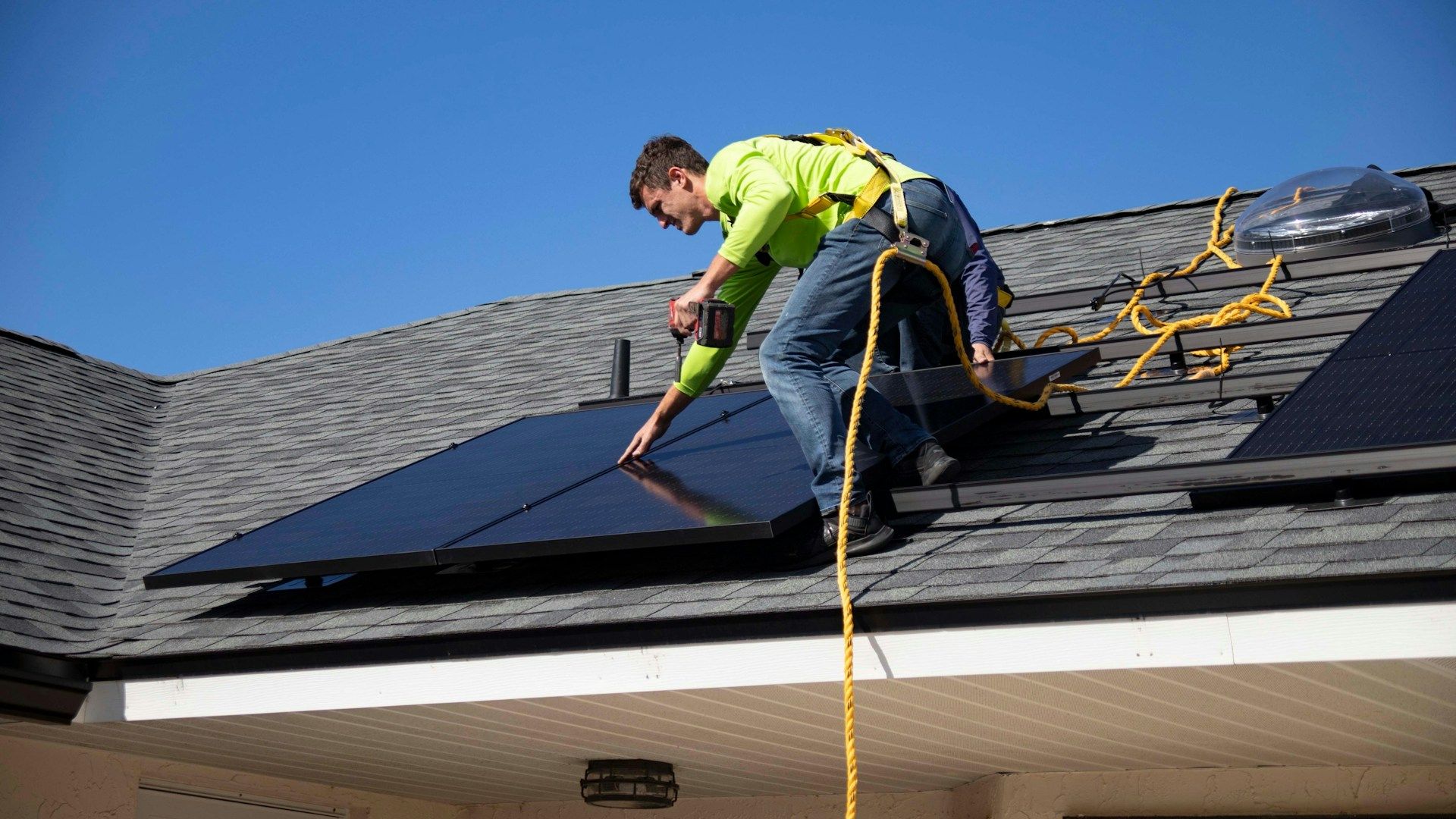

The best roofs for solar panels are strong, durable, and properly tilted to maximize the amount of sunlight the panels capture. Flat roofs present certain challenges for installing solar panel systems. However, these can be overcome, and in this guide, we’ll explain how to mount solar panels on flat roofs and the key factors to consider.
PowerOutage.us leverages historical monitoring of 950+ utilities to help solar planners identify regional grid vulnerabilities. During 2026’s Winter Storm Fern, for example, we tracked over 1 million outages, showing that localized data is essential for sizing resilient backup systems.
Installing solar panels on a flat roof with proper tilt
For a successful solar panel installation on a flat roof, the panels must be angled. This tilt allows them to capture maximum sunlight and helps rain and wind clear away dust and debris that could otherwise accumulate on a flat surface and reduce output.
Ideally, solar panels should face south and be tilted between 10° and 30°, depending on your geographical latitude. If you are installing a solar panel system on a flat roof, you will need to use engineered tilt racks to position your panels at the correct angle and orientation for peak energy generation.
In the table below, you’ll see explanations of the key factors you need to be familiar with before installing solar panels on a flat roof.
| Factor | Why it matters for a flat roof installation | What to watch for |
|---|---|---|
| Mounting type | Panels require tilt frames for optimal sun exposure. | A ballasted or mechanically attached racking system is necessary. |
| Roof load capacity | The combined weight of panels and racking adds a significant load. | A structural engineer must confirm the roof can support the array's weight. |
| Drainage & water flow | Elevated mounts must not obstruct water drainage. | An improper layout can cause water pooling and lead to leaks. |
| Roof material | The material affects mounting methods and weatherproofing. | Membrane roofs need specialized handling to prevent punctures during install. |
| Panel tilt angle | The tilt is essential for efficiency and proper drainage. | A 10°–15° angle is typical; the layout must prevent panels from shading each other. |
| Wind resistance | Flat roofs experience greater wind uplift forces. | Ask your installer about wind-rated racking designed for flat roof solar arrays. |
| Maintenance access | The array must allow safe access to the roof surface. | Leave clear pathways for servicing HVAC units or repairing the roof. |
| Installation cost | Tilted racks and ballasted systems add to the project cost. | A flat roof solar install may cost 10–15% more than a standard sloped roof install. |
| Aesthetics | The array is less visible from ground level. | This is a great benefit for properties with aesthetic rules or HOA covenants. |
| Permitting & fire codes | Flat roofs have specific setback and access requirements. | Check local building codes for required spacing and firefighter access zones. |
Choose ballast or mechanical mounts
You can choose from three different mounting systems when installing solar panels on flat roofs. These systems are:
- Ballasted Mounts: This is the most common method for flat roof solar panel installations. The system employs concrete blocks to anchor the solar array with weight, which prevents the need to drill into your roof and cause potential roof damage. This method protects the roof from potential leaks and preserves the roofing membrane.
- Mechanical Mounts: This system fastens the racking directly to the roof's structural joists. A mechanically attached system is specified for buildings in high-wind regions or where the roof cannot support the extra weight of a ballasted system.
- Hybrid Systems: A hybrid system combines both ballasted weights and mechanical attachments. This approach delivers added security and customizes the installation to the specific wind and structural loads of the building.
Does solar cost more for a flat roof?
The short answer is yes, typically by 10% to 15%. While you save money on safety equipment (since installers aren't balancing on a slope), those savings are usually offset by the specialized hardware required for flat surfaces.
The price premium is driven by two main factors:
- Hardware and weight: Since the roof lacks a natural slope, you must pay for specialized tilting racks to angle the panels toward the sun. Additionally, using heavy concrete ballasts to secure the system without drilling holes adds both material and labor costs.
- Engineering and layout: Flat roofs require more precise spacing to prevent one row of panels from casting a shadow on the row behind it. This "shading analysis" often leads to a more complex design phase compared to a standard pitched roof.
That said, since you aren't limited by the direction your house faces, you can orient flat-roof panels for maximum sun exposure, which can lead to higher energy yields and a faster return on investment.
Evaluate drainage and space layout
Some of the most important considerations when installing solar panels on a flat roof are drainage and the physical space layout.
The equipment you need may have a large footprint, so you’ll need to build in strategic lanes that keep the panels accessible for maintenance and repairs and provide drainage pathways. There must be adequate space between panel rows to prevent panels from shading one another, which would reduce your system's energy production. The layout must also provide clear access to HVAC systems, vents, and other rooftop equipment.
Confirm structural loading capacity
As with shingle or metal roofs, you must confirm the structural load capacity before installing a solar system.
Solar panels are heavy, and a ballasted mount adds significant weight from the concrete blocks. Before the installation begins, your solar company must work with a structural engineer to inspect the roof and verify its weight-bearing limits.
The inspection should also identify areas where water currently pools and check for any deterioration on membrane roofs. During installation, the solar array should be placed away from the roof's edges to properly distribute weight and account for wind forces.
Bottom line: Flat roofs work well with tilted solar racks
Though they require extra steps and equipment, ultimately, flat roofs work very well for solar panel systems. The titling racks and ballast equipment enable efficient, non-invasive solar installations that help you avoid preventable roof damage. Before installing your panels, conduct a thorough inspection of the roof to verify there are no structural or drainage issues.
Going solar isn’t for everyone, however, and a flat roof may pose more issues than benefits. Be sure to thoroughly consider all factors before making your decision.