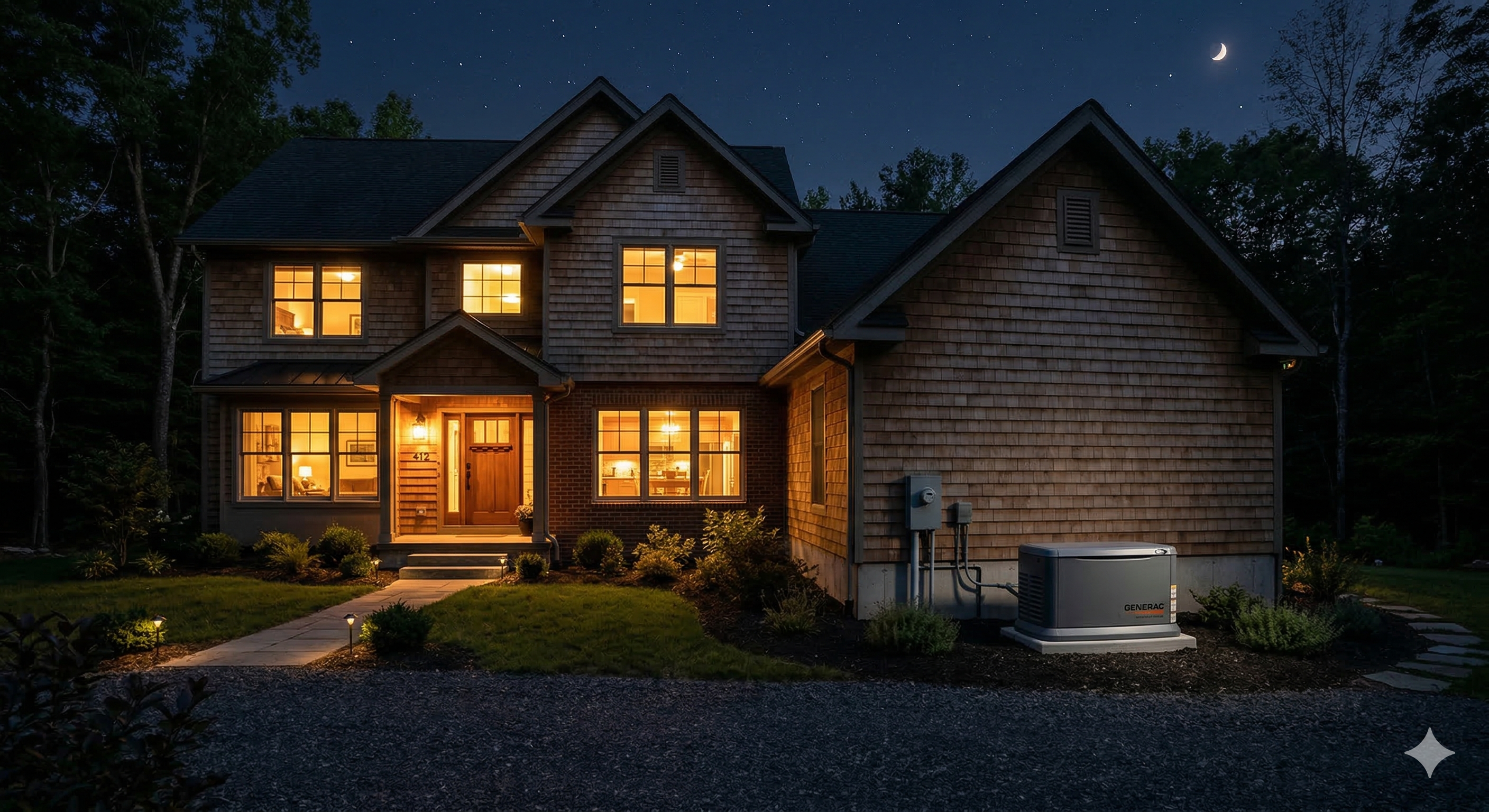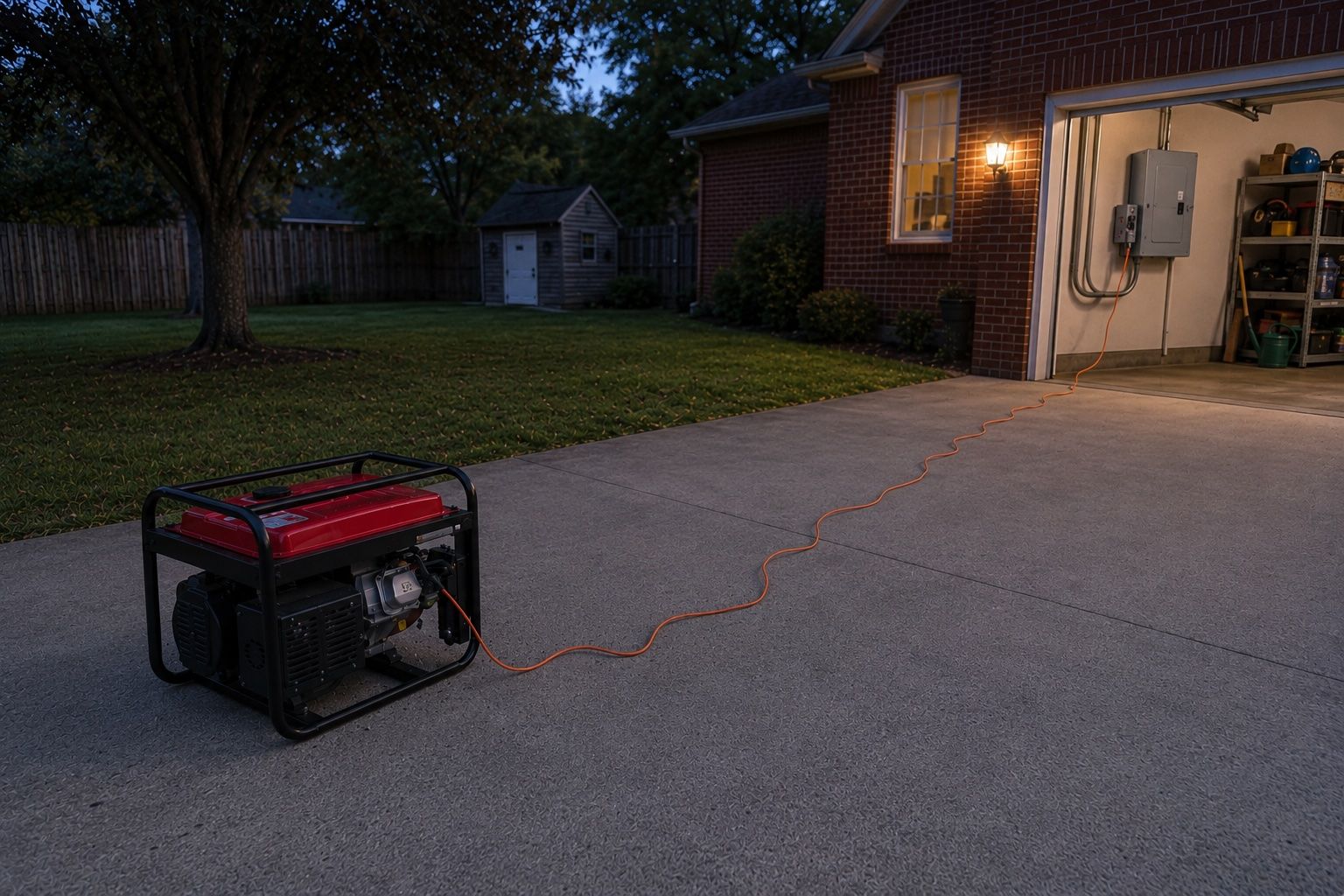


Generator noise can be a real annoyance for homeowners and their neighbors, especially after several days or more of constant use during an extended power outage. However, modern generators can provide backup energy without creating so much noise.
In this guide, we share our list of the five best quiet generator options. We go over the most important details of each model on our list and provide a quick lesson on how quiet generators work. You’ll also find a guide to costs and what to look for in a new whole-home generator or portable generator that won’t disturb the peace while it’s running.
PowerOutage.us tracks outage events across 950+ utilities covering 96% of U.S. customers, with data going back to 2016 across every major weather event and grid failure. Noise output matters most in dense neighborhoods where outages frequent, which varies significantly by region.
5 Top quiet generator options
In this section, we cover our top five picks this year for the best quiet home generators. We provide a summary view of the main features and highlights of each model in the table below, and a more detailed look after.
We chose the quiet generator list based on a combination of customer ratings, price, and features. Noise ratings reflect manufacturer specifications measured at a quarter load and about seven meters (23 ft). Only generators with an average operating noise of 60 dB or less were eligible for the list.
| Generator | Average operating noise (dB) | Fuel type | Average running power | Average retail price | Highlights |
|---|---|---|---|---|---|
| Honda EU2200i | 48 to 57 dB | Gasoline | 1,800W | $1,000 | Extremely quiet, fuel-efficient, reliable, parallel capable |
| Pulsar 2200 Dual-Fuel | 59 to 60 dB | Gasoline/propane | 1,700W | $815 | Dual-fuel, compact, inverter clean power, versatile |
| Westinghouse iGen4500 | 52 to 55 dB | Gasoline | 3,700W | $995 | High power, long runtime, remote/electric start |
| Cummins Onan P4500iDF | 52 dB | Gasoline/propane | 3,500W | $1,570 | Dual-fuel, quiet, remote start, LED monitor, support |
| Honda EU3000iS | 50 to 57 dB | Gasoline | 2,800 W running/3,000W max | $1,999 | Quiet, inverter-grade power, electric start, excellent for home backup or RV use |
*Prices are approximate as of 2025 and may vary by retailer or configuration.
1: Honda EU2200i
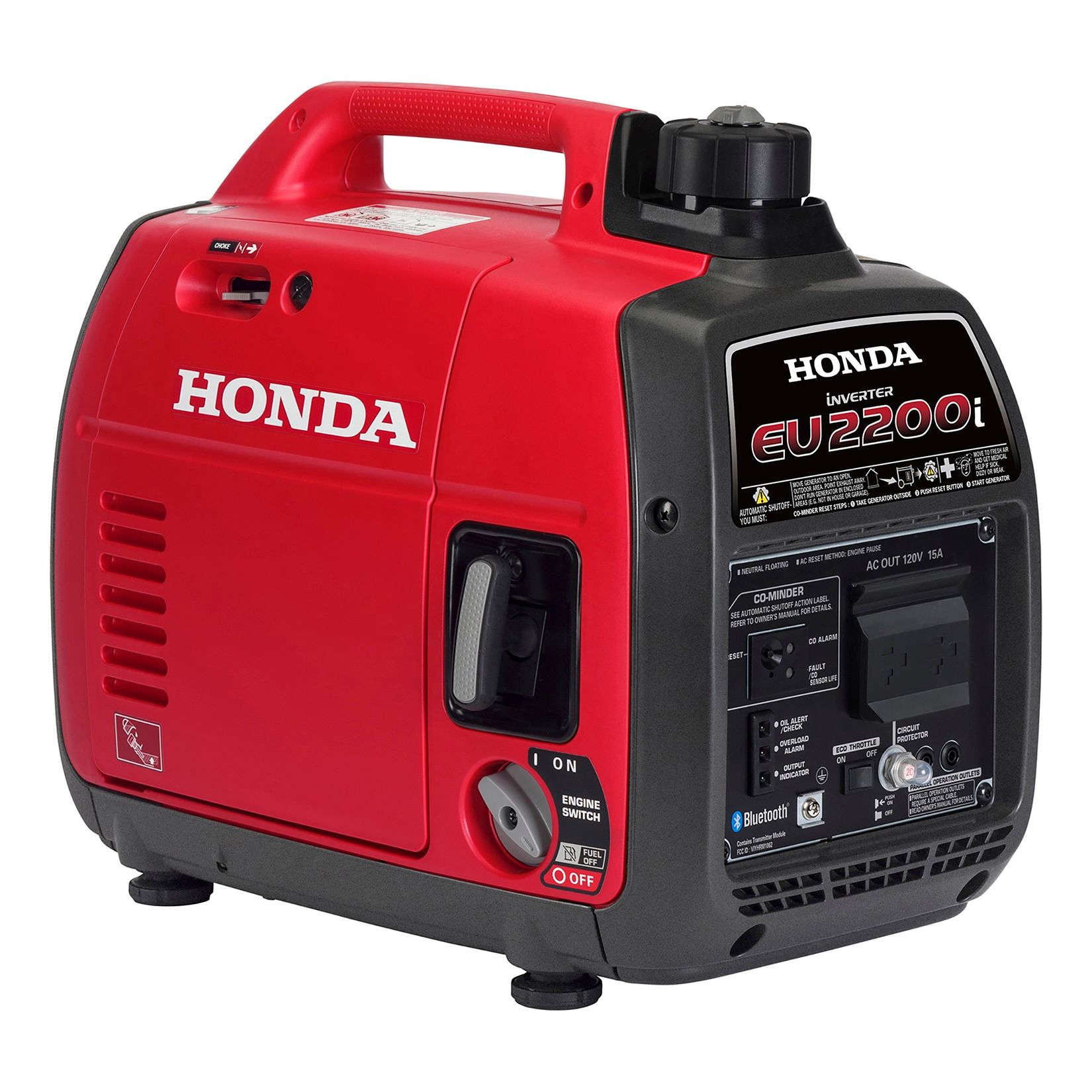
Honda’s EU2200i gasoline-powered generators capable of supplying 1,600W or more of power. That enables it to double as a somewhat-overpowered camping generator that won’t annoy the rest of the campground. But in keeping with the Honda tradition, the EU2200i is also an extremely economical and reliable machine. High fuel efficiency means lower operating costs, and excellent build quality means a quiet generator you’ll know you can count on when you need it most. Honda rates it 57 dB at rated load and 48 dB at a quarter load.
2. Pulsar 2200 Dual-Fuel
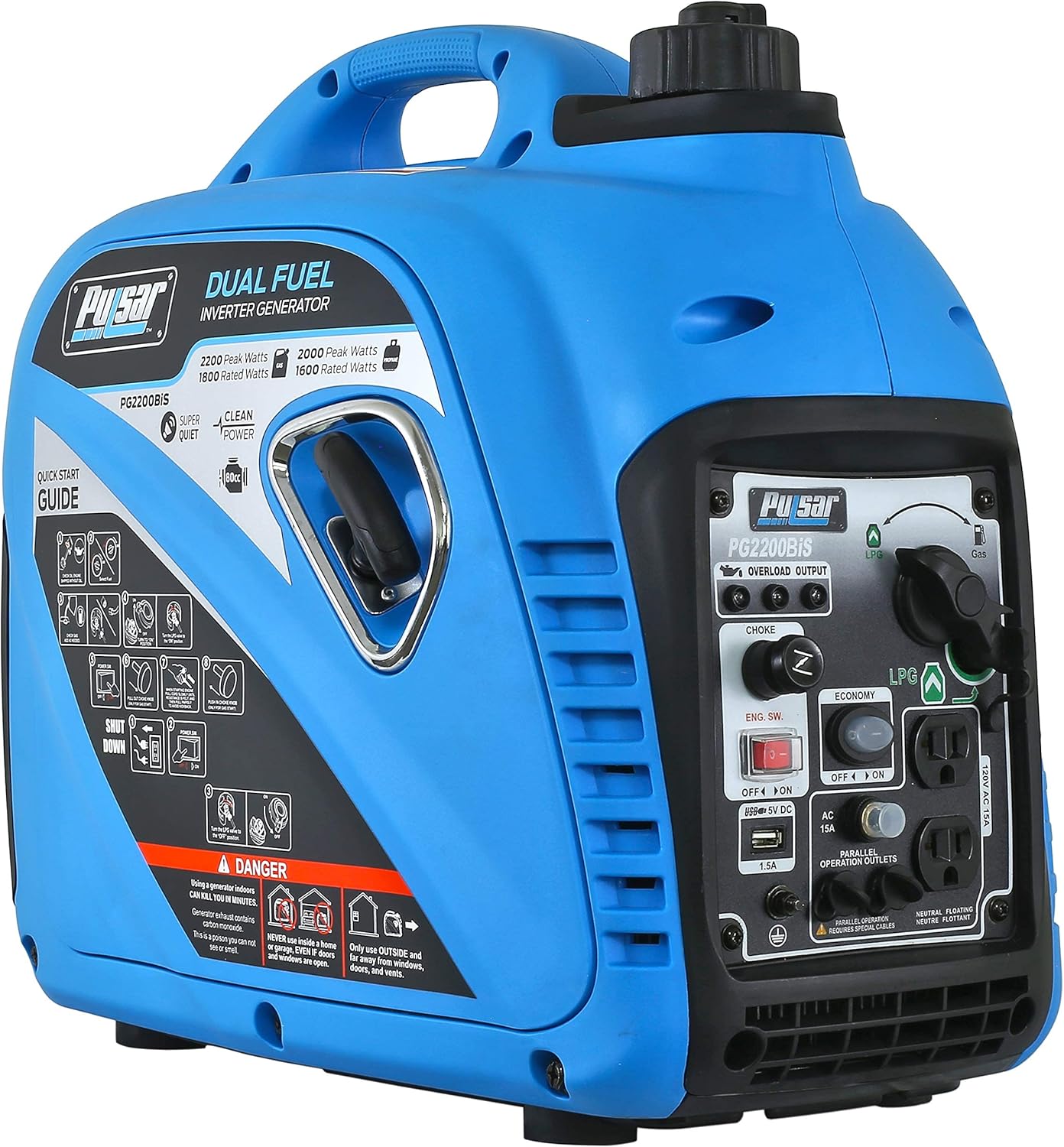
The Pulsar 2200 Dual-Fuel is somewhat noisier and provides a little less power than the other generators on this list. However, it still meets our criteria for a whole-home-capable quiet generator at the lowest price point of any other model on our list. In addition to the low sticker price, the Pulsar 2200 Dual-Fuel can run on both gasoline and cheaper, lighter, more shelf-stable propane for lower operating costs. Its 59 dB rating is measured at a quarter load. This makes the Pulsar an overall budget-friendly and quiet generator that still gets the job done.
3. Westinghouse iGen4500
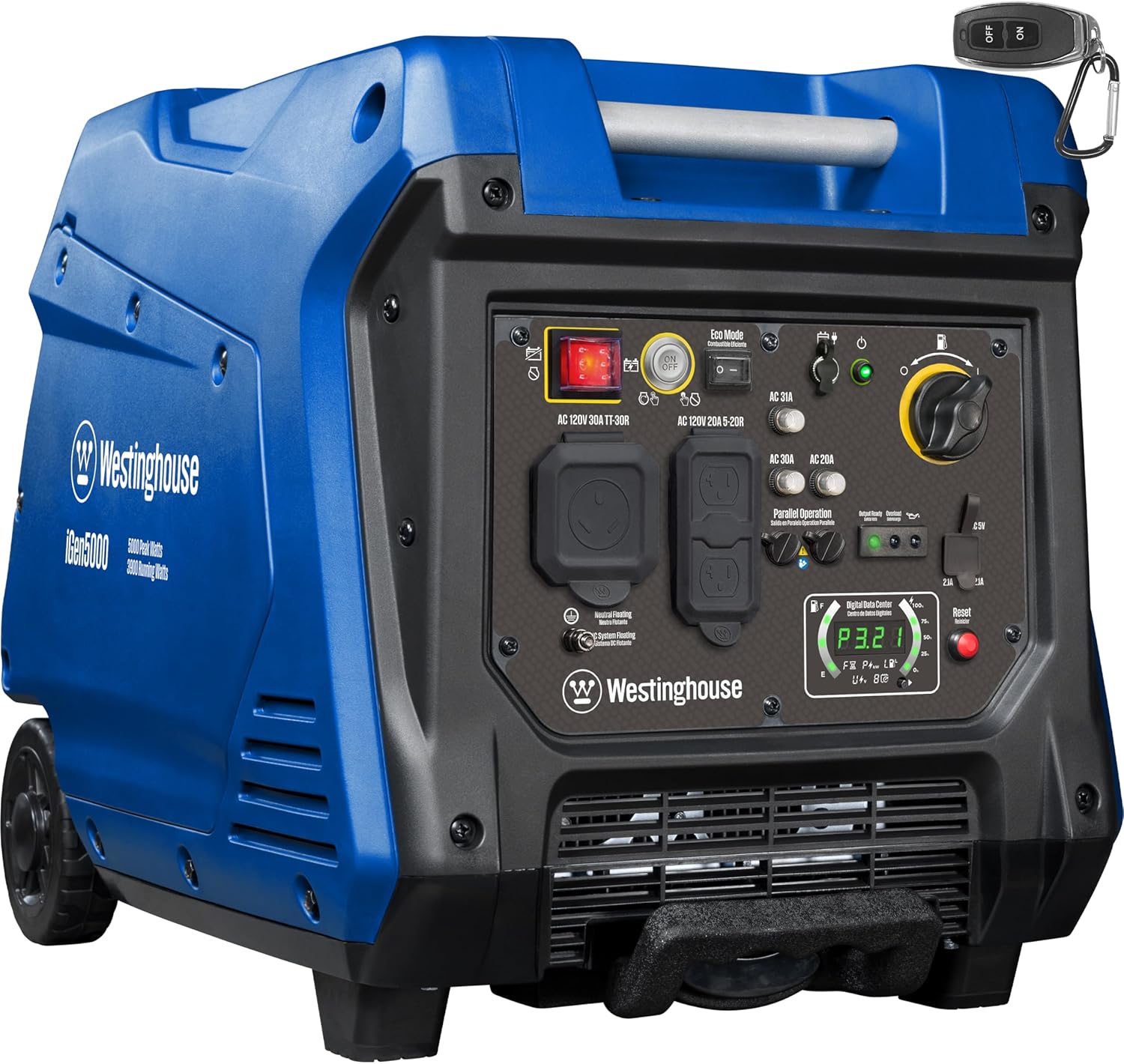
Noise level: 52 to 55 dB (at quarter load) Best for: High-capacity backup energy for large homes and small businesses
With a maximum output of 3,700 watts, the Westinghouse iGen4500 offers more than double the capacity of the first two quiet generators on our list while still operating at well under 60 dB. As a result, the iGen4500 can provide enough power for larger family households and even some smaller shops and other businesses in an emergency. The generator’s long runtime and remote start feature add even more to its overall utility.
4. Cummins Onan P4500iDF
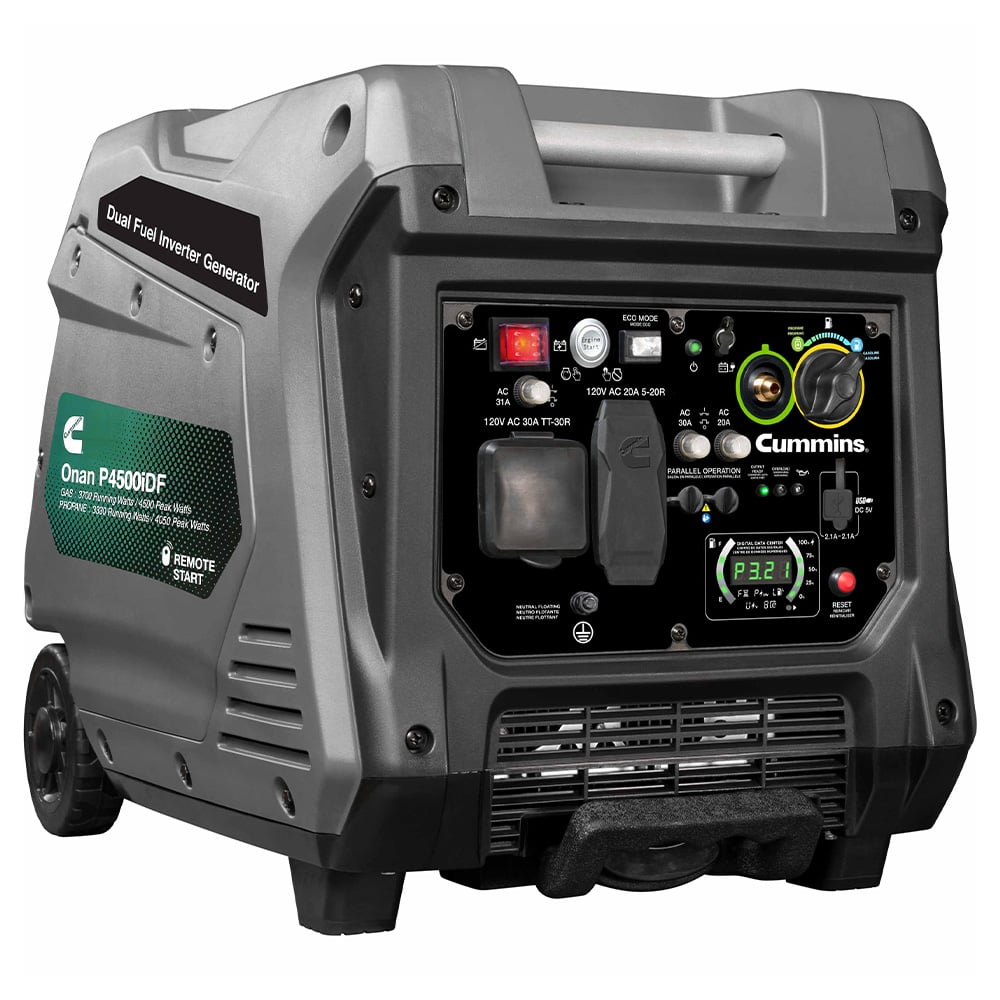
Noise level: 52 dB (at quarter load) Best for: Heavy-duty home and commercial energy supply
The Cummins Onan P4500iDF is an absolute workhorse of a dual-fuel generator, quietly supplying up to 3,500 watts of power while running on either gasoline or propane. Thanks to its highly-durable construction and up to 15 hours of continuous runtime, the P4500iDF is tough and powerful enough to travel to and supply electricity for job sites as well as homes. Cummins also has a reputation for excellent customer service to help you work through issues if you run into any.
5. Honda EU3000iS
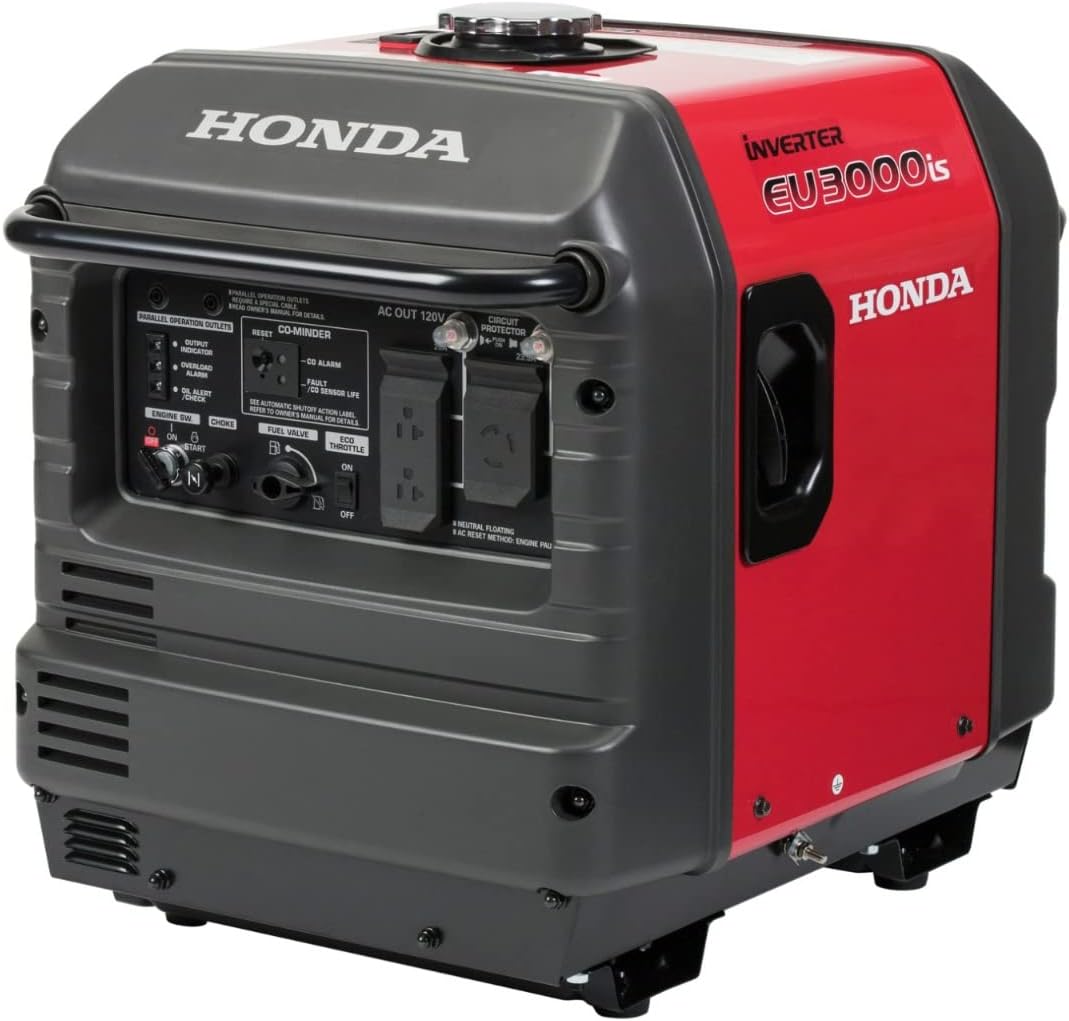
Noise level: 50 to 57 dB (A) Best for: Quiet, higher-capacity backup power for home or RV use
The Honda EU3000iS is a reliable inverter generator offering 2,800 running watts and 3,000 peak watts. It operates between 50 dB (at a quarter load) and 57 dB (at rated load), making it exceptionally quiet for its size. The EU3000iS features electric start, Eco-Throttle mode for fuel efficiency, and a reputation for Honda-level durability. It’s ideal for home backup, tailgating, and RV applications.
How quiet generators work and why noise levels matter
With the introduction of quiet generators, manufacturers have addressed one of the biggest downsides of generators — the substantial noise they create while running. These newer generators have given homeowners a backup energy option that’s far less disruptive to their home environment and those around them.
What do decibel ratings mean?
Manufacturers typically list the noise rating of their generators in decibels (dB), often as a range or a maximum. Decibels are a scientific unit for measuring the volume of a sound, with higher numbers meaning higher volume. As a point of reference, normal human conversation is said to be around 60 dB.
Decibels measure sound pressure on a logarithmic scale. Every 10 dB increase sounds roughly twice as loud to the human ear. Normal conversation is about 60 dB, so lowering even 3 to 5 dB makes a noticeable difference.
How loud are generators?
Traditional gasoline-powered generators can be extremely loud. While standard generators tend to put out between 70-90 dB while in operation, some have noise levels that go as high as 100 dB, as much as a concert or chainsaw.
Quiet generators running on fossil fuels typically produce less than 60 dB of operating noise, with many running at between 50 and 55 dB. Battery-powered generators (solar generators) often run at half the decibel level, making them quieter than a friend whispering to you a few feet away.
In the table below, we’ve listed the average decibel ratings of different types of generators and their real-world noise equivalents.
| Type of generator | Average decibel rating | Real-world comparison |
|---|---|---|
| Traditional combustion generator (loudest) | 90-100 dB | Power tools, motorcycles |
| Traditional combustion generator (quieter) | 70-90 dB | Washing machine, vacuum cleaner |
| Quiet generator (combustion) | 50-60 dB | Moderate rainfall, electric toothbrush |
| Solar/battery generator | 25-35 dB | Normal breathing, rustling leaves |
How do manufacturers make generators quieter?
Quiet generators are the result of multiple technological innovations. There are several ways that manufacturers have been able to reduce the noise their generators produce.
Inverter generators vs. conventional generators
Traditional, or conventional, generators create AC power at a constant rate. This requires the combustion engine to run at a consistently high RPM, which produces a consistently high level of noise.
Inverter generators, on the other hand, use processors to convert AC power into more stable DC power, which can then be converted back to AC power if needed. As a result, the onboard motor can run at variable speeds, and most of the time at a low RPM.
This means inverter generators produce far less than their maximum noise level most of the time they’re in operation. Consider the difference in noise between revving the engine in your car and cruising at a low speed to get a sense for how this works.
Advanced soundproofing
Another way manufacturers have been able to reduce generator noise is by adding shielding that suppresses sound to their units. Similar to how soundproofing for music recording works, a layer of thick material, like metal or wood, lined with sound-absorbing materials like foam can significantly limit the amount of sound that escapes into the surrounding environment.
What about solar generators?
Solar generators don’t actually generate power the way fuel-burning generators do. They’re large rechargeable battery packs that store electricity from a wall outlet or solar panels. These systems use an inverter to convert stored DC energy into usable AC power for appliances.
Because there’s no engine, exhaust, or moving parts, they operate almost silently and require little to no maintenance. Their main limitations are capacity and recharge time, which depend on battery size and sunlight availability rather than fuel supply. Keep in mind that a grid-tied solar array won’t provide power during an outage; you need a battery pack to store and use power.
Key features to look for in a quiet generator
A generator is a major purchase, so it’s important to weigh your options carefully. The most important features to consider when shopping for a quiet generator include:
- Noise level: Generators with operating noise levels of under 60 dB at 25% capacity are considered “quiet generators” and won’t disturb your environment.
- Fuel type: Most generators run on gasoline, but you can also find diesel and propane-powered quiet generators, as well as “dual-fuel” generators that run on both gas and propane. Gasoline is common, while propane burns cleaner and stores longer.
- Runtime: The listed runtime of a generator is the maximum amount of time it can run on one tank of fuel or a full charge. Quiet generators can have runtimes of up to 20 hours.
- Eco mode: Inverter generators often have an “eco mode” setting that runs the motor at a low RPM when energy demand is low. This conserves fuel and further reduces operating noise.
- Portability: Many generators have wheels and/or handles that make them easy to carry from one place to another. Consider whether you are likely to move your generator around a lot or if it is likely to stay in one place.
- Parallel capability: Some generators allow for parallel connectivity, which means linking two or more generators together to provide more power. This allows owners to scale their generator power without having to replace the current unit.
- CO monitoring: Combustion-powered generators create carbon monoxide as a byproduct, which is toxic or even fatal to humans. Many generators now feature onboard CO monitors to alert you if they are releasing dangerous levels of the gas.
- Connectivity: Some generators have built-in Bluetooth or WiFi capability that allows users to control, monitor, and manage them remotely through an app or website.
What outage data reveals about quiet generator use
The May 2024 Houston derecho hit 100 mph winds and knocked out power for 900,000+ metro customers, with officials warning restoration could take weeks. In neighborhoods where homes sit close together, running a loud generator for days strains neighbor relationships and can violate local noise ordinances.
Winter Storm Fern left over one million customers without power at peak, with Tennessee hardest hit and some areas going 6+ days without restoration. Nashville accounted for 306,700 of those customers. Running a generator for nearly a week in that density means noise travels directly to neighbors.
Quiet generator costs and value considerations
Quiet generators typically cost between $800 and upwards of $4,000. In general, the price of a generator goes up as capacity increases. Combustion-powered generators are usually cheaper than battery power banks. Among combustion-powered generators, inverter generators tend to be more expensive than conventional generators.
Beyond price, fuel source, noise level, and capacity, there are a few other factors to consider when shopping for a generator. These include:
- Fuel efficiency: Just like with gas mileage in cars, some generators are more fuel-efficient than others. Even a slight difference in efficiency can add up to a huge difference in the cost of fuel over time.
- Maintenance needs: The amount of generator maintenance and upkeep needed varies between makes and models, as does the cost of replacement parts like air filters. Battery-powered generators require significantly less maintenance than combustion-engine generators.
- Brand reliability: Some generator manufacturers have a well-established reputation for making high-quality products that last. While generators from these companies may be more expensive than less-established brands, they often last longer and are more reliable.
- Size: Keep in mind that you will need space to run and store your generator. Since sizes vary, make sure you get a model that fits where you need it to.
Summary: Best quiet generators
We chose the Honda EU2200i as the best overall quiet generator, but that doesn’t necessarily mean it’s the right choice for you. Depending on your preferences for things like fuel sources, your energy needs, and your budget, another option from this list may be your best option.
You should take the time to document your needs and wants in a quiet generator and then compare your options. This will ensure that you get the best possible value for your investment and a reliable source of backup energy for years to come.