

Our picks apply to different outage scenarios tracked by PowerOutage.us, including events that left over a million customers without power for days.
When Winter Storm Fern (North American storm in Jan 2026) made 1,005,641 customers lose electricity at its outage peak, our PowerOutage.us team monitored blackouts that stretched into multi-day restoration across large regions. Having the right type of generator for your home matters in this scenario.
PowerOutage.us tracks outages across states, counties, and individual utilities. Our data refreshes every 10 minutes during live events so you can monitor restoration in your area in real time. This event data informs how we evaluate backup power for real outages, not just spec sheets. Let's review some of the best portable generators for home considering real-world outages and extended power disruptions.
Best portable generators for home backup
Best battery generator
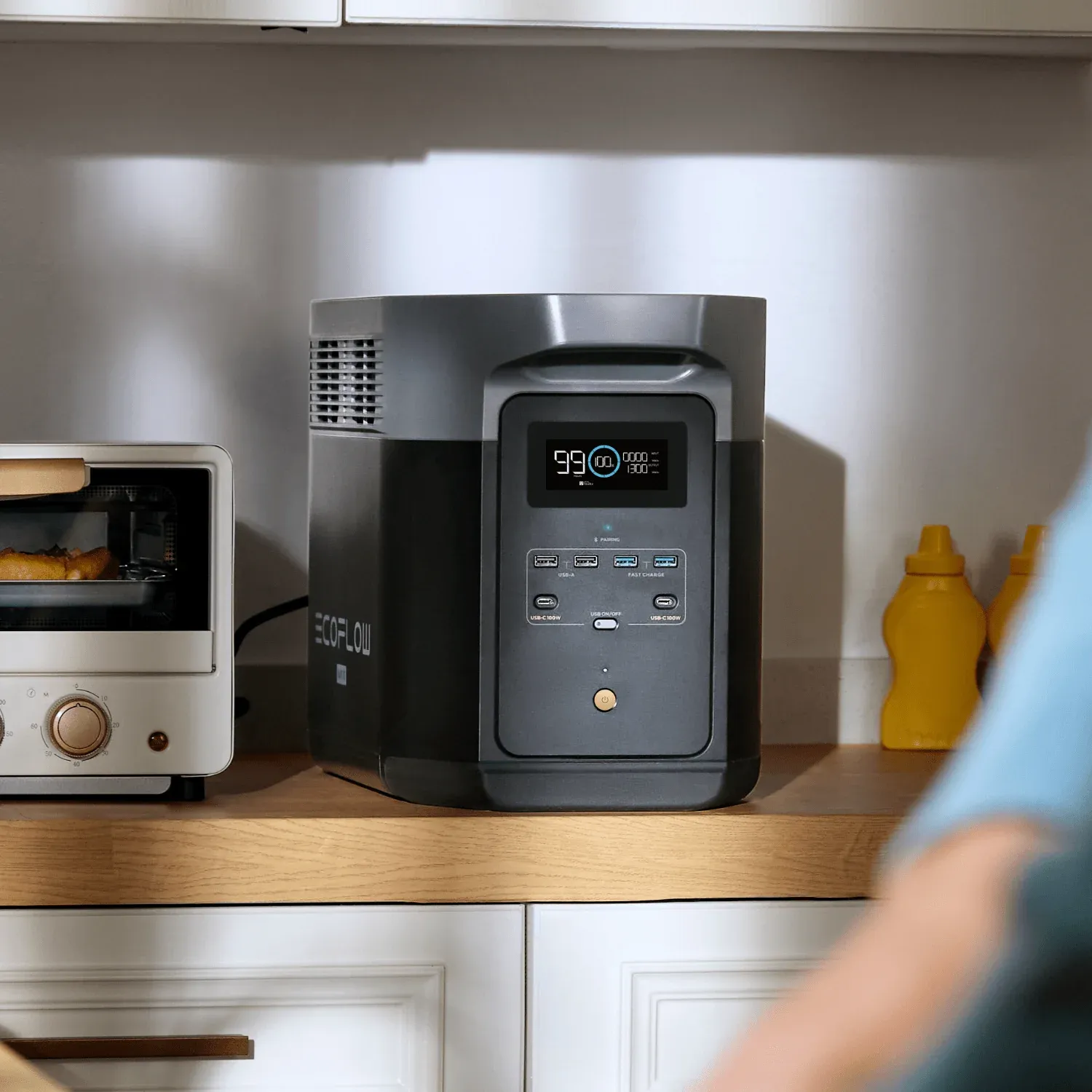
The EcoFlow DELTA 2 Max is the best "inverter-style" option for homes that prioritize indoor-safe, quiet, electronics-friendly backup for essentials, routers, and medical-support devices that require stable power.
- Capacity and output: 2,048Wh capacity and 2,400W output
- Price: Retail listings show the EcoFlow DELTA 2 Max at about $849 during current promotions, although prices vary widely by retailer and seasonal discounts
- Noise: EcoFlow retail copy cites ~30 dB at low input/output scenarios, fitting indoor-adjacent "quiet backup" expectations
- Use case: Backup power that avoids combustion fumes and supports sensitive electronics and communications during outages
Choose this power station if you need backup that can operate where combustion generators cannot, and you want stable power for electronics during brief restoration windows and repeat outages.
Best budget battery
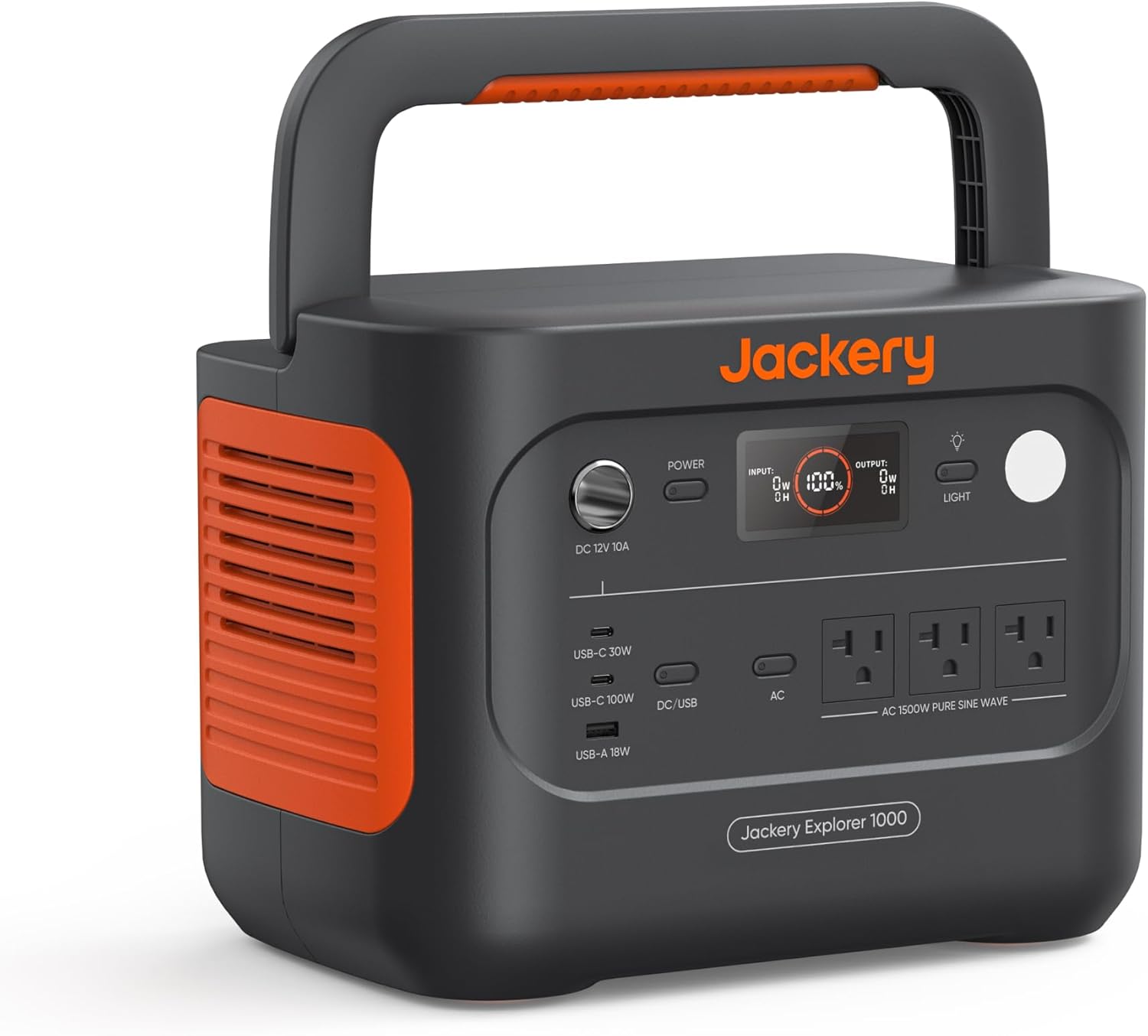
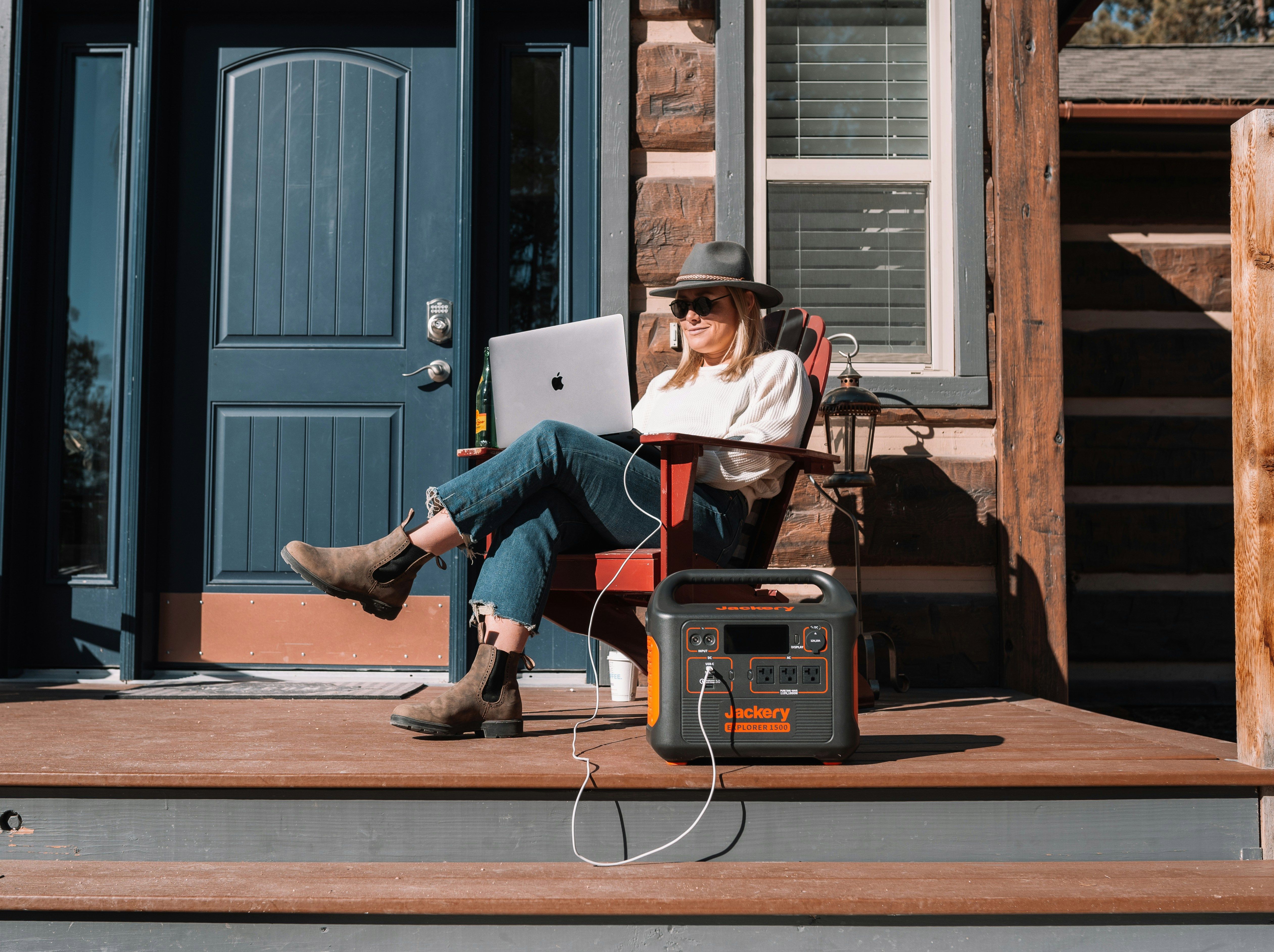
The Jackery Explorer 1000 v2 is a practical mid-size battery option because it delivers a 1,500W rated / 3,000W surge class output in a lighter package for the essentials-first plan.
- Battery: 1,070Wh LiFePO4 (4,000+ cycle lifespan)
- Output: 1,500W continuous AC (3,000W surge)
- Charging: Full AC recharge in ~1 hour via Super Charge mode
- Weight: 23.8 lbs (compact design with a folding handle)
- Ports: 3 AC outlets, 2 USB-C (up to 100W), 1 USB-A, and 1 Car Port
Choose this power station if you want lighter indoor-safe backup for communications, refrigeration support via cycling, and device charging.
Best budget high-watt fuel
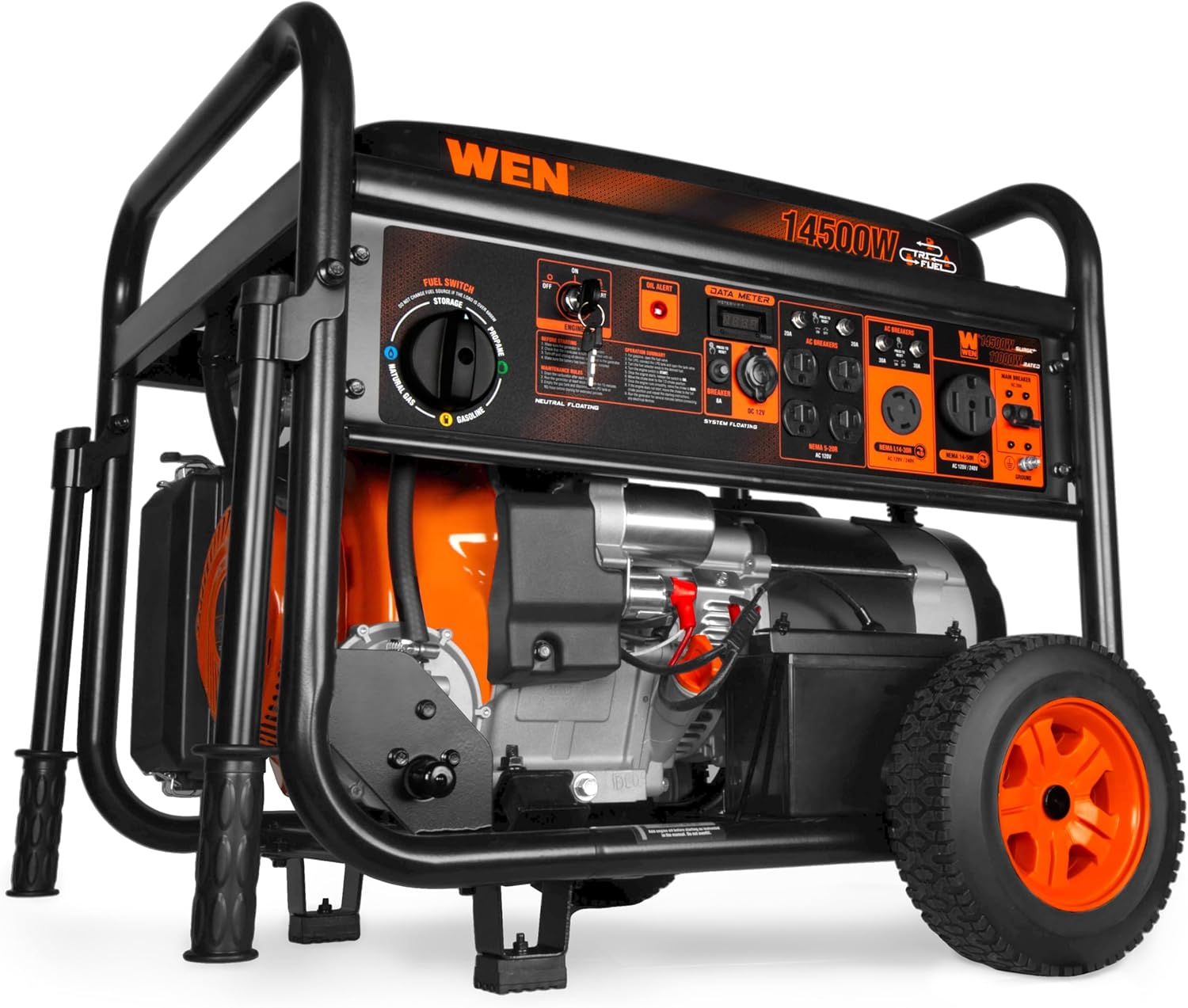
The WEN TF-1450X is a 14,500-watt tri-fuel portable generator running on gasoline, propane, or natural gas. It features electric key start with recoil backup, an automatic CO shutdown sensor, and includes a wheel kit for portability.
- Running/starting watts (gasoline): 11,500 running / 14,500 surge
- Running/starting watts (propane): 10,300 running / 12,500 surge
- Running/starting watts (natural gas): 8,750 running / 10,500 surge
- Noise level: Retailers report ~77 dB
- Safety feature: CO shutdown sensor ("Watchdog") appears in product descriptions
Choose this generator if you prioritize fuel availability planning, including the ability to run on a natural gas line when gasoline runs short after a large-scale outage.
Best mid-range home backup
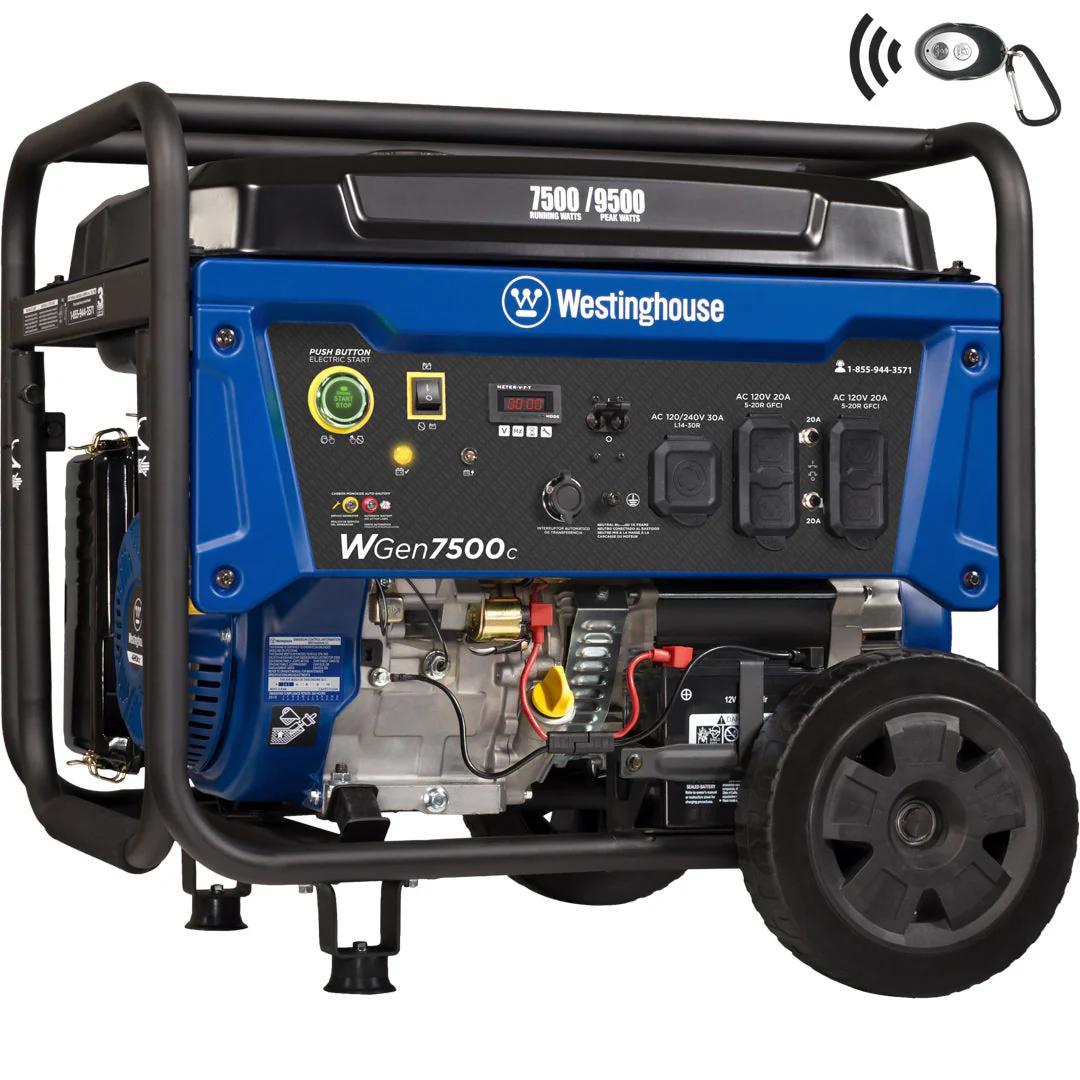
The Westinghouse WGen7500c is a strong value for home backup because it pairs 7,500 running watts with transfer-switch readiness and a CO sensor while staying in a widely accessible price band.
- Running/starting watts: 7,500 running / 9,500 peak
- Fuel type: Gasoline
- Fuel tank: 6.6 gallons
- Runtime: Up to 11 hours at 25% load
- Noise level: 72 dBA
- Voltage: 120/240V with L14-30R outlet commonly used for transfer switch connections
- Price range: Home Depot commonly lists it around $849 (promos vary)
Choose this generator if you want reliable critical-circuit backup for outages that last hours to a couple of days, with simpler operation than higher-watt tri-fuel units.
Best serious whole-home
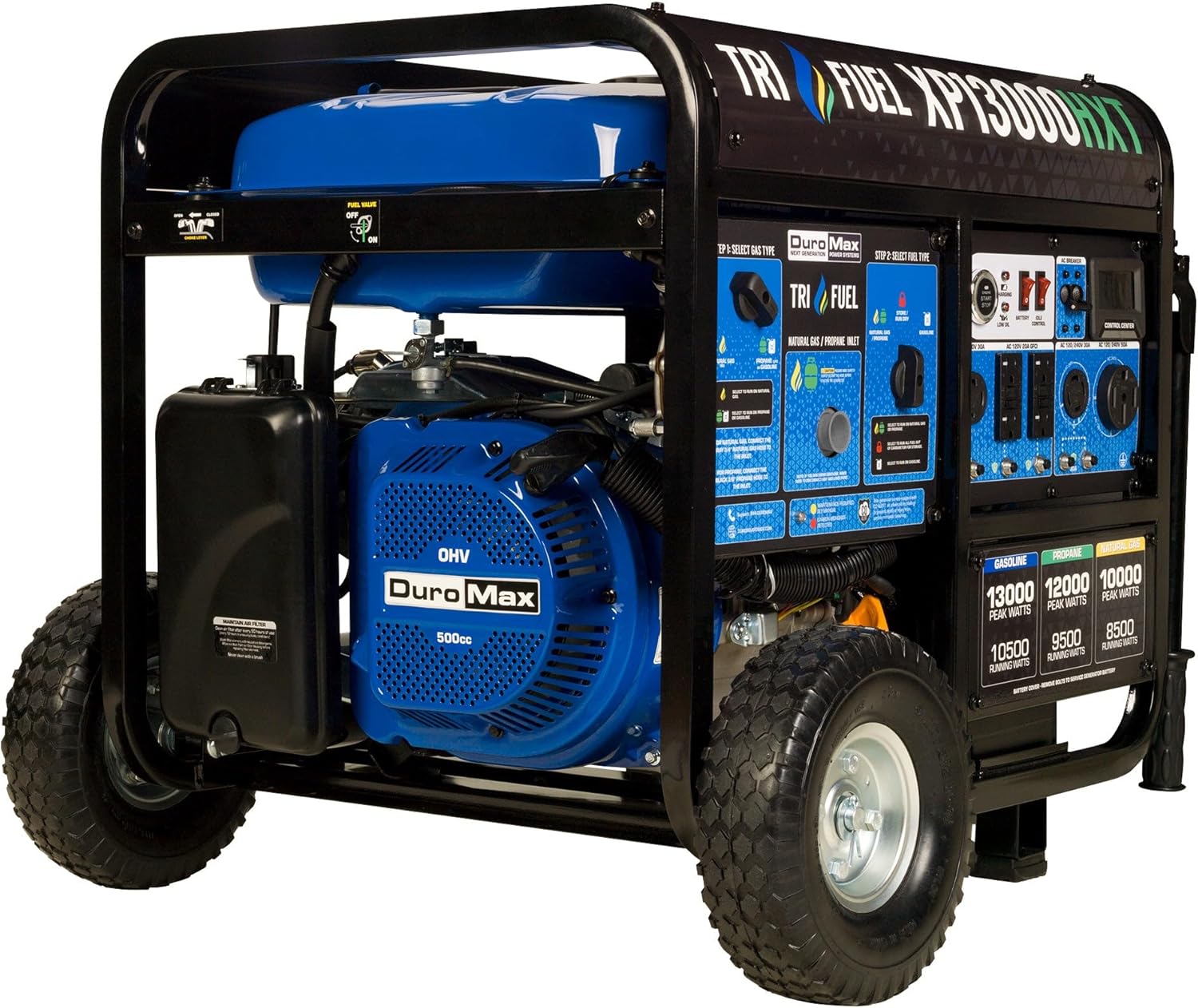
The DuroMax XP13000HXT is the best serious whole-home generator because it provides high-level wattage, tri-fuel flexibility, and long runtime at moderate load.
- Running/starting watts: 10,500 running / 13,000 peak (gasoline); 9,500 / 12,000 (propane); 8,500 / 11,000 (natural gas)
- Fuel type: Gasoline, propane, natural gas (tri-fuel)
- Runtime: Up to 17 hours at 25% load (gasoline)
- Voltage: 120/240V output supports transfer-switch use and 240V circuits
- Safety features: CO alert is commonly included in this model's positioning and retail listings
- Price range: Listed at $1,499 sale and $2,199 regular on DuroMax channels and retailers
Choose this generator if you want to support a broader set of circuits through a transfer switch and you want fuel flexibility when gasoline supply becomes constrained after a regional event.
Real outage examples: what our data shows
PowerOutage.us has tracked every major U.S. outage event since 2016, and the scale of these events reinforces why home generator planning matters year-round, not just during hurricane season.
Winter Storm Fern (January 24–26, 2026) peaked at over one million customers without power, with Tennessee bearing the heaviest impact at 306,700 customers and some areas going six or more days without restoration. Ice accumulation brought tree after tree down onto power lines faster than crews could respond. This type of outage is what a mid-to-high-watt generator is built for. Parts of northern Mississippi were still without power two weeks later.
We also tracked Hurricane Helene (4.79 million customers at peak, the largest event we recorded in 2024), where western North Carolina saw restoration timelines exceeding 14 days, and Hurricane Milton, where brief grid cycling windows made fast-charging battery stations particularly valuable for millions of Florida residents. These events represent the full range of what portable home generators are actually tested against in practice.
How many watts do you need to power a home?
To size a portable generator for home backup, list the circuits and appliances you plan to run during an outage, add up total running watts and starting (surge) watts, then pick a generator that covers both with about 20% headroom. That headroom helps a home portable generator start motor loads without constant breaker trips or voltage drop.
Electrical sizing guidance from electricians and generator guides commonly recommends about 20% extra wattage headroom above calculated loads to handle surge demands from motor-driven appliances without overloading the generator. This is a useful rule of thumb when planning home backup power and is standard engineering guidance found in multiple generator sizing resources. For a deeper look at matching wattage to your home's specific needs, see our guide on what size generator you need for your house.
Use running watts vs starting watts correctly
Running watts describe the steady power a portable generator for home use can supply continuously while your loads stay on.
Starting watts (surge/peak) describe the short burst required when motors start, like a refrigerator compressor, sump pump, well pump, or furnace blower. When you choose a portable generator for home, the surge rating often decides whether those motor-driven appliances start reliably.
Pick the right generator wattage tier to match real outage needs
- 3,000 to 5,000W fits an essentials-style portable generator plan. Essentials could include a refrigerator, a few lights, phone/laptop chargers, router/modem, and small kitchen appliances on 120V circuits (usually managed by rotating loads).
- 6,000 to 8,000W fits many critical circuits setups for home backup. Critical loads could include a refrigerator and freezer, lights, outlets, and it can cover some 240V needs if the unit provides 120/240V output and you connect it properly through a transfer switch or interlock.
- 10,000W+ supports broader home coverage with fewer compromises. This matters when you depend on a portable generator across multi-day outages — like the 6+ day stretches seen during Winter Storm Fern — and you can't constantly shut off one load to run another.
Determine whether you need 240-volt circuits
If your portable generator needs to run 240V circuits (like a well pump, some HVAC components, or a dryer circuit) you need a generator with 120/240V output and the correct receptacle (often 30A or 50A). For most homes, pairing the portable generator with a transfer switch or interlock is the safest way to feed selected panel circuits without backfeeding the utility line. Learn more in our guide on how to hook a portable generator up to your house.
Portable vs standby generators
A portable generator for home backup makes sense when you want lower upfront cost, the ability to move the unit as needed, and a plan focused on essential or critical circuits rather than automatic whole-home coverage.
A standby or whole-house generator makes sense when you want automatic transfer, broader "whole-home" continuity, and longer-duration operation with fewer manual steps than a portable generator typically requires.
Compare cost and setup requirements
A portable generator capable of actual backup often costs about $800 to $2,500 depending on wattage, fuel type, inverter vs conventional design, and features like CO shutoff. Standby generator projects often run $10,000 or more once equipment, permits, gas work, and installation are included.
A portable generator becomes "home-ready" when you connect it through a transfer switch or interlock, use a correctly rated inlet, and size it to the circuits you actually plan to power (rather than assuming it can run everything at once). A standby generator becomes "home-ready" through permanent installation and an automatic transfer switch, which removes much of the hands-on setup that portable home backup involves.
Compare fuel planning
Gasoline can run most portable generators for home use, but it requires active refueling and depends on retail availability during a regional outage. Plan safe storage and rotate fuel if you keep it on hand. During large-scale events like Hurricane Helene or Winter Storm Fern, gas station lines can stretch for hours, or stations can run dry entirely.
Propane supports longer-term storage planning and can simplify refueling logistics when gas stations are closed.
Natural gas can provide continuous fueling if distribution stays intact and your home has a suitable connection. This reduces the refueling burden compared with gasoline-based setups.
Generator safety: carbon monoxide, placement, and overload prevention
Safety is a core part of choosing and running a portable generator for home power because exhaust contains carbon monoxide. This gas can kill quickly in enclosed or semi-enclosed spaces such as garages, basements, porches, or near open windows.
According to the U.S. Consumer Product Safety Commission, an average of about 100 people in the United States die each year from carbon monoxide poisoning linked specifically to portable generators, underscoring the importance of safe placement and ventilation when using them.
Position your generator to reduce CO risk
Place the portable generator outdoors only, never in a garage or enclosed space, even with doors open. The CPSC and CDC recommend a minimum of 20 feet from your home, with exhaust pointed away from all vents, windows, and doors. Install battery-operated CO alarms on every level of the home, and if one triggers, get outside immediately and call 911.
Prevent overload and equipment damage
Overload prevention keeps a portable generator stable. Overload can trigger voltage sag, breaker trips, overheating, and damage to appliances and electronics.
Before starting large loads, compare your total running watts to the generator's running capacity and confirm the surge rating covers motor starts. Start motor-driven appliances one at a time to avoid stacking surge loads, especially with refrigerators, freezers, sump pumps, and well pumps common in home backup plans. Watch for overload signs such as dimming lights, a surging engine sound, hot cords or plugs, and repeated breaker trips, then reduce load before you damage connected equipment.
Use rest cycles for longer runs
If you run a fuel-powered portable generator for many hours, follow the manufacturer's schedule for oil checks, oil changes, air filter inspection, and rest cycles. Long runtimes during extended outages increase heat and wear, so planned maintenance helps the generator keep stable output when your home depends on it.
How to choose the right portable generator
Choose the right portable generator for your home by matching wattage, voltage (120V vs 120/240V), fuel, noise limits, and a safe connection method (transfer switch/interlock, or dedicated loads with extension cords) to the way outages happen in your area.
Quick selection checklist
- Calculate watts: List each appliance/circuit you want to run, then total running watts plus starting watts
- Select wattage tier: 3,000–5,000W (essentials), 6,000–8,000W (critical circuits), 10,000W+ (broad home coverage) based on how many loads you need simultaneously
- Confirm voltage: Choose 120/240V output if your home backup plan includes 240V loads like a well pump or certain HVAC circuits
- Plan connection: Install a transfer switch or interlock (with a proper inlet and cord) if you want to power selected breaker-panel circuits safely
- Choose fuel strategy: Gasoline for common availability, propane for longer storage planning, natural gas for continuous feed where available and permitted
- Manage noise: Check dB ratings and place the unit to reduce disturbance while keeping safe clearance (72 dBA for the WGen7500c; ~77 dB for the WEN TF1450X)
- Prioritize CO protection: Consider models with CO sensing/shutoff and follow outdoor placement rules every time
Use PowerOutage.us to match equipment to your outage reality
Check PowerOutage.us during and after regional events to estimate typical outage duration and the odds of multi-day restoration in your area. That data helps you decide whether a smaller portable generator for home essentials is enough, or whether you need a higher-watt, fuel-flexible setup that can run for days.
During Winter Storm Fern, PowerOutage.us outage counts exceeded one million at the peak of power loss. We've also monitored Hurricane Helene's 4.79 million affected customers across the Southeast and Hurricane Milton's cycling grid failures across Florida. These events provide more of a full picture of what "extended outage" really means across different regions and storm types.
Quick recap
Start by calculating running watts and starting watts, then choose a portable generator for home backup that fits a realistic wattage tier with around 20% headroom and a safe connection method.
The EcoFlow DELTA 2 Max earns the top spot because it delivers indoor-safe, quiet backup for essentials with strong output and expandable capacity, which suits many portable power plans for the home.
If you want a lower-cost battery for lighter loads, choose the Jackery Explorer 1000 v2 and plan your portable home backup around its smaller capacity.
If you prefer higher-watt fuel flexibility at a budget price, choose the WEN TF1450X for tri-fuel output and transfer-switch readiness.
For reliable critical-circuit coverage, the Westinghouse WGen7500c is the practical mid-range choice, and for whole-home fuel-flexible coverage during serious multi-day events, the DuroMax XP13000HXT remains the clear pick at the high end.