
What do solar panels do when the sun goes down? A big constraint of solar energy is that it’s non-dispatchable. That means you can’t generate it at will — the sun needs to be in the sky for solar panels to work. At night, your solar-powered home can get energy through battery storage or the electrical grid. We’ll cover how solar panels (don’t) work at night and options you have for after-hours generation.
PowerOutage.us tracks outages across 950+ utilities, helping you gauge overnight grid reliability where you live. With data refreshed every 10 minutes during live events, the free public outage map reveals patterns that inform battery sizing and resilience planning.
Do solar panels work at night?
Solar panels convert sunlight into electricity during daylight hours. It’s in the name “solar panel.” They fundamentally require direct solar radiation to function.
Solar panels convert sunlight into electricity through the photovoltaic effect. During the day, photons strike semiconductor materials (usually silicon) in the panel, freeing electrons and generating direct current (DC).
At night, however, ambient light isn’t strong enough to create the photovoltaic effect. Moonlight is about 400,000 times weaker than sunlight. In other words, if you think of full sunlight as 100% solar energy, moonlight is like 0.00025% of that.
Nighttime energy advancements
There are some fringe solar technologies that try to capture energy from solar panels at night. For example, radiative cooling technology uses temperature differentials between solar panels and their environment. Thermoelectric generators (TEGs) use the heat the earth produces at night as it cools.
However, these experimental systems only generate 50 milliwatts per square meter compared to 200 watts from standard solar panels. This tiny amount is enough electricity to power minimal-consumption devices like LED lights but nowhere near enough to power a home.
How your solar home gets energy at night
Your household still runs lights, refrigeration, heating/cooling equipment, and chargers after sunset. So if solar panels don’t work at night, where does the power come from? In most solar homes, nighttime electricity comes from battery storage and/or grid power.
When solar panels stop producing after dark, homes typically cover nighttime use in two ways:
- Battery storage systems
- Grid connections
Battery storage systems
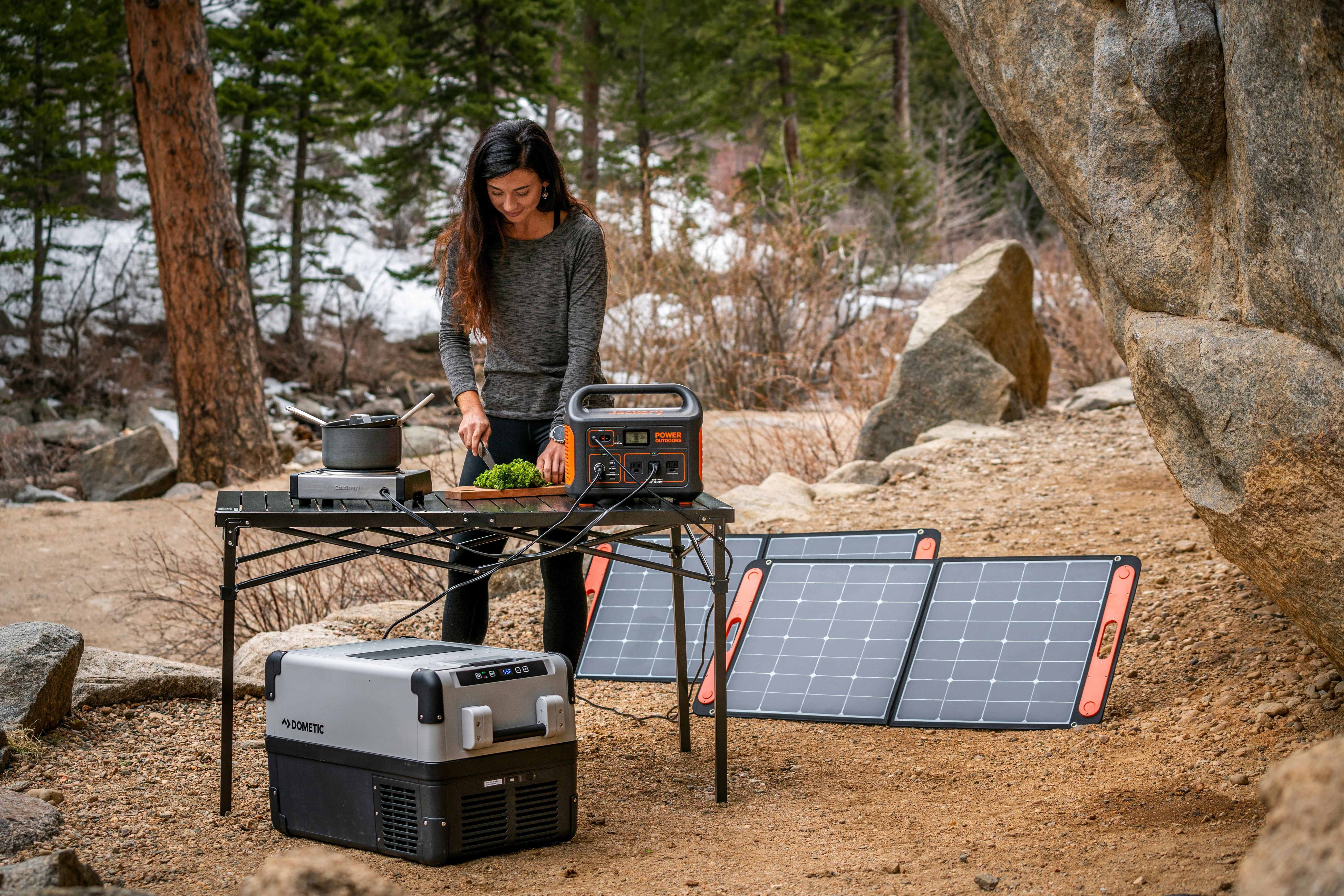
Battery systems answer the “do solar panels work at night” problem by shifting daytime production to nighttime use. During the day, your panels may produce more than your home consumes; a battery stores that surplus and then supplies power when the panels are inactive. Many modern lithium-ion systems (for example, units similar to a Tesla Powerwall at about 13.5 kWh) can run key circuits for hours overnight, depending on load.
Stored solar energy can keep a home operating after sunset, reduce grid purchases at night, and provide backup power during outages. Batteries also work in both off-grid and grid-tied systems, but the sizing and settings differ depending on whether you can fall back on the utility.
Grid-tied systems
Grid-tied solar homes typically switch to utility electricity once the sun goes down, because solar panels don’t generate at night. If your area offers net metering, your utility tracks the excess power your panels exported during the day and applies credits that can offset power you draw from the grid at night.
Your meter records bi-directional energy flow: it measures imports when your home consumes more than the panels produce, and exports when your system sends surplus to the grid. Those exports often appear as credits on your bill, and in full net metering programs they may offset usage close to one-to-one.
Not every state or utility offers full net metering, and credit rates vary widely. If credits are reduced (or not offered) nighttime grid electricity costs more out of pocket, and a battery can cover more of your after-dark usage.
Using battery energy at night for grid-tied systems
In a grid-tied setup, your solar panels generate during the day and the battery stores excess energy for later. Since solar panels don't work at night, the system can draw from the battery first, then the grid if needed. Steps below help you plan for reliable nighttime supply.
Choose the right size
Start by reviewing your daily kWh use with special focus on nighttime loads (HVAC run time, cooking, EV charging, medical devices, and always-on devices). Then size the battery so it can cover the portion of your usage you want to run after sunset—plus a buffer for outages if that’s a priority. Many households also size panels slightly larger so daytime production covers daytime needs and charges the battery for the night.
Use a quality inverter and charge controller
In a solar-plus-storage system, the inverter and charge equipment largely determine how well the system manages nighttime power. A well-built inverter and charge controller regulate battery charging during the day and discharge at night, prevent harmful overcharge/over-discharge cycles, and coordinate power flow between the battery, solar array, and grid. Better components cost more, but they protect battery life and keep nighttime operation stable.
Optimize your time-of-use
If you want lower bills at night, shift major loads to daylight when the panels are producing. For time-of-use rate plans, set the system so the battery supports the house during expensive evening peak periods, then recharge the next day. This approach reduces how much you buy from the grid at night, even though solar panels themselves don’t work at night.
Using battery energy at night for off-grid systems
Every watt counts in an off-grid system because you’re not connected to a broader utility network. Optimizing battery storage is critical since nighttime power depends entirely on stored energy. Here’s how to create a reliable, night-focused energy setup:
Accurate system sizing with nighttime in mind
Begin with a comprehensive energy audit that includes a close look at your nighttime consumption. Factor in longer hours of darkness during winter or overcast seasons to ensure your battery bank is sufficiently large. Include extra capacity to cover prolonged periods without sunlight.
Manage your battery for night supply
The backbone of an off-grid system is its battery storage, which must reliably cover the entire night. Use deep-cycle batteries with a Battery Management System (BMS) that:
- Monitors the state of charge and battery health.
- Prevents overcharging during the day and deep discharging at night.
- Maximizes the usable capacity to ensure essential loads are powered after sunset.
Use high-efficiency inverters and MPPT controllers
Off-grid systems must convert stored DC battery energy into AC power through an inverter, and every loss matters because there’s no grid backup at night. High-efficiency inverters waste less energy as heat, which extends runtime after sunset. MPPT charge controllers help the array harvest more power during the day so the battery starts the night as full as possible. Avoid unreliable low-cost controllers that can fail under real-world heat and electrical stress.
Prioritized load management for nighttime use
When you live off-grid, nighttime demand determines how long your batteries last, because solar panels don’t generate electricity in the dark. Plan your loads so the battery supports what matters most:
- Load shifting: Run high-energy appliances (laundry, water heating, pumping) during daylight when panels produce.
- Essential nighttime loads: Keep refrigerators, security systems, medical devices, and communication equipment powered overnight.
- Nighttime conservation: Reduce evening consumption (lighting, entertainment, standby loads) to extend battery supply until morning.
Wrapping up: Manage your nighttime energy
While solar panels don’t produce energy at night, you still need electricity. If you use a grid-tied system, you’ll draw power from the grid and you could use net metering credits depending on your area. You can also use a battery with a grid-tied system for nighttime energy and outage security. And if you’re building an off-grid system, you definitely need battery storage to cover nighttime use (without using a generator). Whatever your goal, plan your panel and storage size correctly to see if solar power is a good idea or not.