

As an apartment renter, you have to deal with power outages differently from people living in single-family homes. You share electrical systems with other tenants, have limited storage space, and usually can’t install permanent backup equipment. This is why your options might be limited compared to a homeowner’s.
At PowerOutage.us, we track 950+ utilities serving 200+ million customers, which is about 94 to 95% of the U.S. grid. When Winter Storm Fern hit in January 2026, the platform recorded 1,005,641 customers at peak impact. Tennessee alone saw 306,700 customers lose power, with Nashville hit hardest—a city where 48% of residents live in apartment buildings of 20+ units. Restoration took 6+ days in the hardest-hit areas, which shows why planning for a storm power outage in an apartment must account for multi-day disruption.
Step 1: Identify your limitations before a power outage in an apartment
Understanding your building's physical and legal limits will influence the choices you make before an outage. Apartments have limits that houses don’t, like:
- No generators: Gas, propane, and dual-fuel generators produce carbon monoxide. An apartment lacks the ventilation to clear it safely. This applies to balconies, too, so a generator is not a safe answer to a power outage in an apartment. You wouldn’t be able to store the fuel in an apartment either.
- Elevator failure: Elevators run on building power. If you live above the third floor, plan to use stairs during a power outage in an apartment. This matters for evacuation and for carrying supplies up.
- Shared infrastructure: Your water pressure may depend on electric pumps, which fail during an outage. Hallway lighting, intercoms, and security systems may also fail, as with a parking garage door.
- Limited electrical control: You can’t rewire, install transfer switches, or add permanent backup systems without landlord approval.
Find out what’s limiting you now. Review your lease for fuel storage rules, identify your stairwell exit, and locate the building's emergency contact. Those steps make any future power outage in an apartment easier to manage.
Step 2: Build a compact emergency kit for a power outage in an apartment
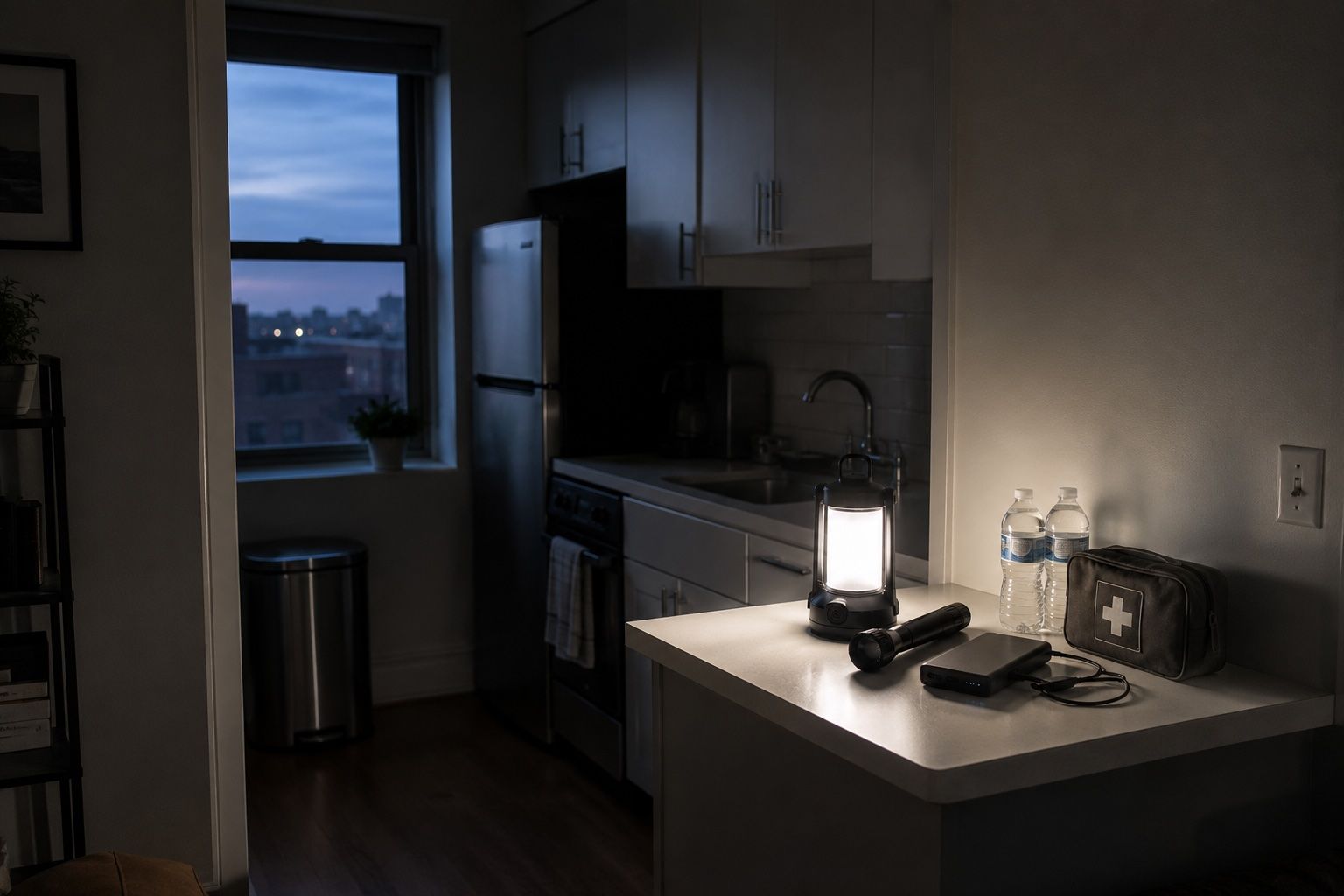
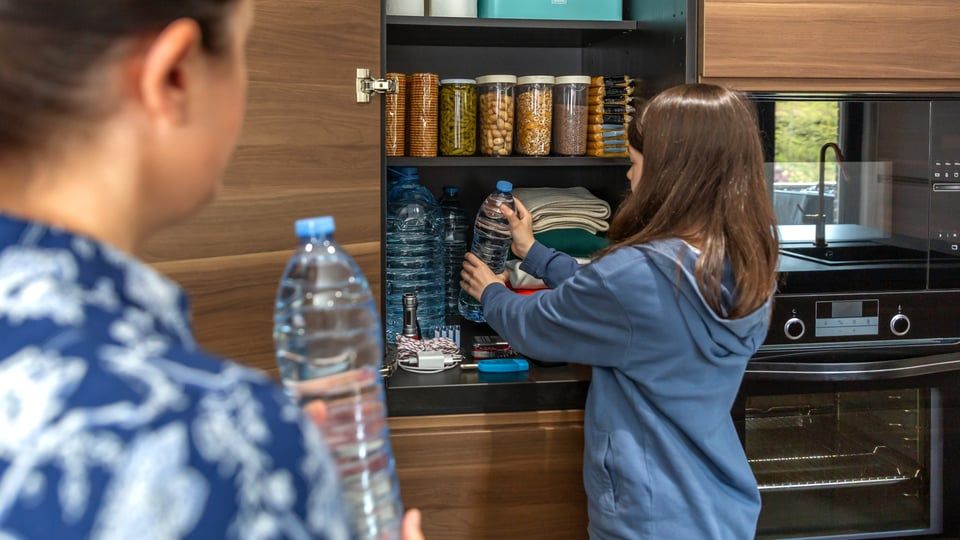
Build a 72-hour kit that fits in a single backpack or under-bed storage bin. In an apartment, you have to deal with space constraints and don’t have garage space for a large emergency kit.
Store these items in a single, accessible container:
- Water: 1 gallon per person per day. Three people need a minimum of 9 gallons. Under-bed storage fits standard 1-gallon jugs efficiently and works well in an apartment.
- Food: Non-perishable, no-cook food. Choose items like peanut butter, canned fish, crackers, trail mix, and shelf-stable nut milks. Avoid anything requiring boiling if your stove is electric, because that will not help during a power outage in an apartment.
- Lighting: One headlamp per person plus one LED lantern. Headlamps free your hands and help navigate hallways and stairwells. Avoid candles, since fire risk in apartment buildings rises during a blackout.
- Power banks: 10,000+ mAh capacity for phones. Charge to 100% when a storm is forecast, so you can communicate during a power outage in an apartment.
- First aid kit: Compact, pre-assembled kits like those from Ready America fit inside a shoebox.
- Documents: Copies of your lease, ID, insurance, and prescriptions in a waterproof bag.
- Cash: ATMs and card readers fail without power.
Build this kit before you need it. Our complete power outage emergency kit guide covers additional items worth adding for an apartment emergency plan.
Step 3: Choose safe backup power
Portable battery power stations are the only safe backup power source for most apartment renters during a power outage in an apartment building.
Recommended: Battery power stations (500Wh–2kWh)
Units like the EcoFlow DELTA 2 (1,024Wh) or Jackery Explorer 1000 charge via a wall outlet before an outage and recharge from a car's 12V outlet during one. They can power things like CPAP machines, phone chargers, fans, LED lights, and small refrigerators within their capacity range, which makes them practical for a power outage in an apartment.
- 500Wh: Covers phones, lights, and a CPAP for 1–2 nights
- 1,000Wh: Adds a small fan or mini-fridge for short durations
- 2,000Wh: Covers a full-size refrigerator for 12–20 hours, depending on draw
USB power banks (10,000–30,000 mAh) handle phone charging, small lights, and earbuds. Carry one in your go-bag so a power outage in an apartment does not leave you without communication.
Car inverters (300W–1,000W) let you run devices from your vehicle's battery. Run the engine periodically to avoid draining it. Use in a garage only if ventilation is adequate—never in a closed space.
Do not use home generators indoors or on balconies. Carbon monoxide accumulates in enclosed and semi-enclosed spaces faster than symptoms develop. FEMA and Ready.gov both prohibit indoor generator use for this reason, and that warning is especially important during a power outage in an apartment.
Unfortunately, full home battery backup systems are also not an option in an apartment. Backups like the Tesla Powerwall require permanent installation through the electrical panel.
Step 4: Prepare for food and refrigeration safety
Refrigerators hold a safe temperature for 4 hours after an outage, and full freezers hold for 48 hours.
- Refrigerator: The USDA sets 4 hours as the maximum safe hold time at or above 40°F. After 4 hours without power, discard perishables like meat, dairy, eggs, and leftovers. Do not open the door unless necessary. Each opening shortens the safe window during an apartment blackout.
- Freezer: A full freezer holds 48 hours. A half-full freezer holds 24 hours. Fill empty freezer space with water-filled containers before a forecast storm to extend hold time.
- Cooler strategy: One mid-size cooler (28–48 qt) stores high-priority items (insulin, medications, infant formula) with block ice. Block ice lasts significantly longer than cubed ice. Prepare this before the outage; do not scramble after.
Prioritize ready-to-eat foods in your pre-outage shopping. Reduce refrigerator dependence before the storm by consuming perishables early. That cuts waste and stress during a power outage in an apartment.
If you use medical devices requiring refrigeration, create a medical device power outage checklist to follow when the power goes out. This will help you prioritize backup power to the items you need most.
Step 5: Plan not to cook in an apartment outage
A no-cook food strategy is the safest and most practical approach for apartment renters dealing with a power outage in an apartment.
Apartments lack the outdoor space for safe camp cooking. Electric stoves, microwaves, and air fryers are all non-functional during an outage. Plan your food supply around no-cook options first, because that is the most reliable approach during a power outage in an apartment.
Food options include:
- Peanut butter and nut butters (high-calorie, shelf-stable)
- Canned beans, lentils, fish, and chicken (no heating required)
- Crackers, rice cakes, granola bars
- Shelf-stable beverages and electrolyte packets
Limited backup cooking options:
- Butane stove (outdoor only): Portable butane burners like the Iwatani or Camp Chef units work well outdoors. Butane is safer than propane for transport. Use only on a balcony or in an outdoor common area, never inside. Check building rules first, because many properties ban open-flame devices altogether.
- Sterno canned heat: Approved for limited indoor use in well-ventilated spaces. A Sterno produces low heat output, so it’s fine for warming canned soup, but not for full cooking. Read the manufacturer's ventilation requirements before use.
Avoid charcoal grills, propane burners, and camp stoves indoors under all circumstances. Carbon monoxide risk is immediate and fatal in enclosed spaces, especially during a power outage in an apartment building.
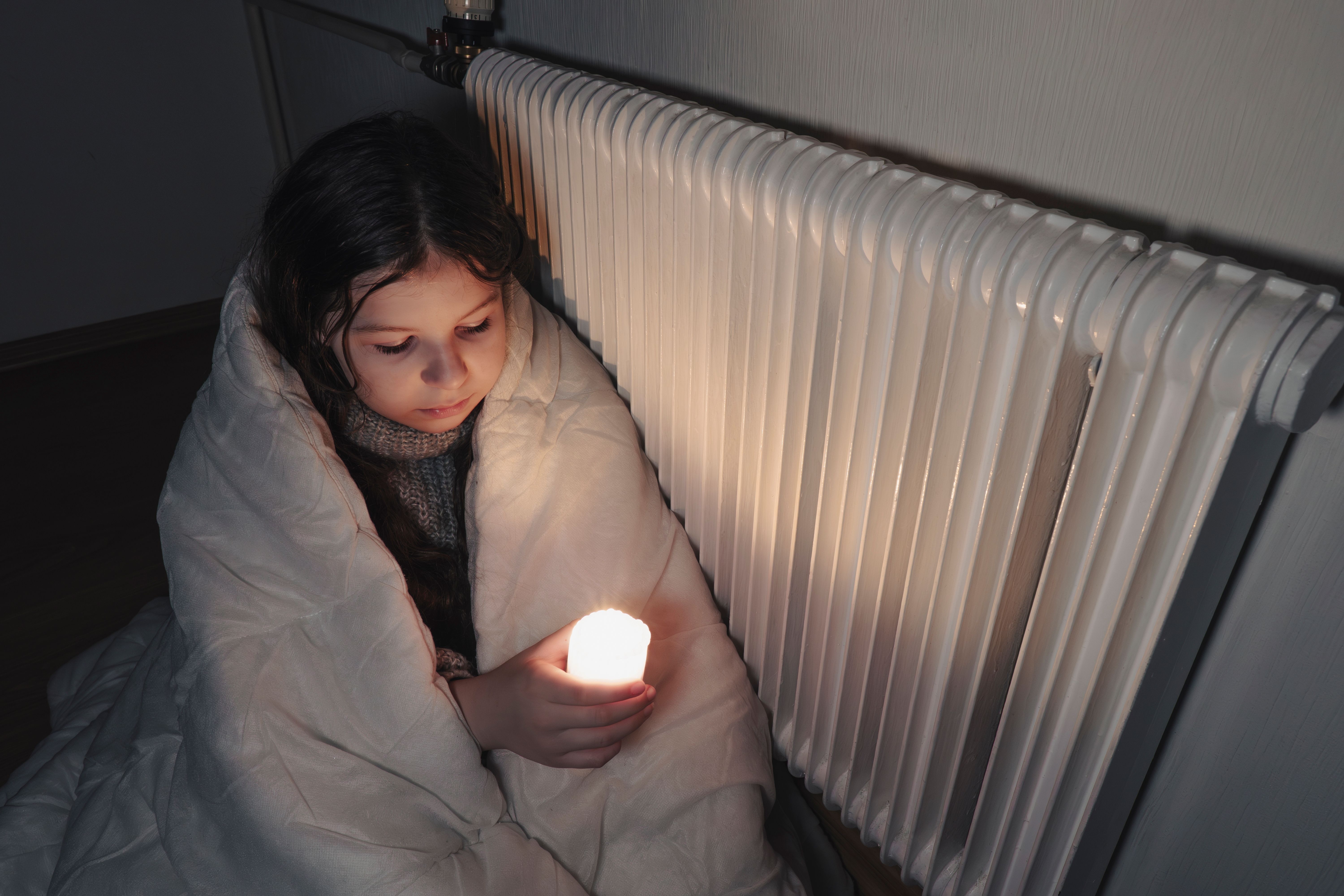
Step 6: Stay warm or cool during an outage
Layering clothing and using micro-climate strategies help you maintain survivable temperatures during a power outage in an apartment.
For cold weather:
- Layer clothing like a moisture-wicking base layer, an insulating mid-layer, and a wind-blocking outer layer
- Use a 0°F-rated sleeping bag if temperatures may drop significantly
- Create a micro-climate by hanging blankets over a doorway to section off a small, body-heat-warmed space
- Gather in one room with other household members to concentrate warmth
Do not use propane heaters, gas ovens, or camp stoves for heating. Each produces carbon monoxide. Each has caused apartment deaths during winter outages.
In hot weather:
- Identify the coolest room in your unit. Interior rooms usually stay cooler than sun-facing ones.
- Wet a bandana or cloth and apply it to your neck and wrists to reduce perceived heat
- Battery-powered fans move air without cooling it, so combine this with a wet cloth
- If temperatures exceed 90°F indoors and the outage persists past 4 hours, relocate to a cooling center
- Think about common spaces like a garage or basement gym that might be cooler than your unit
Extreme heat can be a medical emergency, so take it seriously and know where cooling centers in your area are. During a power outage in an apartment, indoor temperatures can become dangerous faster than many renters expect.
Step 7: Deal with safety risks unique to an apartment outage
Carbon monoxide, neighbor-caused fires, water leaks, and elevator shutdowns are all risks that escalate during a power outage in an apartment building.
- Carbon monoxide: Neighbors using gas generators, grills, or improper heating in adjacent units can push CO into shared ventilation. Install a battery-operated carbon monoxide detector. If it alarms, exit immediately and call 911. Do not re-enter until cleared.
- Fire risk from neighbors: Candle use, improper heating methods, and cooking fires increase building-wide risk during outages. Know your two nearest stairwell exits. Keep shoes and a flashlight at your bedside if you are on an upper floor.
- Water leaks: Pipe bursts in upstairs units—common in winter outages—can flood units below. If water appears on your ceiling, move electronics and valuables and contact building management immediately.
- Elevator shutdown: Elevators stop when building power fails unless the building has an emergency generator backup. Determine whether your building's elevators have backup power. If you have mobility limitations, contact building management before any forecast event to establish an evacuation plan.
- Shared HVAC: Central HVAC systems in apartment buildings fail in an outage. This accelerates temperature loss in winter and heat gain in summer.
Step 8: Maintain communication in a power outage
Monitor outage status and preserve your phone battery so you can make clear decisions during a power outage in an apartment.
PowerOutage.us tracks 950+ utilities and refreshes data every 10 minutes during live events. Use it to determine whether your outage is isolated or regional, and to estimate restoration timelines. Set up real-time outage alerts by text or email before storm season so you can respond faster during a power outage in an apartment.
A battery-powered or hand-crank AM/FM radio provides emergency broadcast updates when cell networks are congested or down. NOAA Weather Radio broadcasts continuous official updates.
To preserve phone battery:
- Enable low-power mode immediately when power fails
- Disable Bluetooth, background refresh, and location services
- Reduce screen brightness to the minimum
- A 20,000 mAh power bank provides 4–6 full charges for most smartphones
Avoid streaming video or music during outages. A phone at 20% battery with GPS enabled drains in under 3 hours, which can leave you without essential information during a power outage in an apartment.
Step 9: Work with your building management during a power outage in an apartment
Report outages immediately and know emergency protocols with building management before a storm arrives. In a power outage in an apartment, your landlord or property manager controls much of the community response.
Before an outage:
- Request a copy of the building's emergency plan
- Ask whether the building has backup generator power for common areas, elevators, or water pumps
- Identify the after-hours emergency contact number
- Confirm whether the building management company has a mass notification system
During an outage:
- Report the outage to building management and your utility provider simultaneously
- Ask whether crews have already been dispatched and what the estimated restoration time is
- Request access to any backup-powered common area if temperatures are extreme
If a power outage in an apartment creates uninhabitable conditions (failed heat in a winter storm, for example), document the conditions with photos and timestamps. Tenants may have legal recourse under implied warranty of habitability provisions. The HUD rental assistance resource page provides guidance on tenant rights during emergencies.
Step 10: Know when to leave your apartment
Leave when temperatures, medical needs, or outage duration extend past survivable thresholds. During a power outage in an apartment, waiting too long can narrow your options.
Relocation thresholds:
- 48+ hours: Relocation is likely appropriate. You might be out of food or phone battery. Temperature regulation becomes difficult in cold and hot seasons.
- Immediately: If you or a household member requires powered medical equipment (CPAP, oxygen concentrator, insulin refrigeration, home dialysis) relocation is not optional. Plan this before any forecast event.
- Temperature triggers: Indoor temperatures below 55°F or above 90°F with no restoration timeline constitute an emergency. Seek a warming or cooling center.
Where to go:
- A friend or family member in an unaffected area
- A hotel outside the outage zone
- A municipally designated shelter
Beforehand, prepare a go-bag with 72-hour supplies so relocation during a power outage in an apartment requires minutes, not hours.
Should you buy a ready-made kit for a power outage in an apartment?
Building your own gives you a more customized emergency kit, while ready-made kits offer speed and convenience at a cost premium. For a power outage in an apartment, customization usually matters more than bulk items.
Advantages of a pre-made kit include immediate readiness, professionally curated items, and compact packaging. Limitations are the generic contents, which may include items irrelevant to your unit and specific medical needs. A pre-made might not include a power bank.
Compare this to building your own:
- Choose items specific to your unit size, floor, and household medical needs
- Select a power bank with the capacity your devices require
- Add apartment-specific items like a CO detector, flashlight, and renter's insurance documents
- Replace food items with your preferred brands and dietary requirements
A ready-made kit works as a baseline. Then, add apartment-specific supplies rather than relying on a pre-made kit exclusively during a power outage.
Apartment power outage examples from PowerOutage.us data
Real outage data shows that a power outage in an apartment-dense city can still last far longer than renters expect.
When Winter Storm Fern struck in January 2026, PowerOutage.us tracked 1,005,641 customers at its outage peak. Nashville (where nearly half of the residents live in large apartment buildings) saw 306,700 Tennessee customers lose power.
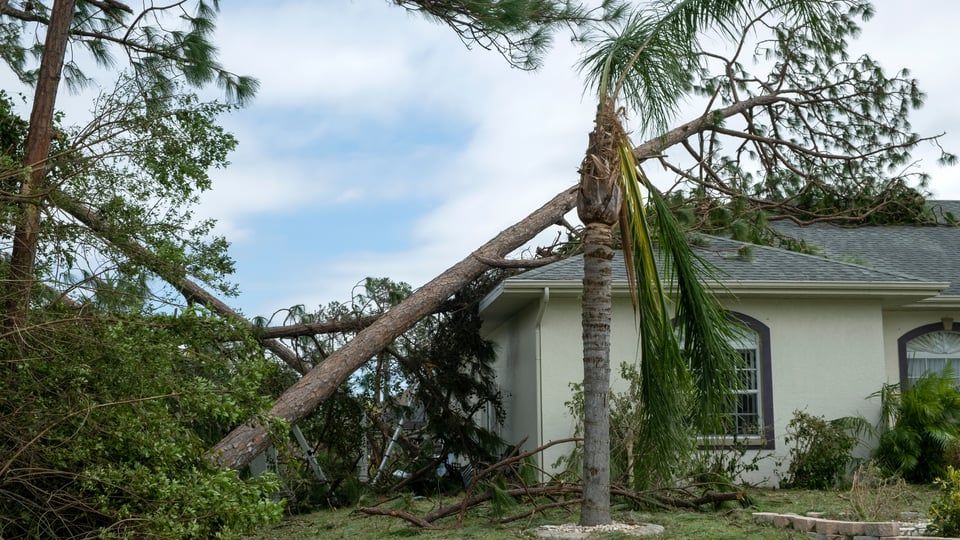
Ice accumulation caused tree after tree to fall on power lines faster than crews could repair them, according to utility crew reports. Restoration took 6+ days in the hardest-hit areas. For anyone facing a power outage in an apartment, that kind of timeline changes food, medical, and relocation planning.
During Hurricane Helene (September 2024), PowerOutage.us tracked 4.79 million customers at peak—the largest single event recorded in 2024. South Carolina averaged 53 hours without power per affected customer, the worst in the nation per EIA data. Urban apartment residents in Charlotte saw power restored in roughly 24 hours; mountain county residents waited 14+ days. The gap between urban and rural restoration times shows why planning for a power outage in an apartment should follow worst-case durations, not average ones.
Renters have more leverage than homeowners when outages become a pattern — you can leave. If repeated blackouts, a landlord who's slow to address them, or an aging building have you considering a move, estimate what relocating would actually cost before you decide, and weigh it against renters insurance that covers food loss and spoilage where you are now.
Apartment power outage reference checklist
We’ve covered a lot, so here’s a quick checklist you can use as a reference:
| Timing | Actions |
|---|---|
| Before any storm | Build/refresh emergency kit (water, food, lighting, backup power), charge all power banks to 100%, fill freezer with water-filled containers, identify stairwell exits and building emergency contact, set outage alerts on PowerOutage.us |
| Outage begins | Report to building management and utility provider, enable phone low-power mode, do not open refrigerator unless necessary |
| 4 hours | Discard refrigerator perishables if power not restored, relocate medications to cooler with ice |
| 24 hours | Assess restoration timeline; monitor PowerOutage.us |
| 48+ hours | Evaluate relocation; food safety window has closed |
| Any time | If CO detector alarms exit immediately and call 911, monitor indoor temperature and relocate if below 55°F or above 90°F, never use gas generators, grills, or propane heaters indoors |
If CO detector alarms exit immediately and call 911, monitor indoor temperature and relocate if below 55°F or above 90°F, never use gas generators, grills, or propane heaters indoors
Quick recap
Apartment outages require specific preparation, not house-based solutions scaled down. Determine your building's backup systems now, store a compact 72-hour kit within lease limits, and choose battery power over any fuel-burning alternative. Monitor your utility in real time at PowerOutage.us, where data refreshes every 10 minutes during active events.