
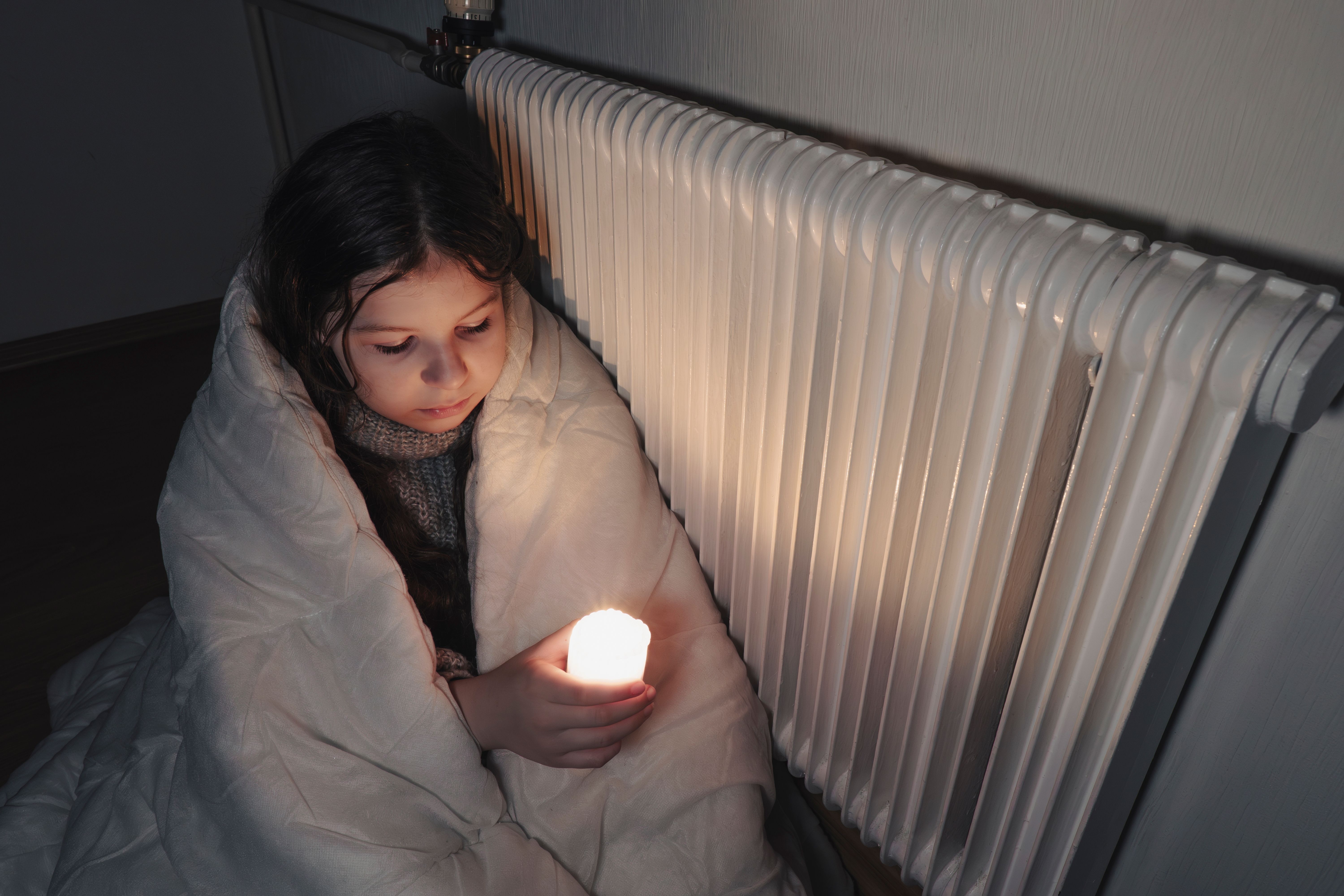
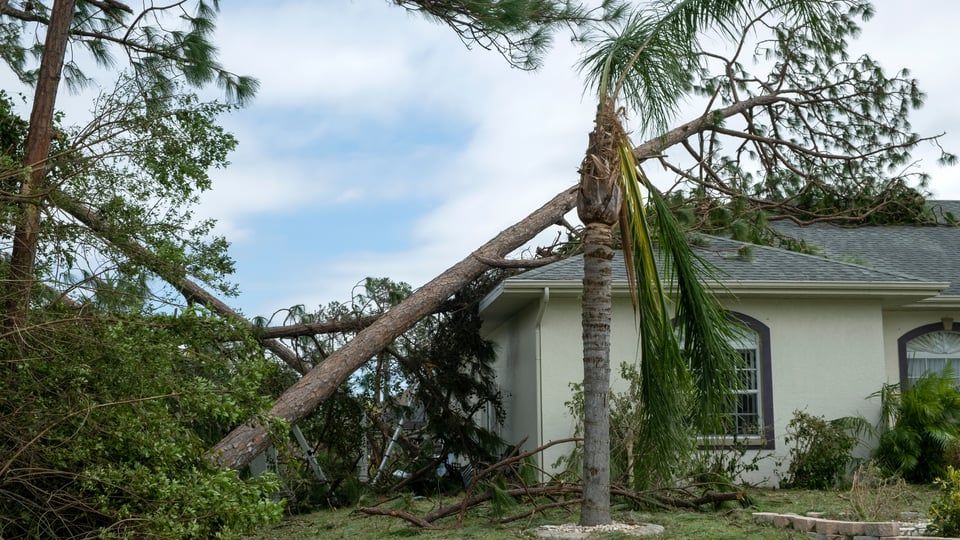




Seismic events can damage substations, snap utility poles, crack underground transmission lines, trigger fires, block access roads, and disrupt water pumping systems, all at the same time. The result is a cascading failure that utilities may take days or weeks to reverse. Every section of damaged infrastructure must be physically inspected and declared safe before power can be restored.
PowerOutage.us tracks outages across 950+ utilities serving more than 200 million U.S. customers, including the major seismic, storm, and wildfire events that knocked out power since 2016. Data on PowerOutage.us refreshes every 10 minutes during live events, giving households real-time visibility when the earthquake knocks out power.
We’ll let you know what to do before, during, and after a power outage that happens from an earthquake below.
What to do before an earthquake causes a power outage
Preparation before an event reduces both physical risk and recovery time. Households that have secured their homes, stored supplies, and made backup power arrangements recover faster.
Secure your home
- Strap bookshelves, refrigerators, water heaters, and cabinets to wall studs. You don’t want a water heater to fall and rupture gas lines or a refrigerator to shift and block exits.
- Identify shelter spots in each room, like spots under sturdy tables or against interior walls away from windows.
- Put heavy items on lower shelves and install cabinet latches to reduce projectile hazards during shaking.
- Install smoke and carbon monoxide detectors on every level. Fires and generator exhaust after earthquakes are both serious CO hazards.
Know your utility shutoffs
- Locate your gas meter shutoff and keep an adjustable wrench near it. Shut off the gas only if you smell gas, hear hissing, or see visible damage, because unnecessary shutoff can delay restoration.
- Locate your main water shutoff. Broken mains following a quake may contaminate tap water before authorities issue a formal advisory.
- Locate your electrical panel so you can isolate circuits if sparks or burning smells appear after shaking stops.
Store supplies
- Water: At least one gallon per person per day, ideally a 14-day supply. FEMA recommends a minimum 72-hour supply, but large earthquakes can disrupt water pumping systems for a week or more.
- Food: Shelf-stable items requiring minimal preparation. Choose what your household already eats.
- Medications: Maintain a 3–5 day advance supply when possible. Pharmacies depend on electricity and may close during widespread outages.
- Cash in small bills: ATMs and card payment systems stop working when the grid is down.
- Copies of important documents: Identification, insurance policies, medical records, and emergency contacts, stored in a waterproof container.
- Lighting: Flashlights and extra batteries in multiple locations throughout the home.
- Fuel: Keep vehicle tanks at least half full. Gas stations require electricity to operate pumps.
Plan for your whole household
- Prepare pet supplies, including food, water, medications, carriers, and vaccination records.
- Store infant supplies like formula, diapers, and comfort items.
- Account for household members who rely on powered medical devices, mobility aids, or refrigerated medications. Create a medical device outage checklist to plan how you’ll power devices or relocate.
- Create a family communication plan with a meeting location and an out-of-state contact. Local networks often become congested immediately after a major quake.
Early warning and alert tools
- Install MyShake (UC Berkeley) for earthquake early warnings on the West Coast.
- Enable Android Earthquake Alerts if your device supports the feature.
- Activate Wireless Emergency Alerts on all household phones to receive official warnings, including tsunami notices.
- Sign up for PowerOutage.us notifications to monitor restoration progress in your area.
Build an earthquake emergency kit
A complete earthquake power outage emergency kit supports your household through days or weeks without electricity. Build supplies across three layers: a home kit, a portable go bag, and a vehicle kit.
Home kit
- Water: sealed containers, 1 gallon per person per day, ideally a 14-day supply
- Food: nonperishable canned goods, dried foods, energy bars with a 3-day supply at minimum, up to 2 weeks for extended outages
- LED flashlights, headlamps, and battery lanterns (one per person with spare batteries)
- Battery-powered or hand-crank NOAA Weather Radio (like Midland or Eton models)
- Portable phone power bank of 10,000 mAh capacity or larger
- First aid kit with manual and household medications
- Sanitation supplies like hand sanitizer, wipes, toilet paper, garbage bags, and a bucket
- Prescription medications and medical supplies for several days
- Tools: gas shutoff wrench, utility knife, work gloves, pry bar
- Protective equipment: N95 masks, gloves, safety glasses
- Pet supplies: food, water, medications, carrier, ID records
- Cash and waterproof document copies
- Portable power station for safe indoor electricity
Go bag
A go bag lets you evacuate quickly. Keep it light. Include one day of water and food, a flashlight, phone charger, medications, cash, identification, a first aid kit, gloves, N95 masks, a change of clothing, and pet supplies if needed. Commercial starting kits from Redfora, JUDY, or Sustain Supply Co. are useful foundations but often lack sufficient water, medications, and household-specific items.
Car kit
Store water, energy bars, a flashlight, jumper cables, a reflective vest, gloves, masks, first aid supplies, and a phone charger in your vehicle. Because seismic outages often disable gas stations, maintaining at least half a tank of fuel is part of earthquake preparedness.
What to do during shaking
Drop, Cover, and Hold On. When shaking begins, drop to your hands and knees, take cover under a sturdy desk or table or against an interior wall, and hold on until movement stops completely. This approach, recommended by USGS and FEMA, is the most effective way to reduce injury from falling objects.
- If indoors: Remain inside until movement stops. Most injuries occur when people attempt to move during shaking.
- If outside: Move away from buildings, streetlights, and utility lines. Drop to the ground.
- If driving: Pull over away from bridges, overpasses, and power lines. Stay inside until shaking stops.
- In high-rise buildings: Stay in place and take cover. Do not run for stairwells.
- Near a coastline: Move immediately to higher ground after shaking stops. Earthquakes can trigger tsunamis with very little warning time.
Expect aftershocks and follow Drop, Cover, and Hold On each time shaking resumes.
What to do right after shaking stops if the power is out
The first 30 minutes after a seismic event carry the highest risk of secondary hazards like gas leaks, damaged wiring, and structural instability. These require your attention right away.
Check for injuries
Check yourself and household members and provide first aid where needed. Emergency response times may be significantly delayed during a large event because emergency systems are overwhelmed by simultaneous calls across a wide area.
Inspect for hazards
- Check for gas smells or hissing sounds. If detected, ventilate, shut off the gas at the meter if safe to do so, and leave immediately.
- Inspect for sparks, burning smells, or damaged wiring. Shut off electricity at the main panel if damage is visible.
- Look for structural damage (cracked load-bearing walls, sagging ceilings, chimney damage). Evacuate if the structure appears compromised.
- Stay at least 30 feet from downed power lines and treat every line as energized. Ground contact with an energized line can electrify surrounding surfaces.
- Use flashlights rather than candles. Gas leaks that are not yet detectable by smell can ignite with an open flame.
Protect electronics and communicate carefully
- Unplug sensitive electronics. Power surges are common when utilities restore service after an outage, and equipment left plugged in can be damaged.
- Lower screen brightness and disable unnecessary wireless connections to conserve phone battery.
- Use text messages rather than voice calls, since texts transmit successfully even on congested networks.
- Monitor a battery-powered or hand-crank radio for emergency broadcasts.
- When internet access is available, check PowerOutage.us for restoration updates.
Check on neighbors
Reach out to elderly neighbors, people with disabilities, and anyone living alone. Community check-ins matter most when emergency services are delayed, which is typical after a large quake affects a wide area.
Food, water, and medicine safety during extended outages
Refrigerator food safety
A refrigerator maintains safe temperatures (below 40°F) for approximately four hours after power is lost, provided the door stays closed. After four hours, perishable foods (meat, dairy, eggs, cooked leftovers) should be discarded if temperatures have risen above 40°F for two or more hours. CDC food safety guidelines treat this two-hour threshold as the standard for post-outage discard decisions.
Freezer food safety
A fully packed freezer holds safe temperatures for roughly 48 hours; a half-full freezer for about 24 hours. Foods that still contain ice crystals may be safely refrozen. Fully thawed items above 40°F should be discarded. Adding dry ice (if available) can extend safe storage time.
Cooler strategy
Keep a well-insulated cooler ready. Transfer the most perishable items when the outage extends beyond several hours. Block ice melts significantly slower than cubed ice, maintaining safe temperatures longer.
Water safety
Earthquakes can break water mains and knock out pumping stations. This can reduce pressure and potentially contaminate the water supply. Water that looks clear could still be unsafe.
It’s important to follow boil water advisories from local authorities, like boiling water for one minute at elevations below 6,500 feet. Use stored supplies first. If disinfecting tap water is necessary, the standard guidance from USGS and CDC is to add 8 drops of unscented liquid household bleach per gallon, stir, and wait 30 minutes before use.
Medications and medical devices
Insulin and certain other biological medications lose potency when exposed to temperatures outside their specified range. If the outage exceeds several hours, consult a pharmacist about storage options and usable duration. Many pharmacies and emergency management agencies maintain guidance on this.
People who rely on powered medical devices should plan backup power carefully. Typical power consumption varies considerably:
- CPAP machines draw roughly 30–60 watts, meaning a 500 Wh portable power station could provide one to two nights of use.
- Home oxygen concentrators typically consume 150–300 watts, which places higher demands on backup power, so a 1,000–2,000 Wh station may provide several hours of operation.
- Small medical refrigerators for insulin storage draw approximately 30–60 watts; a 500 Wh station could sustain one for many hours.
- Infusion pumps and powered wheelchairs vary widely; consult device documentation for wattage requirements.
Register with your utility as a medical baseline customer if the program is available. This alerts utilities that life-support equipment depends on power at your address, which can influence restoration prioritization.
Generator and backup power safety
If a backup extends for days, having a generator can be a lifesaver. That said, it’s important to use generators correctly to avoid carbon monoxide poisoning and fire.
Portable generator rules
- Operate generators outdoors only, at least 20 feet from any building opening, window, or vent. Carbon monoxide from generator exhaust is odorless and can be fatal at relatively low concentrations.
- Point exhaust away from doors and windows.
- Don’t run generators in the rain unless using weather protection designed specifically for generator use.
- Use heavy-duty outdoor extension cords rated for the electrical load.
- Never backfeed a generator into household wiring without a transfer switch installed by a licensed electrician. Backfeeding can electrocute utility workers on lines assumed to be de-energized.
- Allow the generator to cool before refueling. Store fuel in approved containers away from living areas.
Comparing backup power options
- Gas-powered portable generators offer high wattage for refrigerators and large appliances, though they require outdoor placement and fuel storage.
- Home battery backup systems (like Tesla Powerwall, Enphase IQ Battery, LG RESU) are permanently connected to a home’s electrical panel. Typical capacity ranges from 10-20 kWh, supporting essential circuits for many hours or days.
- Portable power stations (Jackery, EcoFlow, Goal Zero, Bluetti, Anker SOLIX) are silent, safe for indoor use, and capable of running lights, phones, and small medical devices. A 500–2,000 Wh unit covers most household essentials.
- Solar generator systems combine portable power stations with solar panels so batteries can recharge even when the grid remains down for an extended period.
- UPS battery backup units typically run a router or a light for a few hours and aren’t enough for multi-day outages.
For most households, a portable power station in the 500–2,000 Wh range provides practical indoor electricity for lighting, communications, and low-wattage medical devices during a seismic outage.
Why seismic grid failures can last long
Post-earthquake power loss is different from storm outages in a few ways. A storm typically damages distribution lines, which are the last segment of the grid between a substation and your home. Repair crews can isolate the break, fix it, and restore service section by section.
On the other hand, a major earthquake attacks the entire system at once. Ground shaking can displace substation equipment, shear transformer bushings, and fracture the porcelain insulators that keep high-voltage components isolated.
Transmission towers can lose foundation stability through liquefaction. This is when saturated soil temporarily behaves like a liquid under seismic stress, causing structures to tilt or sink.
Landslides can also damage distribution lines in mountainous areas. Automatic protection relays, which are designed to prevent cascading failures, may isolate large grid sections as a precaution, cutting power to areas that sustained no direct physical damage at all.
Earthquake power outage examples
Real events illustrate the scale. The 2011 Tōhoku earthquake (magnitude 9.0) left roughly 4.4 million households without electricity across northeastern Japan. While some coastal areas lost power due to direct physical destruction of substations, a significant portion of the outage resulted from automatic grid protection trips isolating sections as a precaution — a restoration challenge that took days even where infrastructure was structurally intact.
The 1994 Northridge earthquake (magnitude 6.7) caused approximately 2.5 million customer outages across the Los Angeles area, primarily from substation failures and broken distribution equipment; most service was restored within days, but heavily damaged neighborhoods waited longer as engineers assessed structural safety.
The 2010 Chile earthquake (magnitude 8.8) affected roughly 90 percent of the country's electrical customers at peak outage, though Chile's modern grid and relatively low population density aided faster restoration.
The 1989 Loma Prieta earthquake (magnitude 6.9) left about 1.4 million customers in the San Francisco Bay Area without power, with delays extending beyond routine repair timelines because crews could not safely access certain areas until aftershock activity subsided.
PowerOutage.us tracks outage data every 10 minutes during major events across more than 950 utilities serving over 200 million U.S. customers. Monitoring this data can provide real-time information about which grid sections are affected and where restoration is progressing.
Should you buy a ready-made earthquake kit?
Commercial kits from Redfora, Ready America, Emergency Zone, JUDY, and Sustain Supply Co. provide a useful starting point, particularly for offices, vehicles, and households just beginning to prepare. They supply basic items quickly and in an organized form.
Most ready-made kits have significant limitations for a prolonged earthquake-related outage:
- Insufficient water — typically 72 hours' worth for one person, far below what a multi-week outage may require
- Limited food quantity
- No prescription medications or medical equipment
- Little or no backup power
- No supplies for pets or infants
Treat any commercial kit as a baseline. Add water storage, medications, backup power, and supplies specific to your household's needs. Evaluate kits based on water capacity, food shelf life, and customization options rather than packaging.
First 24 hours checklist
Here’s a high-level checklist for the first day after an earthquake.
Life safety: first 30 minutes
- Check household members for injuries and provide first aid
- Apply Drop, Cover, and Hold On for each aftershock
- Evacuate if the building appears structurally unsafe
Hazard inspection: first 30 minutes
- Check for gas leaks; shut off gas only if damage is confirmed
- Inspect for sparks or burning smells; shut off electricity at the panel if warranted
- Stay at least 30 feet from all downed lines
- Use flashlights, not candles
Communications: first 1–2 hours
- Monitor battery-powered or hand-crank radio
- Use text messages instead of voice calls
- Check PowerOutage.us for restoration updates when the internet is available
- Unplug electronics before grid power returns
- Connect devices to power banks to conserve battery
Food and water: within the first 4 hours
- Keep refrigerator and freezer doors closed
- Move perishables to a cooler with ice if the outage continues
- Use stored water until authorities confirm tap water safety
- Discard perishable food held above 40°F for more than two hours
Medical needs: within the first 4 hours
- Protect refrigerated medications from temperature fluctuation
- Connect powered medical devices to backup power
- Confirm adequate medication supply for several days
Backup power
- Run portable power stations indoors
- Place gas generators outdoors at least 20 feet from structures
- Verify carbon monoxide detectors are functioning
Community
- Check on neighbors who may need assistance
- Identify households that depend on powered medical equipment
Ongoing
- Follow official emergency alerts
- Watch for aftershocks
- Avoid unnecessary travel on roads with unknown damage
- Track utility restoration updates
Earthquake power outage recap
Earthquake preparedness and power outage planning go hand in hand. The practical steps (securing your home, storing water and food, building a layered emergency kit, preparing backup power, and knowing your utility shutoffs) all reduce the risk that an extended outage becomes a true emergency.
Review supplies at least once a year, rotate stored food and water, and monitor real-time outage data through PowerOutage.us when seismic activity affects your region. The investment in preparation is small compared to being caught unprepared.