



Being prepared for a hurricane power outage means you’re confident in what to do before, during, and after a hurricane to minimize risk from flooding, wind damage, carbon monoxide poisoning, food spoilage, medical device disruption, downed-line hazards, fuel shortages, and evacuation barriers.
At PowerOutage.us, we track real-time outage data from utilities nationwide and have seen hurricane blackouts lasting over two weeks in some cases. For example, our data shows Hurricane Milton cut power to 3.4 million in Florida with cycling outages and 1.8 million site requests per hour at landfall, while Hurricane Helene peaked at 4.79 million customers with 14+ day outages in parts of North Carolina. Our data models make hurricane outage scale and restoration patterns visible in real time, so consumers can make clear decisions about what to do.
It’s a good idea to prepare an action plan and emergency supplies before you’re in that situation. Let’s walk through some hurricane outage plans.
Why hurricane power outages require advance planning
A hurricane power outage requires advance planning because outages scale fast, restoration varies by location, and grid damage can create intermittent service that complicates a simple “wait it out” plan.
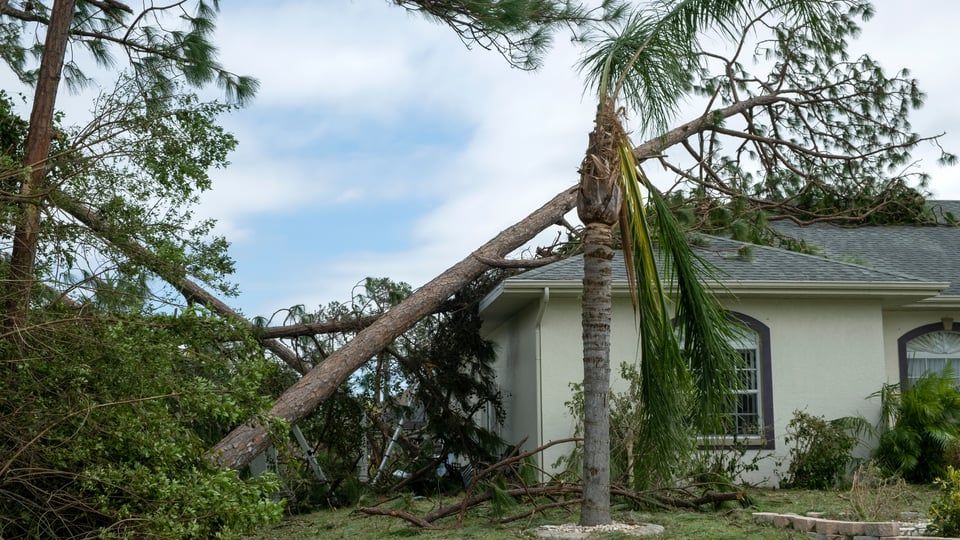
A hurricane damages distribution equipment (poles, transformers, power distribution feeders), and that damage reduces local service capacity, which can extend the time your home stays in a storm-related power outage. Flooded roadways and debris block crews, delaying repairs and stretching blackout time.
We consider historical patterns to recommend realistic minimums for a hurricane power outage. Hurricane Helene (September 27–28, 2024) reached a 4.79 million customer outage peak across multiple states, and the hardest-hit areas in western North Carolina experienced 14+ days in some locations, with major rebuild requirements and a long tail of remaining outages.
Hurricane Milton (October 9, 2024) produced large-scale Florida outages and “cycling” conditions where power returned in short windows (often 30 minutes to 2 hours) before failing again; PowerOutage.us saw 1.8 million site requests per hour at landfall, a signal that households rely on live outage intelligence when conditions change quickly.
Similarly, our data shows Hurricane Beryl (July 2024) drove 2.6 million Texas customers into outages and intensified heat stress through A/C loss during high-demand conditions. What does all this show? That it’s important to plan for multiple days without electricity, and treat “brief uptime windows” during a hurricane power outage as a resource you intentionally spend on charging, refrigeration recovery, and medical priorities.
Before the hurricane hits
Before the hurricane hits, build a plan that converts your highest risks into checklists, then stage supplies for 3–7 days so you can operate through fuel shortages, closed stores, and limited communications during a hurricane power outage.
To do this,
- Build an emergency kit
- Prepare backup power
- Protect documents and medical needs
- Secure cash and communications
- Fortify your home against the storm
Build a hurricane power outage emergency kit
Here are some tips to building a power outage emergency kit:
- Store water at 1 gallon per person per day for 3–7 days (plus extra for pets). Municipal water systems use pumps and treatment controls which can fail or reduce pressure during a hurricane power outage.
- Stock non-perishable food for 7 days and include a manual can opener, paper plates, and utensils to avoid using drinking water for dishwashing.
- Collect flashlights, headlamps, lanterns, and spare batteries so you can move safely through the house during a hurricane power outage.
- Get a battery-powered or hand-crank weather radio, charging cables, and a power bank so you can receive alerts and check restoration updates.
- Store cash in small bills; card networks and ATMs depend on power and connectivity, and a hurricane power outage can shut down transactions even when stores reopen.
- Store hygiene items like toilet paper, trash bags, wipes, towels, and sanitizer for multi-day outage living.
- Get thermometers to check food temperature is below 40°F to stay safe.
- Consider any specialty items like infant formula, mobility aids, hearing aid batteries, and any critical supplies for elderly or disabled household members who may be hit hardest by prolonged power loss.
- Don’t forget to pack pet supplies: food, water, medications, leash/harness, waste bags, vaccination records, and ID info.
If you expect cycling power after the storm has passed, set a “charging stack” in one container (power banks, cables, phone chargers, flashlight batteries) so you can recharge quickly during short uptime windows in a hurricane power outage.
Prepare your generator and backup power
Prepare generator and backup power systems in advance. This includes checking alarms, staging generators, and monitoring backup batteries.
- Install smoke alarms and carbon monoxide alarms with battery backup and test them before the storm so they still work when the grid is down.
- If you have a home battery backup, confirm it’s charged to your backup reserve level, set to outage/backup mode, and showing no system faults.
- Place the generator outdoors at least 20 feet away from windows, doors, vents, and garage openings to reduce carbon monoxide entry risk during a hurricane power outage.
- Store fuel safely in approved containers and stage it away from ignition sources; fuel storage increases vapor exposure, and vapor exposure increases fire risk, especially when people refuel in the dark.
- Determine your priority loads now: refrigeration, medical devices, communications, a few lights, and a fan. A generator has a watt limit, and that limit caps simultaneous loads, which forces you to make choices.
- If you plan to connect a generator to household circuits, schedule an electrician for a safe transfer method before hurricane season.
If you rely on rechargeable medical equipment, stage a backup plan that includes battery runtime expectations and charging priority during brief power returns.
Generator safety
A backup generator can be a lifeline for making it through a hurricane blackout, but operating it can be tricky when you’re under pressure in high winds and low visibility. Generator exhaust contains carbon monoxide, one of the most common deadly hazards during post-storm outages.
CDC disaster safety guidance explicitly recommends operating generators and other gas-powered equipment outside and at least 20 feet away from doors, windows, and vents to reduce carbon monoxide intrusion. This is especially important to remember in a hurricane, when you might assume placing a generator closer to your home will protect it. Doing so can be incredibly dangerous if the exhaust is near a door or vent to your home.
Protect documents and medical needs
Next, protect documents and create a medical device checklist to plan for evacuation, insurance, and recovery decisions during a hurricane power outage. Paper records let you get refills, travel, lodging, and aid when systems are offline.
Put key documents in waterproof containers: IDs, insurance cards, property records, medical records, prescriptions, and emergency contacts.
Refill prescriptions early and plan for refrigerated medications so you have a plan (like using an ice chest) to refrigerate medications without power.
Make a device plan with your doctor if you use electricity-dependent medical devices. The plan should cover runtime, charging method, backup oxygen or supplies if applicable, and where you can relocate if the outage extends beyond your batteries.
Secure fuel, cash, and communications
Secure fuel, cash, and communications early because hurricane outages can limit access to services even after the wind ends.
Fill your vehicle tank before storm impacts and keep a spare fuel plan that matches safe storage rules, because refueling can become difficult during wide-area outages. Store some extra generator fuel, as well.
Charge phones and power banks fully and download offline maps so you can navigate even if cell data slows or drops. Confirm how you will receive alerts: text, email, weather radio, and local emergency notifications.
Set a family communications plan with an out-of-area contact. Be aware that regional cell congestion reduces call quality, so SMS often works better during storm outages.
PowerOutage.us supports this planning step: live outage tracking reduces uncertainty to help you make decisions for charging, travel, and when to conserve device power during a hurricane power outage.
Fortify your home against wind and flooding
Strengthen your home against wind and flooding because physical damage and water can make your home unsafe to reenter after a storm. Install hurricane straps and ring-shank nails to reinforce roof connections. Brace gables, board or shutter windows, and strengthen exterior doors.
Seal gaps with weatherstripping, clear gutters, and trim trees. Bring in outdoor items that can become projectiles that cut utility lines or damage equipment. Clear gutters and drains to reduce water intrusion that can force you out of the home during a power outage.
Identify a safe interior room and stage helmets, shoes, flashlights, and a first aid kit there so you can shelter without scrambling in the dark.
Elevate vulnerable electronics and store extension cords and surge protectors where you can find them during a hurricane power outage. If you live in a low-lying zone, plan flood-safe storage locations and evacuation timing around road closures, because a flood and outage combination can trap households.
During the hurricane power outage
During the hurricane power outage, keep safety in mind to prevent carbon monoxide exposure, preserve food and water quality, avoid electrical hazards, and use limited power strategically for communications and medical needs.
Prevent carbon monoxide poisoning
Prevent carbon monoxide poisoning by controlling where combustion occurs and by keeping exhaust away from people and structures during a hurricane power outage. Run generators, grills, camp stoves, and any fuel-burning device outdoors and keep the generator 20 feet away from openings.
Keep vehicles out of garages and enclosed spaces. Use battery-powered lighting for indoor light and keep CO alarms active throughout the hurricane power outage.
If cycling power returns briefly, keep the generator outside and maintain placement rules. Short energy uptime windows still create the same CO risk when people rush and cut corners.
Manage food and water safely
Manage food and water safely by controlling temperature exposure and following advisory guidance during a hurricane power outage.
Follow water advisories. If officials issue a boil-water notice, boil water (if you can do so safely) or use bottled supplies from your outage kit.
USDA/FoodSafety.gov guidance states that a refrigerator will keep food safe for about 4 hours during a power outage if the door stays closed, and recommends discarding perishable refrigerated foods after that window. USDA FSIS guidance also notes that a full freezer holds temperature about 48 hours (about 24 hours if half-full) when left closed, which is why minimizing door openings is important.
If power returns in short windows, recharge batteries and then focus on recovery. Use thermometers to make sure perishable foods stay under 40°F.
Stay safe around downed power lines
Avoid downed lines since you can’t determine energization by sight, and hurricane debris can hide conductors during a power outage.
Stay at least 35 feet away from downed lines and anything a wire touches (trees, fences, puddles, vehicles), especially in standing water after the storm. Report hazards to 911 and your utility when you can, because line hazards slow restoration and threaten the public during outages.
Avoid driving through debris fields where lines may be hidden, since wires can lie across roads or under branches. If a line falls across your vehicle and you are inside, remain in the vehicle and call for help. Vehicle metal can conduct, and stepping out can create a current path through your body.
Conserve phone and battery power
Maintain access to alerts, outage tracking, and contacts across several days of hurricane power outage conditions by conserving power. Turn on low power mode, lower screen brightness, and close background apps to stretch battery life through the outage.
Use text messages and offline resources when networks slow, because data-heavy apps may fail during storm congestion.
Charge in planned order: medical devices first, communications second, lighting third, to make the most out of limited generator time or uptime.
Know when to evacuate
Use official orders, flood risk, medical constraints, and fuel realities as triggers during a hurricane power outage for when to evacuate.
- Leave early if you are in a mandatory evacuation zone or flood-prone area, since roads can become impassable before the worst outage conditions.
- Evacuate if medical needs exceed your backup power plan, including oxygen concentrators, dialysis constraints, refrigerated meds, or mobility needs that become unsafe without electricity.
- Evacuate if your home becomes unsafe from flooding, structural damage, or lack of potable water, which are problems that can compound during a multi-day hurricane power outage.
- Track road conditions and shelter guidance via official alerts and your weather radio so you are not relying on spotty data service.
If you must evacuate
If you have to evacuate during a hurricane power outage, execute a plan that prioritizes safe travel, medical needs, and family coordination.
First, plan your evacuation route and alternate route. Be aware that blocked roads extend travel time when traffic lights and fuel stations may be down.
Pack your “go kit” with documents, meds, chargers, water, and basic food so you can operate if hotels and stores have limited power. Bring pet supplies and confirm pet-friendly shelter or boarding options before departure, since many facilities restrict animals.
Shut off utilities only if local guidance supports it and it is safe to do so, particularly if flooding threatens electrical panels. Use PowerOutage.us before departure to understand outage spread and restoration patterns in your origin area and likely destination.
After the storm passes
After the storm passes, treat your first steps as safety verification and controlled recovery from the hurricane power outage: check hazards, apply food rules, protect electronics from surges, and monitor restoration updates.
When to throw food away
Follow the 40°F rule: discard refrigerated perishable foods exposed to 40°F or higher for more than 4 hours. Also throw out any food with unusual odor, color, or texture, especially if you can’t confirm temperature history during the outage.
Use a thermometer to confirm fridge temperature before deciding to keep items after power restoration.
Replace refrigerated medications if power was out for a day or more, unless the label provides room-temperature guidance. Call your pharmacist for medication-specific instructions.
Electrical and surge precautions
Use surge precautions because restoration after a hurricane power outage can produce voltage fluctuations that damage electronics. Keep sensitive electronics unplugged until power stabilizes and you confirm circuits are dry and safe.
Use surge protectors for critical devices once power returns, especially for routers, medical chargers, and refrigeration controls. Inspect cords and outlets for water intrusion before use, because floodwater can leave conductive residue.
Call a licensed electrician if you see mast damage, panel damage, or a burning smell, since those conditions can turn restoration into a fire hazard.
Understanding Utility Restoration Priorities
Understanding how utilities turn the power back on helps you deal with delays accurately and plan your next steps during a hurricane power outage. Generally speaking, utilities restore power by clearing hazards, stabilizing backbone infrastructure, and then re-energizing smaller circuits.
A state utility commission review (North Carolina Utilities Commission) summarizes typical storm restoration priorities as (1) safety hazards, (2) emergency services/critical infrastructure, then (3) restoring the largest number of customers in the shortest time, which matches the logic households should expect.
Common restoration sequence:
- Clear downed lines and hazards to protect the public and crews during the outage period.
- Repair transmission and main distribution feeders that serve large areas.
- Restore critical facilities and dense load areas when feasible (hospitals, water systems, emergency operations).
- Repair neighborhood-level equipment (transformers, laterals, service drops) that finally reconnects individual streets and homes.
Why is my power still out?
Not everyone gets power back at once. Hurricane Helene’s urban vs rural pattern illustrates this in PowerOutage.us data: dense infrastructure can restore faster, while infrastructure rebuild needs can extend outages for days to weeks in hard terrain. Use PowerOutage.us to track these patterns locally; real-time outage mapping shows spread, spread suggests feeder-level damage, and feeder damage predicts longer restoration windows.
Florida Public Service Commission documentation also describes how utilities use storm command-and-control processes to prioritize restoration to critical facilities, helping explain why neighborhood-level restoration can lag even when nearby areas re-energize after a hurricane power outage.
Utilities commonly note that crews must often repair “upstream” components (transmission/substations/feeder mains) before neighborhood lines can be safely re-energized, which is why visible damage near your home is not always the bottleneck in a hurricane power outage.
Hurricane power outage readiness checklist
Below is a quick before-during-after checklist that includes all the points we’ve talked about.
Before
- Store 1 gallon of water per person per day for 3–7 days.
- Stock non-perishable food for 7 days, a manual can opener, and disposable dishes.
- Charge phones and power banks. Stage cables in one “charging stack” for hurricane power outage cycling windows.
- Install/test CO alarms and smoke alarms with battery backup.
- Plan where to place the generator outdoors (20 feet from openings), store fuel safely, and prioritize household loads.
- Pack documents in waterproof containers and refill prescriptions early.
- Fill vehicle tanks and store cash in small bills for post-storm outages.
- Set an evacuation route, meeting plan, and out-of-area contact.
- Bookmark PowerOutage.us on your phone and check the outage map before hurricane season.
During
- Run the generator outdoors and keep it 20 feet away from doors/windows/vents.
- Keep the fridge closed (safe after 4 hours without power) and freezer closed (safe after 24–48 hours without power).
- Use thermometers and apply the 40°F rule.
- Stay away from downed lines (35 feet) and anything a wire touches.
- Conserve phone battery; charge medical devices and communications first during hurricane power outage downtime.
- Evacuate early if ordered, flooded, or medically constrained.
After
- Check for hazards before moving around the property after the storm.
- Discard perishables exposed to 40°F+ for 4+ hours.
- Unplug sensitive electronics until power stabilizes; then reconnect with surge protection.
- Monitor PowerOutage.us for restoration progress and cycling behavior in your area.
- Restock your kit and recharge power banks when stable power returns.
Prepare well and stay informed
To recap, prepare your kit for 3–7 days, run backup power with strict generator safety rules, protect food with the 4-hour/24–48-hour timelines and the 40°F threshold. Also keep your distance from downed lines (35 feet), and use live outage intelligence from PowerOutage.us to time charging, travel, and recovery decisions, especially during cycling restoration patterns like those seen in Hurricane Milton.