


Preparing your home for extended power outages means preparing on multiple levels, not just buying a flashlight. The most important step is knowing which home systems depend on electricity and having a plan for each one before the grid goes dark in a storm outage.
When Winter Storm Fern knocked out power to over 1 million customers across a 2,000-mile stretch from New Mexico to New England in January 2026, many households were caught without any multi-day plan. PowerOutage.us tracked outages lasting 6 or more days in the hardest-hit areas. Our data consistently shows that multi-day blackouts are possible in different seasons and parts of the country. Let’s talk about how to prepare.
Know what systems fail in a power outage
Before you can prepare, you need to know what breaks. Extended blackouts affect more than just lights and phone charging.
Common home systems that fail without power:
- Gas furnaces and boilers (require electricity to run controls and blowers)
- Well pumps (no electricity means no running water)
- Sump pumps (flood risk increases during outages tied to heavy storms)
- Medical devices like CPAP machines, oxygen concentrators, and home dialysis units
- Electric stoves and ovens
- Garage door openers
- Security systems
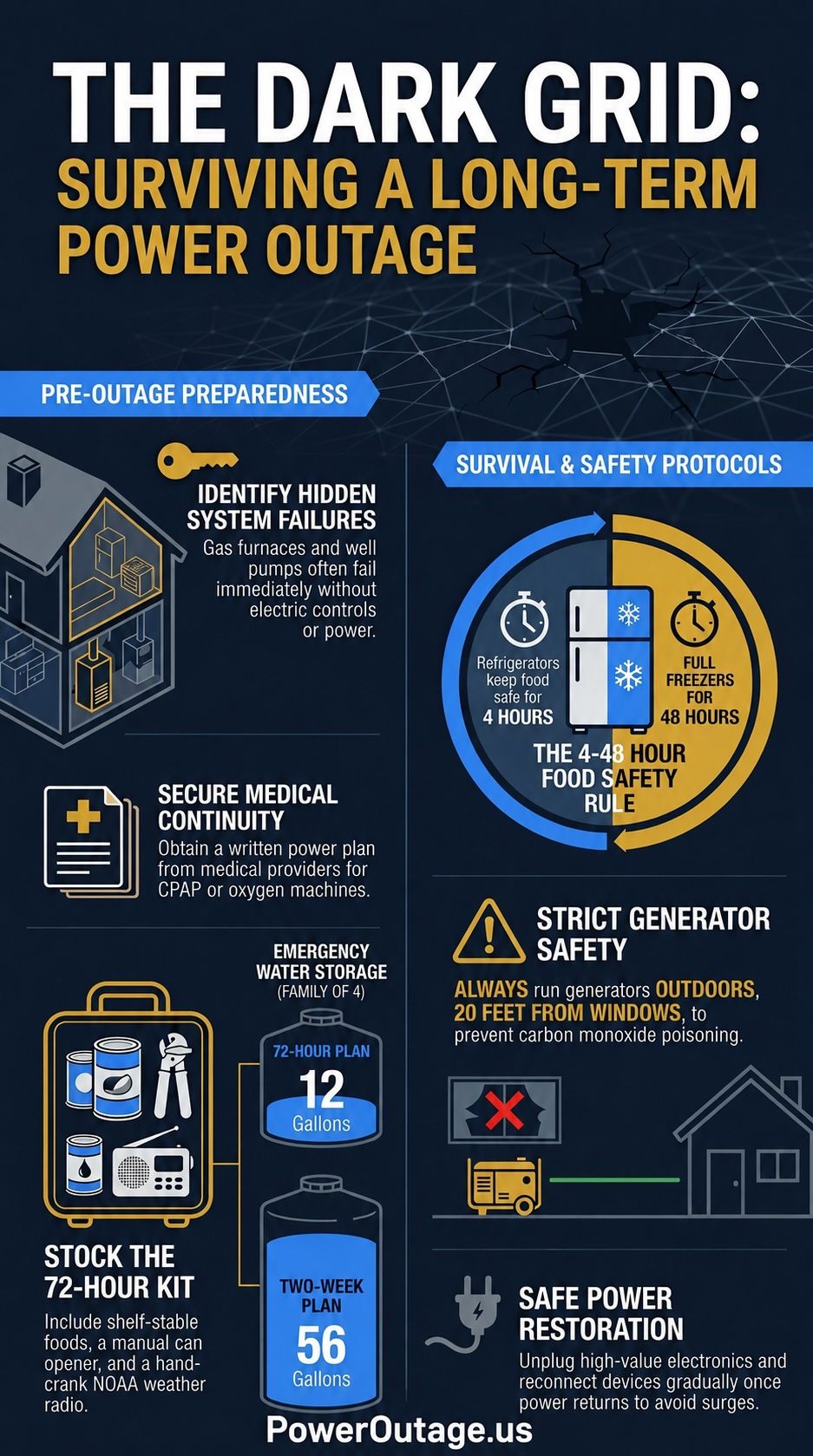
Natural gas supply lines typically continue functioning during a power outage. However, most gas furnaces, boilers, and water heaters rely on electric controls, ignition, and blower motors. This surprises many homeowners who assume gas heat is immune to blackouts. It is not, in most cases.
If you are on a municipal water system, water pressure may hold during shorter outages depending on how your utility manages its pumping stations. However, well-dependent households lose water immediately when the pump loses power. Storing water in advance is not optional for these homes.
Build your emergency supply kit
A long-term power outage preparation kit gives you the ability to sustain your household for 72 hours at a minimum, while extending that to a couple of weeks can be smart for extreme situations.
Water: Store at least one gallon per person per day. For a 72-hour plan, a family of four needs 12 gallons. For a two-week plan, you need 56 gallons. The Federal Emergency Management Agency (FEMA) recommends storing water in food-grade sealed containers kept in a cool, dark location.
Food: Stock non-perishable items that need little or no cooking.
Good options include:
- Canned beans, vegetables, and soups
- Peanut butter and crackers
- Dried fruit, nuts, and granola
- Shelf-stable milk and juice
- Instant oats and rice (if you have a camp stove)
Use a manual can opener. This sounds obvious, but it is one of the most commonly forgotten items.
Light and communication:
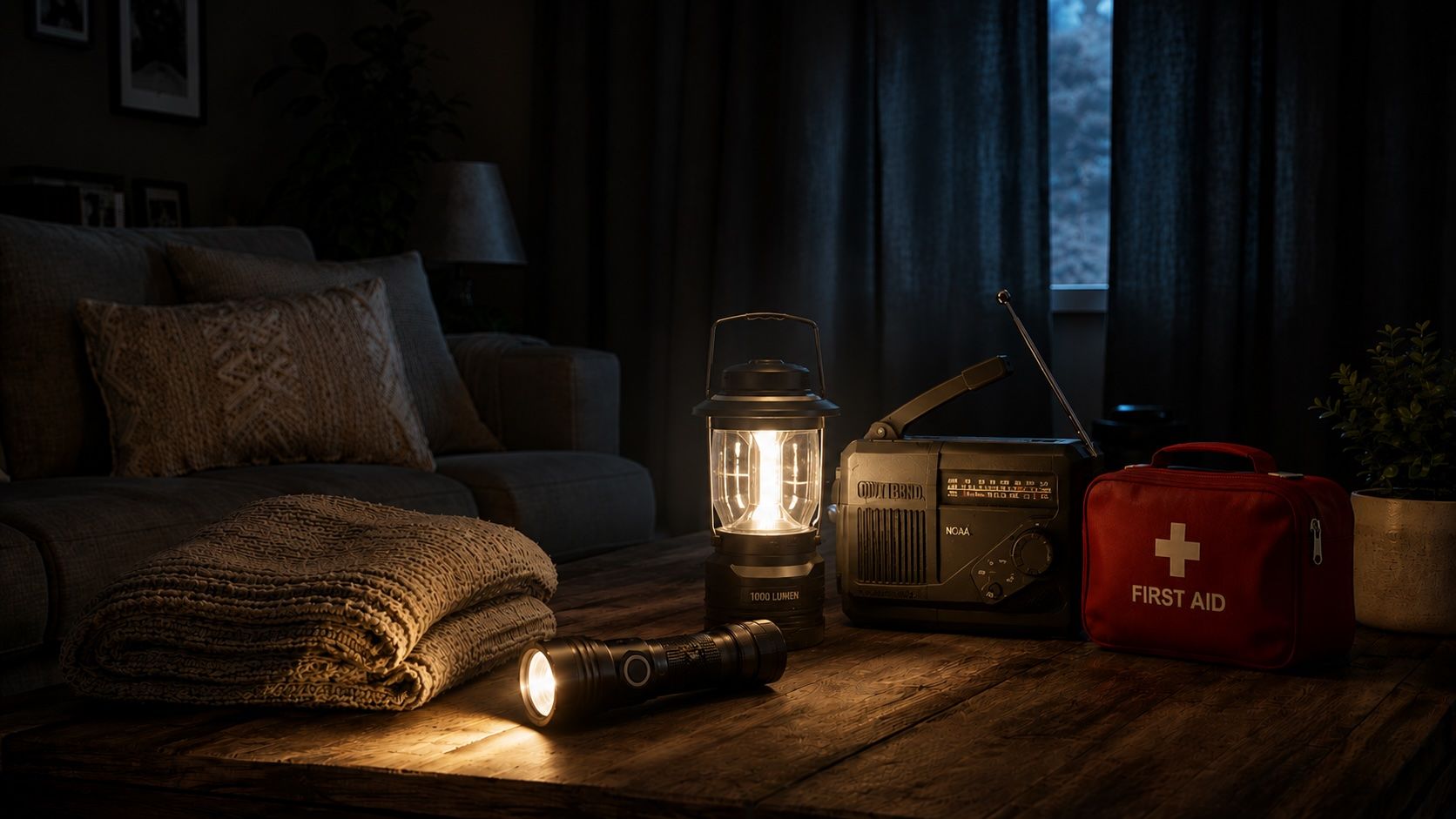
- Flashlights with extra batteries for every household member
- A battery-powered or hand-crank NOAA weather radio
- Portable power banks for phones and small devices
- Car chargers as a backup charging source
First aid: Keep a fully stocked power outage emergency kit with bandages, antiseptics, pain relievers, and any prescription medications in a quantity to cover at least a 7-day supply.
Food storage and refrigerator management
Food safety is one of the most mismanaged parts of a long-term power outage preparation plan. The rules are simple, but the consequences of ignoring them are serious.
Core food safety rules during an outage:
- Keep refrigerator and freezer doors closed as much as possible
- A closed refrigerator holds safe temperatures for about four hours
- A full freezer stays at safe temperatures for approximately 48 hours
- A half-full freezer drops to unsafe temperatures in about 24 hours
- Discard any food that reaches 40°F or higher for two hours or more
Use a refrigerator thermometer. Guessing food safety by appearance or smell is not reliable. The U.S. Food Safety and Inspection Service publishes a detailed chart you can use to see which specific foods are safe after losing refrigeration.
Keeping ice packs permanently in your freezer is a smart habit. They extend the cold hold time in a cooler if you need to transfer food during an extended outage. A well-insulated cooler with block ice can maintain safe temperatures for 48 hours or more.
When in doubt, throw it out. Foodborne illness is a genuine risk, not a minor inconvenience.
Generator safety for multi-day outages
A portable generator extends your ability to run critical systems and can power a refrigerator, medical devices, and a few lights. But if you use one incorrectly, it can kill.
Carbon monoxide (CO) is the primary danger. Home generators produce CO, a colorless and odorless gas that builds up quickly in enclosed or partially enclosed spaces. According to the CDC, carbon monoxide poisoning from generators is one of the leading causes of non-fire-related deaths during natural disasters.
Generator safety rules:
- Always run generators outdoors, at least 20 feet from windows, doors, and attached garages
- Install battery-backup carbon monoxide detectors on every level of your home
- Never use a generator in a garage, even with the door open
- Connect appliances with heavy-duty extension cords rated for outdoor use
- Let the generator cool before refueling to prevent ignition from fuel on hot engine parts
- Never backfeed a generator into your home's wiring without a transfer switch installed by a licensed electrician
A transfer switch lets your generator safely power hardwired circuits in your home. Without one, any power you backfeed through an outlet can energize utility lines outside, putting repair crews at serious risk. This is illegal in most jurisdictions and is a known cause of lineworker deaths after major storms.
A home battery backup system is a safer and quieter option for households that mainly need to power medical devices, keep phones charged, and run lights. Battery systems don’t produce emissions and can be recharged from solar panels (if your system has grid islanding capabilities), making them a better long-term investment for multi-day outage coverage in some scenarios.
Plan for medical and special needs
Medical device planning is the most time-sensitive part of a multi-day power outage plan. It includes knowing how to keep devices running and manage refrigerated medications. Waiting until the outage starts is too late.
If anyone in your household depends on electrically powered medical equipment:
- Contact your medical provider now to get a written power outage plan
- Ask specifically how long your device can run on internal battery and whether backup batteries are available
- Find out how long critical refrigerated medications can remain at room temperature safely
- Enroll with your local utility's medical baseline or life support program if one exists
Review our medical device power outage checklist for a full breakdown of what to plan.
After a major outage lasting more than 24 hours, any medication that requires refrigeration should be discarded unless the label specifically states otherwise. Your pharmacist can help you get an emergency supply. Consult them directly if you are unsure.
Home heating and cooling during extended blackouts
Extreme heat and extreme cold both become dangerous within hours for the elderly, infants, and people with certain medical conditions. Temperature management is what separates a manageable blackout from a life-threatening one.
In cold weather:
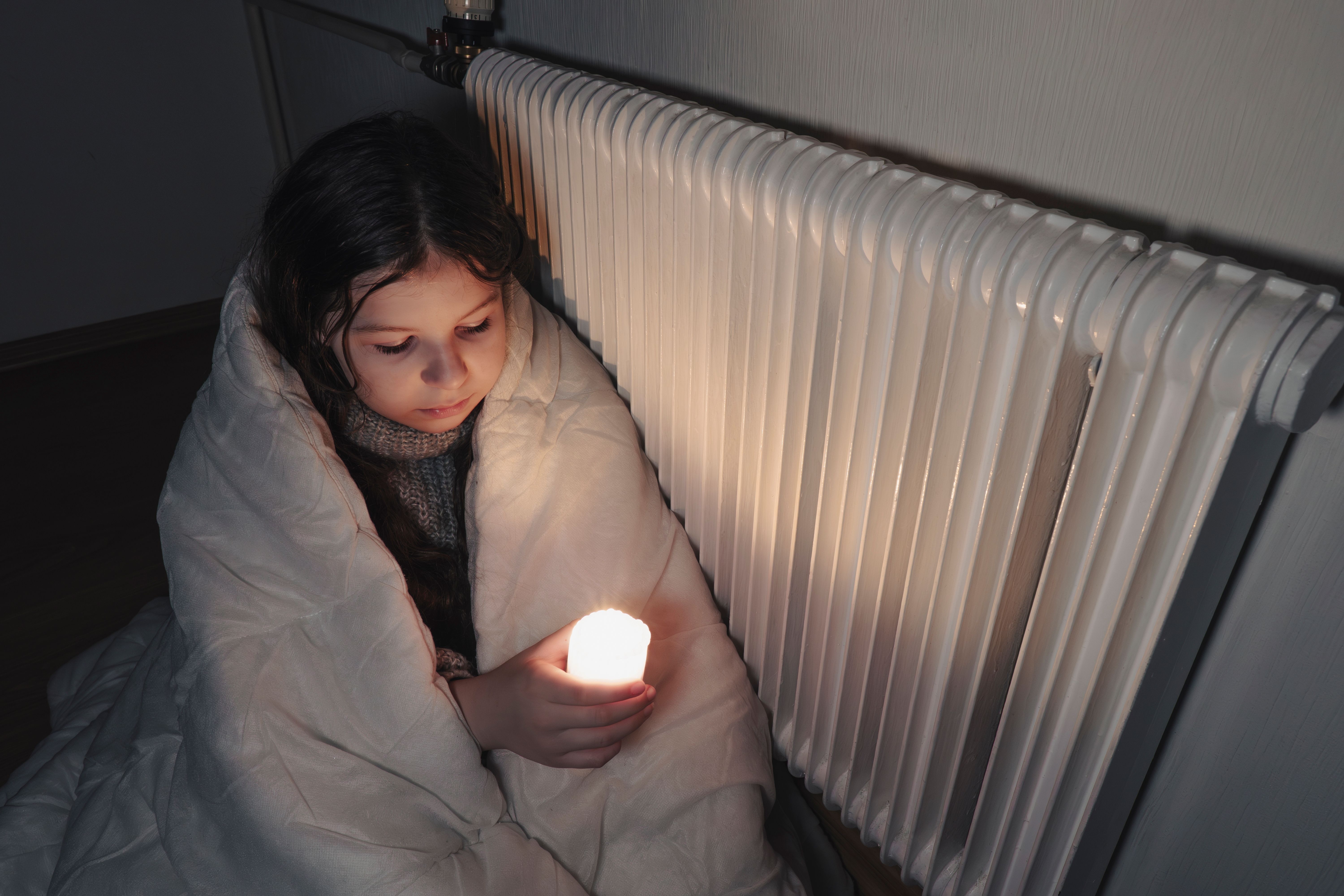
- Layer clothing and use sleeping bags rated for low temperatures
- Move everyone into one room and use body heat to stay warm
- Block drafts under doors with towels or rolled blankets
- Never use a gas oven, charcoal grill, or camp stove indoors to generate heat. All of these produce carbon monoxide.
- Identify local warming shelters through 211.org before storms arrive
In hot weather:
- Stay on the lowest level of the home, where temperatures are cooler
- Drink water consistently, even without feeling thirsty
- Use battery-powered fans to increase airflow
- Identify local cooling centers through your county emergency management office
According to the CDC, over 700 people die each year from extreme heat in the U.S. A generator-powered window air conditioner or fan can meaningfully reduce risk for vulnerable household members during summer outages.
Real outage examples: what multi-day blackouts actually look like
The gap between a theoretical outage plan and a real one often shows up on day three. That is when food safety becomes urgent, generator fuel runs low, and the emotional toll of losing your routine starts to compound.
Winter Storm Fern
During Winter Storm Fern in January 2026, PowerOutage.us tracked outages across a 2,000-mile corridor. Parts of northern Mississippi remained without power for multiple weeks. Rural Tennessee households experienced restoration timelines that stretched well beyond the initial forecasts.
Late winter winds in 2026
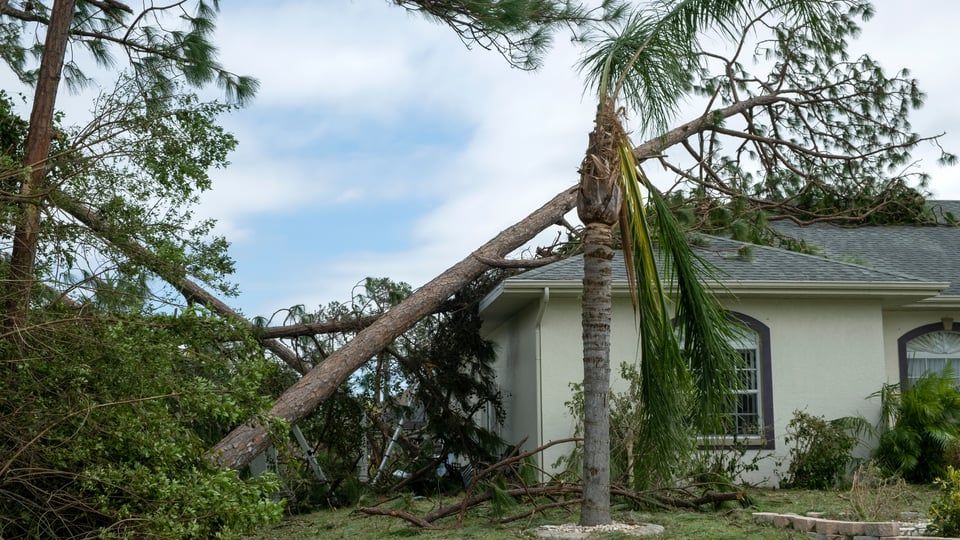
Wind events are another consistent driver of multi-day outages. On March 14, 2026, PowerOutage.us tracked 869,000 customers without power across the U.S., with over 682,000 of those concentrated in Ohio, Pennsylvania, and Michigan.
Hurricanes and other storms
During Hurricane Helene in fall 2024, PowerOutage.us tracked a peak of 4.79 million customers without power across the Southeast. North Carolina saw restoration times exceeding 14 days in the western part of the state, where infrastructure damage was most severe. That scale of outage is where every gap in a household's preparation plan becomes apparent.
We have also monitored Winter Storm Iona in March 2026, which stretched from Texas to Maine and reinforced a consistent pattern: storms are growing in scope and duration. Preparation plans built around a 24-hour outage are no longer adequate for most U.S. households.
Check PowerOutage.us to monitor current outage data, track restoration progress, and set up real-time alerts for your area.
Protect your home and electronics
After an outage, power returns in surges and spikes that can damage electronics and appliances. A few proactive steps can reduce that risk significantly.
Before an expected outage:
- Unplug high-value electronics like televisions, computers, gaming consoles, and home theater equipment
- Turn off major appliances like air conditioners and electric water heaters
- Leave one lamp plugged in so you know when power returns
When power comes back:
- Don’t plug everything in at once. Reconnect devices gradually over 15 to 20 minutes.
- Inspect your circuit breaker panel for tripped breakers before restoring full power
- Check sump pumps, well pressure tanks, and HVAC systems before relying on them
Surge protectors help with minor voltage irregularities during normal use, but don’t protect enough against significant transient spikes that can happen when power returns after a major event. A whole-home surge protector installed at the main panel offers stronger protection and is available through most licensed electricians.
Make a communication and evacuation plan
Reliable phones, accessible evacuation routes, and a written contact list are the three communication tools most likely to fail or go missing when an extended outage hits.
- Know your local utility's outage reporting number and bookmark their outage map
- Write down emergency contacts on paper. Phone batteries die.
- Identify two or three locations you could relocate to: a family member's home, a hotel in a nearby unaffected area, or a public shelter
- Know your route out of your neighborhood if roads become impassable
If you have children or elderly family members, assign a specific person outside your immediate household as a designated check-in contact. This step can reduce confusion during a high-stress event.
Ready.gov provides a free family emergency plan template that covers communication, evacuation, and meeting point planning.