
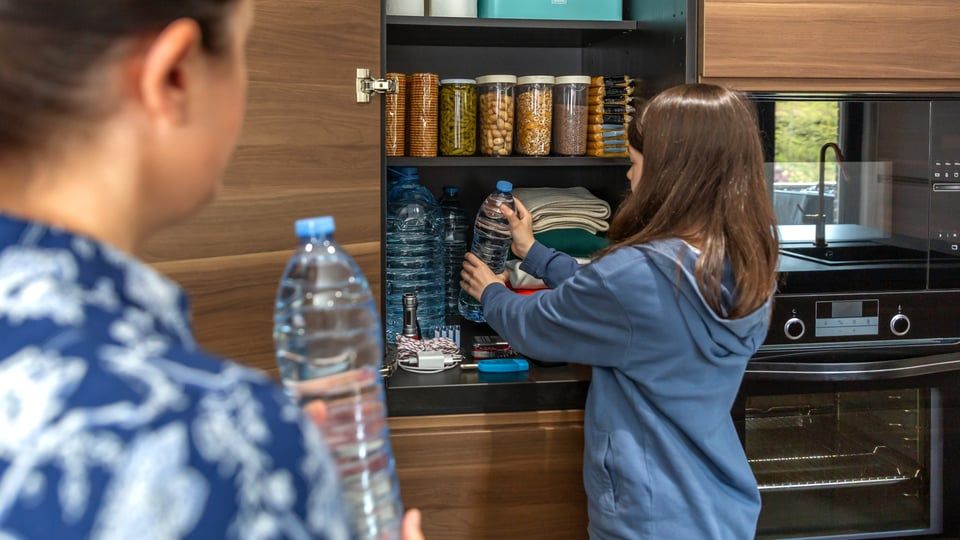


A refrigerator keeps food safe for about four hours without power, provided the door stays closed. After that window, perishable items like meat, poultry, seafood, eggs, and dairy become unsafe to eat. The four-hour rule is the single most important number to know during any storm power outage.
At PowerOutage.us, we've tracked power outages across 950+ utilities serving more than 200 million customers since 2016. During Winter Storm Fern in January 2026, our platform recorded over 1,000,000 customers without power at the storm’s peak, with some areas in Tennessee and Mississippi going without power for six or more days. Events like these make food safety planning essential.
How long does food last in a fridge without power?
The refrigerator keeps food at a safe temperature for up to four hours when the door remains closed. Every time you open the door, cold air escapes and that window shortens. The USDA recommends keeping the refrigerator closed as much as possible from the moment the power goes out.
After four hours above 40°F (4°C), perishable foods enter the danger zone. Bacteria like Salmonella and Listeria multiply rapidly between 40°F and 140°F. You will not necessarily be able to smell or see the difference, which is why guessing is dangerous.
If power is restored within four hours and the refrigerator stays closed, food is generally safe. Use a food thermometer or appliance thermometer to verify the temperature is still 40°F or below before eating anything.
How long does a full freezer last without power?
A full freezer maintains a safe temperature for about 48 hours with the door closed. A freezer that is only half full holds safe temperatures for about 24 hours. The mass of frozen food acts as a thermal buffer, keeping internal temperatures low far longer than an empty unit would.
You can safely refreeze food if it still contains ice crystals or if the temperature reads 40°F or below when you check. But refreezing doesn’t eliminate safety risks if the food has thawed completely and warmed above 40°F. Quality may also suffer after refreezing, with texture and moisture losses in meat, poultry, and some dairy items.
Ice cream and frozen yogurt are an exception. Both should be discarded if they soften at all, even if the freezer is otherwise cold. They do not refreeze well and spoil faster than other frozen items once they begin to melt.
What to do in the first hour of a power outage
The most important action is to stop opening the refrigerator and freezer. Temperature loss accelerates with every door opening. If the outage is likely to last more than four hours, begin preparing a cooler with ice or ice packs for your highest-priority perishables.
- Keep the refrigerator and freezer doors closed
- Check PowerOutage.us to see estimated restoration times for your utility
- Move meat, poultry, seafood, and dairy into a cooler if restoration looks more than four hours away
- Add block ice or dry ice to the cooler to maintain temperatures at or below 40°F
Having a power outage emergency kit ready before an event gives you an advantage. This includes a battery-powered or digital food thermometer, pre-frozen ice packs, and a quality cooler that can hold temperature for 24 hours or more.
Fifty pounds of dry ice keeps an 18-cubic-foot, fully stocked freezer cold for approximately two days, according to the FDA. Block ice lasts longer than cubed ice and is a better choice for the refrigerator compartment.
Refrigerator food safety chart: what to keep and what to throw out
The USDA and FDA publish clear guidance on which foods are safe after exposure to temperatures above 40°F for more than two hours. The general principle is: throw away anything protein-rich, dairy-based, or cooked if it has been above 40°F for more than two hours.
- What to keep: Hard cheeses, butter, margarine, peanut butter, jelly, mustard, ketchup, pickles, olives, Worcestershire/soy/barbecue sauces, vinegar-based dressings, fresh uncut fruits and vegetables, bread/rolls/bagels/tortillas, fruit pies, opened canned fruits
- What to throw away: All meat, poultry, seafood, and lunchmeats; milk, cream, soft cheeses, yogurt, and eggs; opened mayo and creamy dressings; cooked pasta, rice, and potatoes; cut fruits and vegetables; custard/cheese pies and quiche; casseroles, soups, and stews; opened canned meats and fish; pizza
Freezer food safety chart: refreeze or discard?
The rule of ice crystals (refreeze food that still has crystals) is nuanced. Ice crystals confirm the food has not fully thawed, but they don’t guarantee the temperature never rose above 40°F. If you have an appliance thermometer in the freezer, check it the moment power is restored. A reading at or below 40°F means the food is safe.
Still has ice crystals/at or below 40°F?
- Refreeze: All meat, poultry, seafood, soups, stews, milk, eggs, soft/hard/shredded cheeses, fruit juices, frozen fruits and vegetables, breads and cakes (no custard), custard pies, casseroles, pasta and rice dishes, flour, nuts, frozen meals
- Discard: Ice cream and frozen yogurt
Above 40°F for 2+ hours?
- Refreeze: Hard cheeses, fruit juices (discard if moldy/yeasty), frozen fruits (discard if moldy/slimy), breads and cakes (no custard), flour and nuts
- Discard: All meat, poultry, seafood, soups, stews, milk, eggs, ice cream, soft and shredded cheeses, frozen vegetables (after 6 hrs), custard pies, casseroles, pasta and rice dishes, frozen meals
Another thing to think about is that the two-hour rule we mentioned above for perishables at room temperature shortens to one hour when the outdoor or indoor temperature is above 90°F (32°C). Summer outages in hot climates are significantly more dangerous for food safety than winter outages. Perishables reach unsafe temperatures much faster during a heat wave.
How to prepare your refrigerator and freezer before a power outage
Preparation before an outage makes the four-hour window much more manageable. The FDA recommends keeping appliance thermometers in both the refrigerator and freezer at all times so you have an objective reading when power is restored.
A few steps that extend your safe window significantly:
- Freeze containers of water in advance. They add thermal mass to the freezer and provide clean meltwater later.
- Pre-freeze gel packs for the refrigerator compartment.
- Keep the freezer as full as possible. A full freezer lasts 48 hours, a half-full one only 24.
- Move items you can live without to the freezer before a storm. Milk and leftovers freeze well.
- Know where to buy dry ice or block ice locally before you need it.
Home battery backup systems can run a standard refrigerator through a short or medium-length outage. Most modern mid-size refrigerators draw 100 to 200 watts. A 2,000 Wh home battery can run a refrigerator for 10 to 20 hours, depending on the unit's efficiency and how often the door opens. For outages lasting multiple days, a generator is a more practical option for keeping the refrigerator and freezer running continuously.
Real outages from PowerOutage.us tracking: when food becomes a real concern
When Winter Storm Fern hit in January 2026, PowerOutage.us tracked over 1 million customers without power at peak, with Tennessee's hardest-hit areas, including Nashville, going six or more days without electricity. After six days, food safety in a home refrigerator without any backup cooling becomes a total loss. Every refrigerated perishable is gone within the first four hours. The freezer buys you two days at most.
Hurricane Helene (4.79 million customers at peak across Florida, South Carolina, Georgia, and North Carolina) produced 14-day outages in parts of western North Carolina. Cases like these illustrate why generator ownership or a robust battery system is not just convenient but practically necessary in high-risk regions.
What about flood damage to food and water?
Flood conditions add another layer of risk beyond temperature. The FDA states clearly that any food that may have come into contact with floodwater should be discarded, regardless of packaging, except for commercially canned goods in undamaged, all-metal cans.
Screw-cap bottles, snap-lid jars, cardboard cartons, and home-canned foods cannot be reliably cleaned after floodwater exposure. Discard them. You can clean and sanitize undamaged all-metal cans by washing with soap and water, rinsing, then soaking in a bleach solution (1 cup of unscented 5.25% bleach per 5 gallons of water) for 15 minutes.
Flood water can contain all kinds of hazardous chemicals and materials, including sewage, which is why it’s important to sanitize cans.
Also, tap water in flood-affected areas may be unsafe even if it looks clean. Follow your local utility's boil-water advisory if one has been issued. If no guidance is available, boil water for one minute before using it for drinking, cooking, or food preparation.
Medical devices and refrigerated medications
Some households depend on refrigerated medications like insulin or certain liquid antibiotics. A power outage creates a medical risk that goes beyond food safety in these cases. Insulin can generally be kept at room temperature for up to 28 days (unopened vials may vary), but this depends on the specific product and manufacturer guidelines.
For households that rely on electrically powered medical devices, a dedicated battery backup or generator plan is essential before any storm season. Create a medical device power outage checklist to know what steps you’ll take to maintain power to important equipment. Tracking estimated outage duration through PowerOutage.us helps prioritize when to activate backup plans.
After the power comes back: what to check first
When power is restored, the first step is to check temperatures before eating anything. Use an appliance thermometer or food thermometer to verify that the refrigerator is at or below 40°F. If the thermometer was in the freezer throughout the outage, a reading at or below 40°F means freezer contents are safe.
If no thermometer is in the freezer, inspect each package individually for ice crystals. Do not taste food to determine its safety. The USDA and FDA are consistent on this point: tasting unsafe food will not protect you, because harmful bacteria like E. coli and Salmonella produce no reliable flavor signal.
Perishable foods with temperatures between 40°F and 45°F can be cooked and eaten right away, but should not be stored. Anything above 45°F for more than two hours should be discarded.
Quick recap
To summarize power outage food timing rules, you get four hours for the fridge, or 48 hours for a full freezer. After that, throw away perishables. Never taste-test. When in doubt, throw it out, as they say. Check PowerOutage.us the moment power goes out for real-time restoration estimates across 950+ utilities, so you know whether to wait or start moving food to a cooler.