




Besides being inconvenient, a power outage can pose a safety threat. A few, actually. Things like electrical surges, food spoilage, medical device failure, loss of communication, and carbon monoxide (CO) exposure (if you use a generator) require planning to stay safe during a power outage.
At PowerOutage.us, we track 950+ utilities serving 200+ million customers across the U.S., monitoring every major outage event since 2016. During Hurricane Helene, our platform recorded 4.79 million customers out simultaneously—the largest single event we tracked in 2024. Western North Carolina saw 14+ days without power. Outages at that scale expose every weak point in home power outage safety planning. Preparing before an outage is the most effective way to reduce injury, property damage, and avoidable loss, so let’s see how to do it.
What are the most pressing risks during a power outage?
Losing grid power removes HVAC and air conditioning, refrigeration, lighting, medical device power, and communication at the same time. From a power outage safety standpoint, each loss creates a separate hazard that you have to manage.
- Electrical hazards emerge at two points: during the outage, when downed lines or energized water may be present, and when power returns, when voltage surges can damage equipment.
- Food spoilage begins within 4 hours if refrigerator doors stay closed, and faster if they are opened often.
- Medical disruption affects anyone who depends on powered devices like oxygen concentrators, CPAP machines, or refrigerated medications such as insulin.
- Carbon monoxide exposure risk rises if you run generators, grills, or fuel-burning heaters indoors or too close to the home.
- Thinking about communication, stay updated with outage alerts and keep your phone charged. Cell towers run on backup batteries, and most fail within 4 to 8 hours of grid loss, reducing call reliability precisely when coordination matters most.
PowerOutage.us data from Winter Storm Fern (January 2026) shows 1,005,641 customers at peak impact, with Tennessee alone losing 306,700 customers—many in dense Nashville apartment buildings where 48% of residents live in multi-unit buildings. Duration in the hardest-hit areas went over 6 days. That kind of extended outage shows why power outage safety requires more than flashlights and bottled water. You also need a plan for food storage, backup power, and safe relocation if necessary.
Power outage safety checklist for different risks
Here’s a quick overview of what to do for different risks during a power outage.
- Electrical safety: Disconnect sensitive electronics before power returns to avoid surge damage, and stay 30+ feet from any downed power lines.
- Food safety: Keep the refrigerator closed. It stays safe for up to 4 hours; a full freezer holds for up to 48 hours.
- Medical needs: Track battery runtime on all medical devices and relocate refrigerated medications if the outage exceeds 4 hours.
- Communication: Charge power banks (10,000+ mAh recommended) before the storm and monitor PowerOutage.us, which updates every 10 minutes.
- Backup power: Place generators 20+ feet from windows and doors, and install a battery-powered CO detector near all sleeping areas.
Electrical, food, medical, communication, and backup power risks can happen at different rates, so you have to manage each risk on its own timeline.
What to do before a power outage
Inventory every electricity-dependent system in your home before a winter storm outage arrives. For strong power outage safety planning, include refrigerators, freezers, CPAP machines, oxygen concentrators, electric stoves, sump pumps, internet equipment, and garage doors.
Battery and backup planning:
- Store a power bank (minimum 10,000 mAh) charged at all times
- Keep a battery-powered or hand-crank radio for emergency alerts
- Verify smoke detector and CO detector batteries quarterly
These are basic power outage safety steps because communication loss often makes outages harder to manage. If cell service degrades or restoration estimates change, battery reserves and radio access become critical.
Now is the time to charge your home battery backup and verify its functionality if you have one. We’re talking about backups like the Tesla Powerwall or FranklinWH battery here. These require a big investment to install (over $10,000 usually per battery), but they provide whole-home backup for as long as you can ration the capacity. Also, if you have solar panels with islanding capability (to work while disconnected from the grid), you can potentially recharge the battery with solar energy during an outage.
Create a power outage emergency kit
Emergency kit essentials include:
- Flashlight with extra batteries
- Charged power bank (10,000+ mAh minimum)
- Battery-powered or hand-crank emergency radio
- Three-day water supply (1 gallon per person per day)
- Non-perishable food requiring no refrigeration or cooking
- Appliance thermometer (monitors refrigerator stays below 40°F)
- First aid kit with a printed medication list
- Battery-powered CO detector
- Copies of critical documents (ID, insurance, medical records)
- Cash in small bills (ATMs and card readers fail without power)
A home power outage emergency kit should be packed, labeled, and easy to reach in the dark. Store it in a consistent location so every household member can find supplies without delay.
Medical planning:
- Contact your utility to register as a medical baseline customer if you depend on powered devices
- Identify the nearest facility with backup power before an event
- Store a printed list of medications, dosages, and physician contacts
Medical power outage safety planning should start before severe weather is in the forecast. If someone in the home depends on electricity for breathing support, refrigeration, mobility, or medication stability, you need a relocation plan and a backup power plan in writing.
What to do during a power outage
- Disconnect sensitive electronics: Surge damage often occurs when service is restored. For better power outage safety, unplug televisions, computers, routers, and small appliances before the outage ends. Leave one lamp plugged in to signal when power returns.
- Keep the refrigerator closed. An unopened refrigerator maintains a safe temperature for about 4 hours. In practical power outage safety terms, every unnecessary door opening shortens that safe window and raises the chance of food loss.
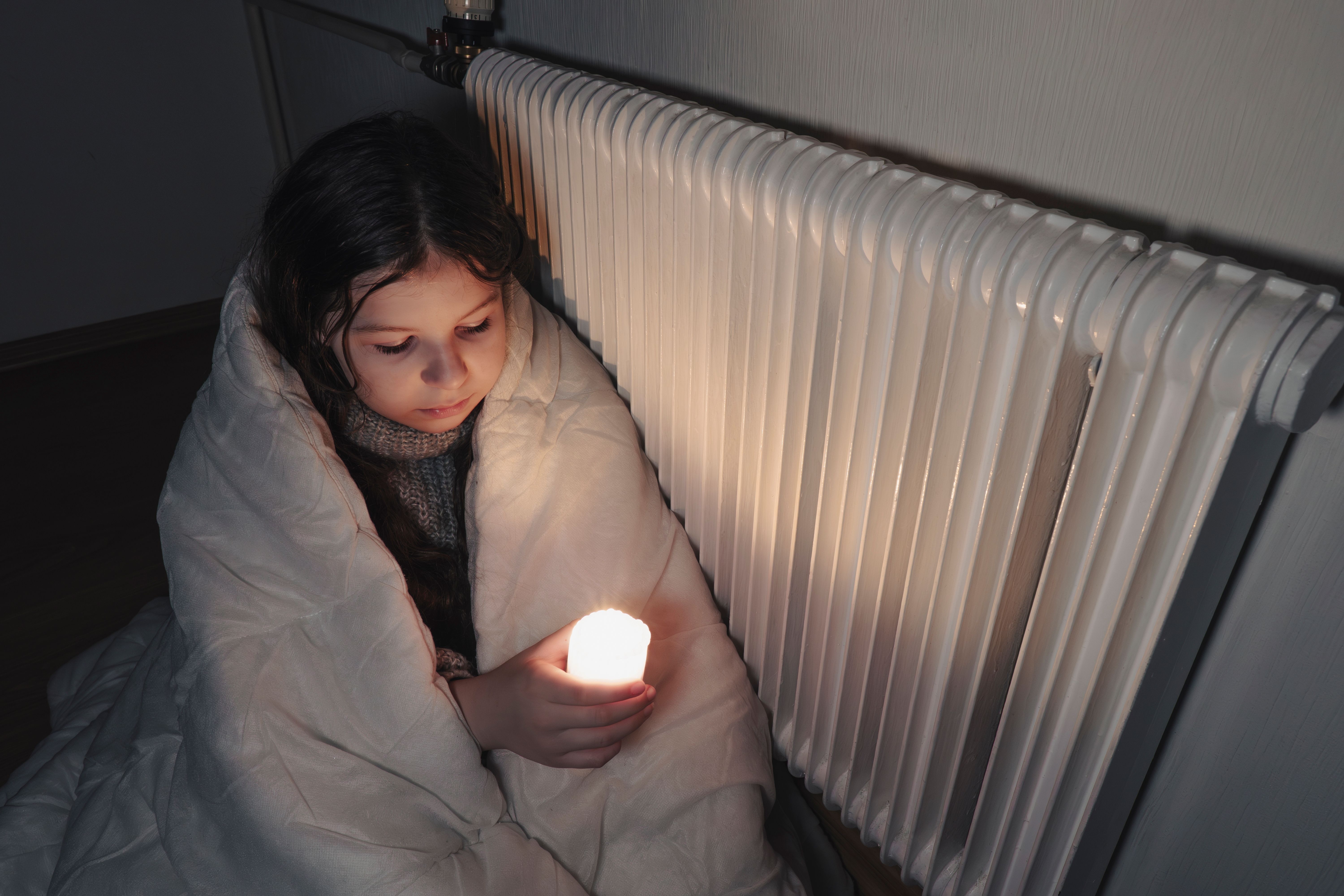
- Use flashlights instead of candles: Candles create a fire hazard, especially in extended outages when visibility is poor, and people are tired. Battery lighting is the safer choice for household power outage safety.
- Monitor outage duration: Set a timer when the outage starts. At 4 hours, shift to food safety protocols. At 24 hours, reassess medical device status, room temperature, and medication storage.
- Avoid carbon monoxide sources indoors: Gas stoves, charcoal grills, and camp stoves produce CO. Safe power outage response requires operating all fuel-burning equipment outdoors only and away from windows, doors, and vents.
Food safety during a power outage
Let’s look at refrigerator and freezer timelines for food safety. The USDA Food Safety and Inspection Service provides the following guidance:
| Storage type | Safe duration (door closed) | Action at threshold |
|---|---|---|
| Refrigerator | 4 hours | Discard perishables above 40°F |
| Freezer (full) | 48 hours | Monitor; refreeze if ice crystals remain |
| Freezer (half-full) | 24 hours | Same criteria—ice crystals required |
| Refrigerator (opened frequently) | Under 2 hours | Shift perishables to cooler with ice |
The threshold temperature is 40°F (4°C). Food held above 40°F for more than 2 hours enters the bacterial growth zone. When in doubt, discard. Do not taste food to assess safety—spoilage bacteria produce no reliable sensory signal.
Keep an appliance thermometer in the refrigerator to verify temperature without opening the door repeatedly.
These are conservative population-level thresholds assuming a sealed unit pre-chilled to 40°F. High ambient temperature, frequent door openings, and low food mass all make the safe time zone shorter. Verify with an appliance thermometer.
Generator safety rules in a power outage
Home generators can provide a lifeline during an outage, but it’s crucial to follow safety procedures to not introduce extra risks. The Consumer Product Safety Commission (CPSC) estimates approximately 85 consumers die annually from generator-related CO poisoning, with 81% of fatalities occurring in residential locations during weather-related power outages. Similarly, the CDC also says that CO kills. Both agencies identify generators as the leading CO source, which makes generator placement one of the most important parts of power outage safety.
Placement rules to follow:
- Position generators away from any window, door, or vent (CDC recommends 20 feet while CPSC recommends 25 feet)
- Direct exhaust away from the structure
- Never, ever, operate a generator in a garage, even with the door open
These are non-negotiable power outage safety rules. A partially open garage, covered porch, or breezeway is still unsafe if exhaust can move back into living spaces.
To maintain safe operation,
- Install battery-powered CO detectors on every floor before running a generator
- Refuel only after the generator cools (hot fuel contact causes fire)
- Use only outdoor-rated extension cords rated for the connected load
Generator power outage safety also requires routine inspection. Test CO alarms, inspect cords for damage, and confirm the generator is dry, stable, and protected from rain according to manufacturer instructions.
Finally, manage your electrical load properly:
- Identify the total wattage of connected devices before starting
- Prioritize the refrigerator, medical devices, and lighting
- Avoid overloading, since it damages the generator and connected equipment
If an outage goes beyond 24 hours and you’re limited on fuel, prioritize refrigerator and medical devices over all other loads. Preserving life and food storage matters more than comfort loads.
Medical device and medication safety
Medical power outage safety begins the moment electricity fails. Identify battery runtime for each powered device before an outage, then create a medical device checklist to follow when the power goes out so you keep crucial items powered.
CPAP machines, for example, typically run 8 to 13 hours on a dedicated battery pack. Oxygen concentrators draw higher wattage and may require generator power or relocation for extended use.
The average runtimes you find in manuals or online might not be 100% accurate. Published CPAP battery runtimes of 8 to 13 hours assume no humidifier, stable pressure, and a new battery.
Most home medical devices last only 3–8 hours on backup power, yet outages in over half of U.S. counties have exceeded eight hours. Test your device under real conditions before an emergency so your power outage safety plan matches actual runtime, not packaging claims.
Refrigerated medications
For refrigerated medications like insulin:
- Unopened insulin remains stable at room temperature (below 77°F) for 28 days—verify with your pharmacist and manufacturer guidance
- If the outage extends beyond 4 hours during hot weather, transfer to a cooler with ice packs
- Avoid direct ice contact with insulin vials
Safety depends on temperature control and accurate instructions. Always confirm storage rules with the prescribing clinician, pharmacist, or manufacturer because some drugs are less tolerant of heat or freezing than insulin.
When to relocate based on medical needs
- Medical device battery below 25% with no restoration estimate? Relocate to a facility with backup power
- Ambient indoor temperature exceeds 95°F or drops below 50°F? Identify a community shelter
- Refrigerated medication at risk and no cold storage available? Contact a pharmacy immediately
Electrical safety after a power outage
Make safe choices after a power outage to avoid electrical hazards. Just because the power’s back doesn’t mean everything is all clear.
Downed power lines
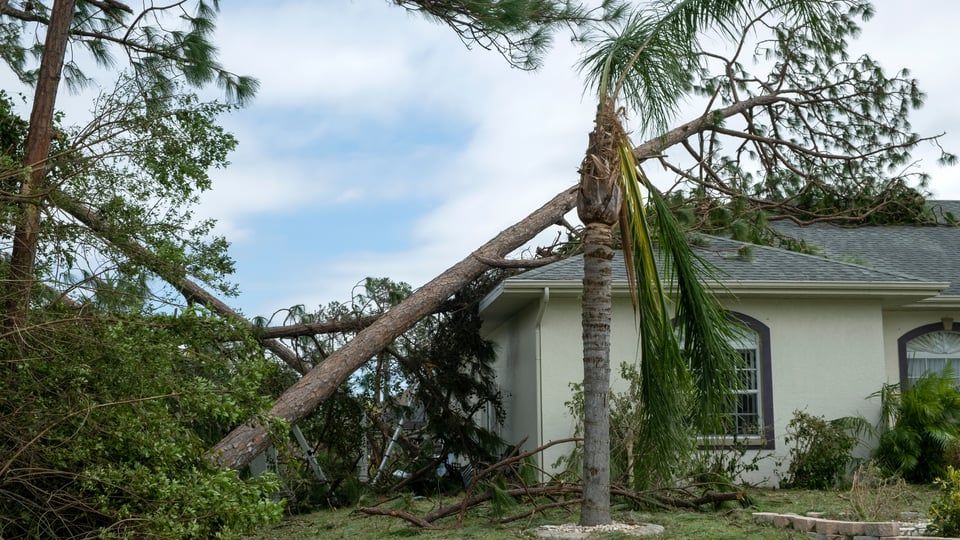
Treat every downed line as energized. Stay at least 30 feet away. Do not attempt to move lines with branches or non-conductive objects. Call 911, then your utility. The ground around a downed line can be energized. Avoid approaching even if the line appears inactive.
The Electrical Safety Foundation International (ESFI) identifies downed line contact as one of the leading causes of storm-related electrocution fatalities.
Flooded electrical systems
- Don’t enter a flooded basement if the electrical panel is submerged
- Verify with a licensed electrician before restoring power to flood-affected circuits
- Discard any appliance that was submerged. Internal components retain water and present an electrocution risk
Breaker and GFCI inspection
- Reset GFCI outlets after power is restored
- If a breaker trips repeatedly, identify the source load before resetting it again
- Verify all circuits before reconnecting sensitive electronics
What extended outages look like based on our data
PowerOutage.us has tracked every major outage event since 2016 across 950+ utilities. Winter Storm Fern (January 24–26, 2026) is among the most instructive recent examples. The storm affected a 2,000-mile zone from New Mexico to New England, knocking out power to 1,005,641 customers at its outage peak.
In this storm, Tennessee got the brunt of the impact with 306,700 customers out of power, mostly in the Nashville metro. Duration exceeded 6 days in the hardest-hit areas. Ice accumulation brought down transmission infrastructure faster than crews could repair it.
Another example is Hurricane Helene (September 2024), which led to 4.79 million simultaneous customer outages across the Southeast. Western North Carolina remained without power for 14+ days in the mountain counties. South Carolina averaged 53 hours per affected customer—the worst per-event average in the nation that year.
While longer outages like these are less common, having a plan is crucial to weathering the storm safely when they do happen.
Should you buy a ready-made power outage kit?
A ready-made kit can cover basic power outage safety needs, but it may not address household-specific risks. Pre-made kits from brands like Ready America and Emergency Zone usually include flashlights, first aid supplies, emergency food, and water purification tablets. Retail price usually ranges from $50 to $150.
Pre-made kit advantages:
- Packaged and ready to store
- Compliant with basic Ready.gov recommendations
- Reliable for 72-hour scenarios
For basic outage preparedness, these kits can serve as a starting point. They work best for short-duration power outage safety situations without major medical or mobility needs.
DIY kit advantages:
- Customizable for specific medical needs
- Higher-quality components at equivalent cost
- Expandable for 7-day or multi-week scenarios
A DIY setup gives households more control over real power outage safety requirements. You can add exact medications, battery sizes, infant supplies, pet food, cooling storage, and backup lighting that fit your home.
For households with medical dependencies, DIY assembly is the more reliable option. Pre-made kits usually do not account for powered device backup, refrigerated medication storage, or mobility equipment charging. Add a dedicated battery backup for medical devices and a cooler with reusable ice packs to any pre-made kit.
When should you leave your home during an outage?
Here are a few situations to think about when deciding whether to stay or leave during an outage.
- Temperature extremes: Indoor temperatures above 95°F create heat stroke risk within hours. Temperatures below 50°F create hypothermia risk for older adults, infants, and medically vulnerable residents. Identify a community cooling or warming center through your county emergency management office before an event.
- Medical device dependency: If backup power can’t sustain a required medical device for the estimated outage duration, relocate before battery depletion—not after. This is one of the clearest power outage safety triggers because delayed action can create a life-threatening situation.
- Duration thresholds: Outages exceeding 72 hours increase cumulative risk across all categories: food, medication, temperature, sanitation, and mental health. Establish a personal relocation threshold before an event occurs so you don’t have to decide under stress.
- Structural safety: If storm damage compromises the building's structure, electrical system, or CO/smoke detectors are nonfunctional, relocate until a licensed inspector clears the structure. A damaged building is not a safe place to wait out a prolonged outage.
- Monitor estimated restoration time on PowerOutage.us: Our platform refreshes every 10 minutes during live events and covers 94–95% of U.S. utility customers. Reliable restoration data helps households make better power outage safety decisions about sheltering in place or leaving early.
Final safety checklist
- Disconnect sensitive electronics at the outlet
- Unplug major appliances to prevent surge damage during restoration
- Keep refrigerator closed—4-hour threshold applies immediately
- Move to flashlights; eliminate candle use
- Place a generator 20+ feet from the structure; verify the CO detector is active
- Stay 30+ feet from any downed power line; call 911
- Do not enter flooded spaces with submerged electrical panels
- Track medical device batteries from the start of the outage
- At 4 hours: assess food, medications, and device status
- At 72 hours: evaluate whether relocation is warranted
- Check PowerOutage.us for real-time restoration estimates
Quick recap
A power outage triggers cascading risks: electrical hazards, food spoilage, CO exposure, communication loss, and medical device failure. Disconnect electronics, keep the refrigerator closed (4-hour rule), run generators 20 feet from the structure, and stay clear of downed lines. Monitor restoration time on PowerOutage.us. When in doubt, discard food and relocate.