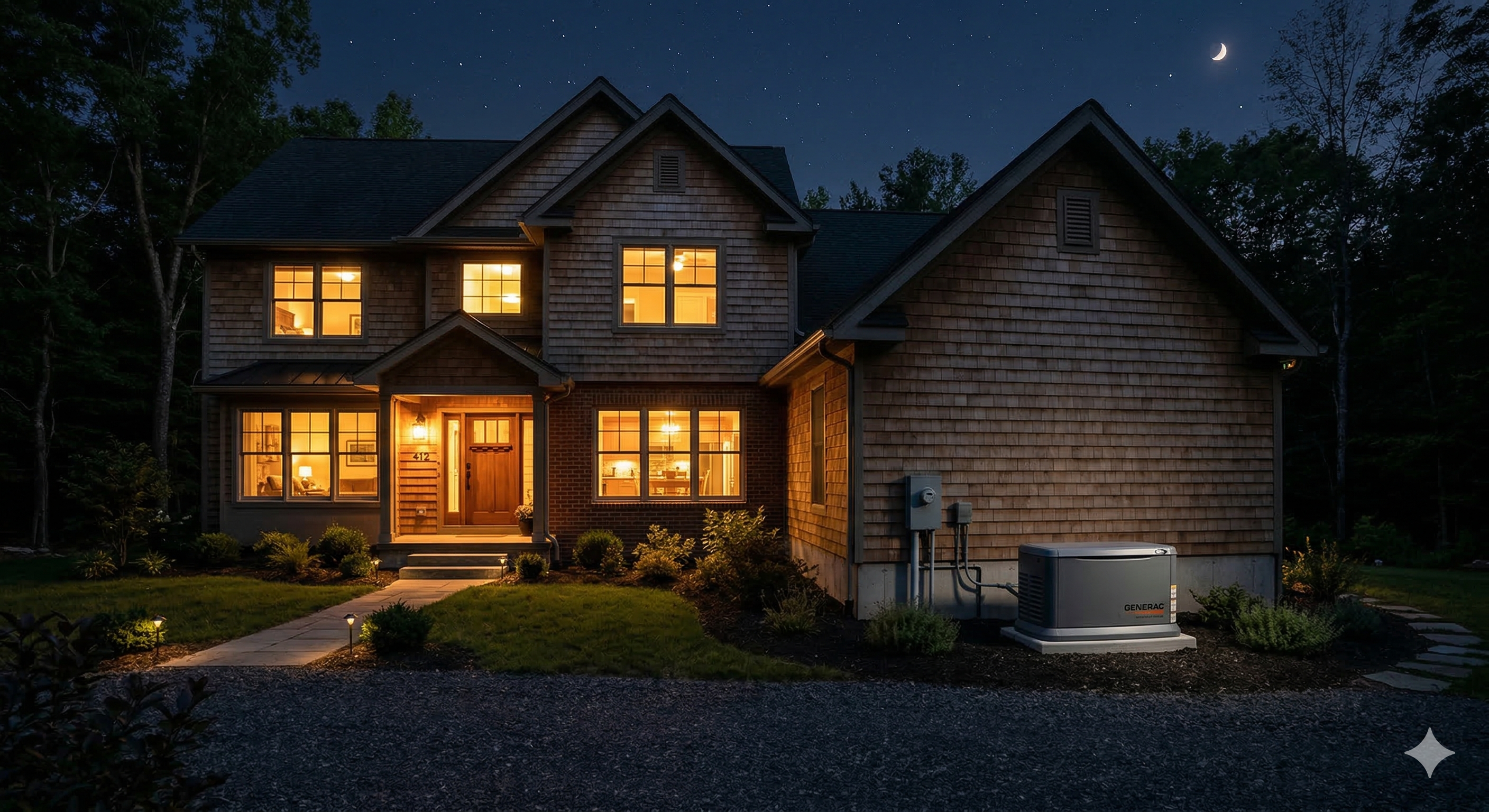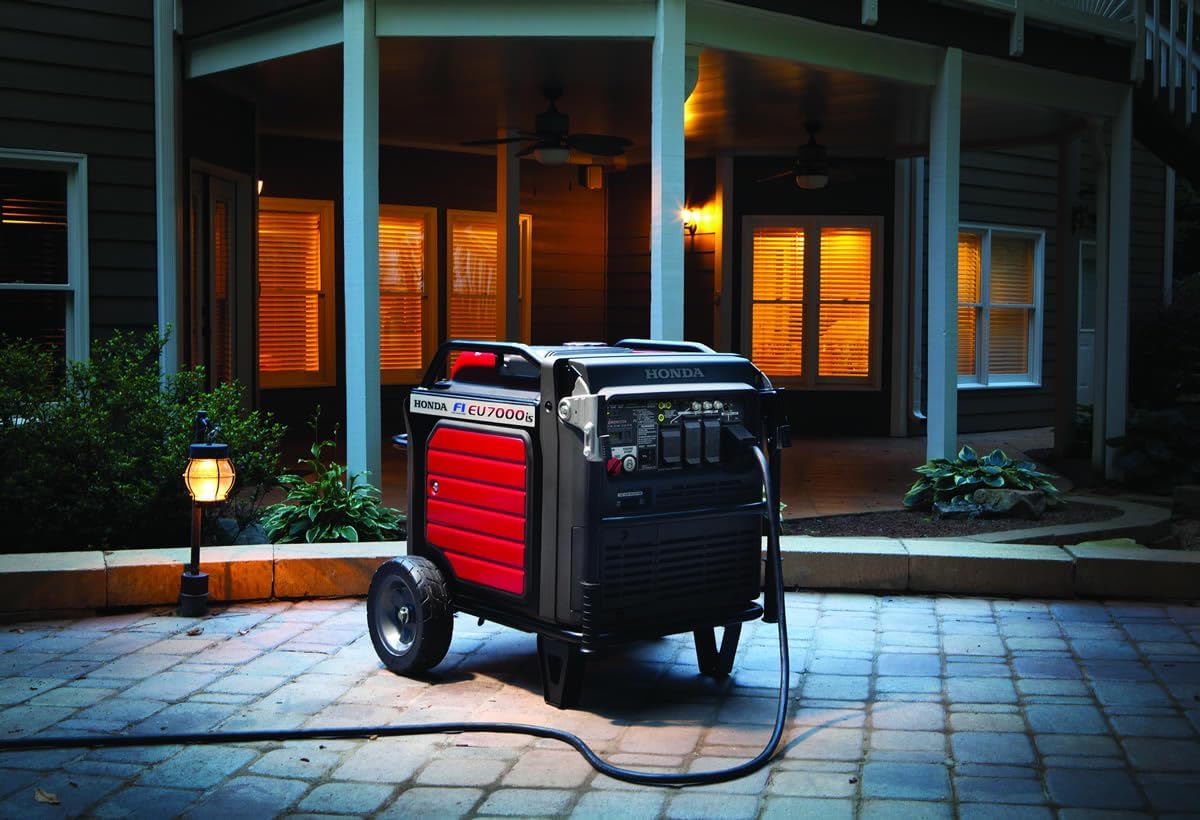


A home generator is more than just a convenience. It's a source of stability and comfort during emergencies. It can prevent food from spoiling and help you stay connected when the grid goes down. In some cases, such as periods of extreme heat or cold, it can even save lives. However, with so many options available and factors to consider, trying to choose the right one can be overwhelming.
This article takes an in-depth look at our expert picks for the best home generators for several different scenarios. You'll also find a sizing guide and other key information to help you find the right solution for your specific needs and get the most out of your investment.
PowerOutage.us tracks outages across states, counties, and individual utilities with data refreshing every 10 minutes during live events. When Winter Storm Fern left over 1 million customers without power in January 2026 (including 306,700 in Tennessee alone) our platform was the source major news outlets turned to for real-time data. That same outage intelligence informs how we evaluate generators.
Best home generator picks for 5 use cases
The following models earned our picks for the best home generators for five common use cases.
- Best whole-home standby (automatic): Generac Guardian 22kW (7043/70432)
- Best portable for home backup via 50A inlet: Westinghouse WGen9500DF
- Best quiet, clean power for essentials and sensitive electronics: Honda EU2200i
- Best "inverter and dual-fuel" essentials pick: Champion 4500W dual-fuel inverter (201278)
- Best NG-convenience portable (tri-fuel) for home inlet setups: Westinghouse WGen11500TFc
Generator comparison table
In the table below, you'll find a head-to-head comparison of key details for each of the models in our best home generator list.
| Pick | Running watts | Best for | Fuel | 120/240v | Why it wins in this role |
|---|---|---|---|---|---|
| Generac Guardian 22kW | 22,000W (NG ~19,500W) | Whole-home automatic standby | NG/LP | Yes | Automatic operation with standby architecture and monitoring |
| Westinghouse WGen9500DF | 9,500W (Gas)/8,500W (LP) | Portable inlet backup (value + review depth) | Gas/LP | Yes | Strong watts-per-dollar and huge ownership-signal sample size |
| Honda EU2200i | 1,800W | Quiet essentials + electronics | Gas | 120V | Low noise, clean power, and high "actually usable" portability |
| Champion 4500W dual-fuel inverter | 3,500W (Gas)/3,150W (LP) | Essentials backup with propane option | Gas/LP | 120V | Inverter-clean power with dual-fuel flexibility for outages |
| Westinghouse WGen11500TFc | 9,500W (Gas)/8,500W (LP)/8,000W (NG) | NG convenience portable (tri-fuel) | Gas/LP/NG | Yes | Natural gas fueling reduces outage friction while keeping high output |
Best whole-home standby (automatic)
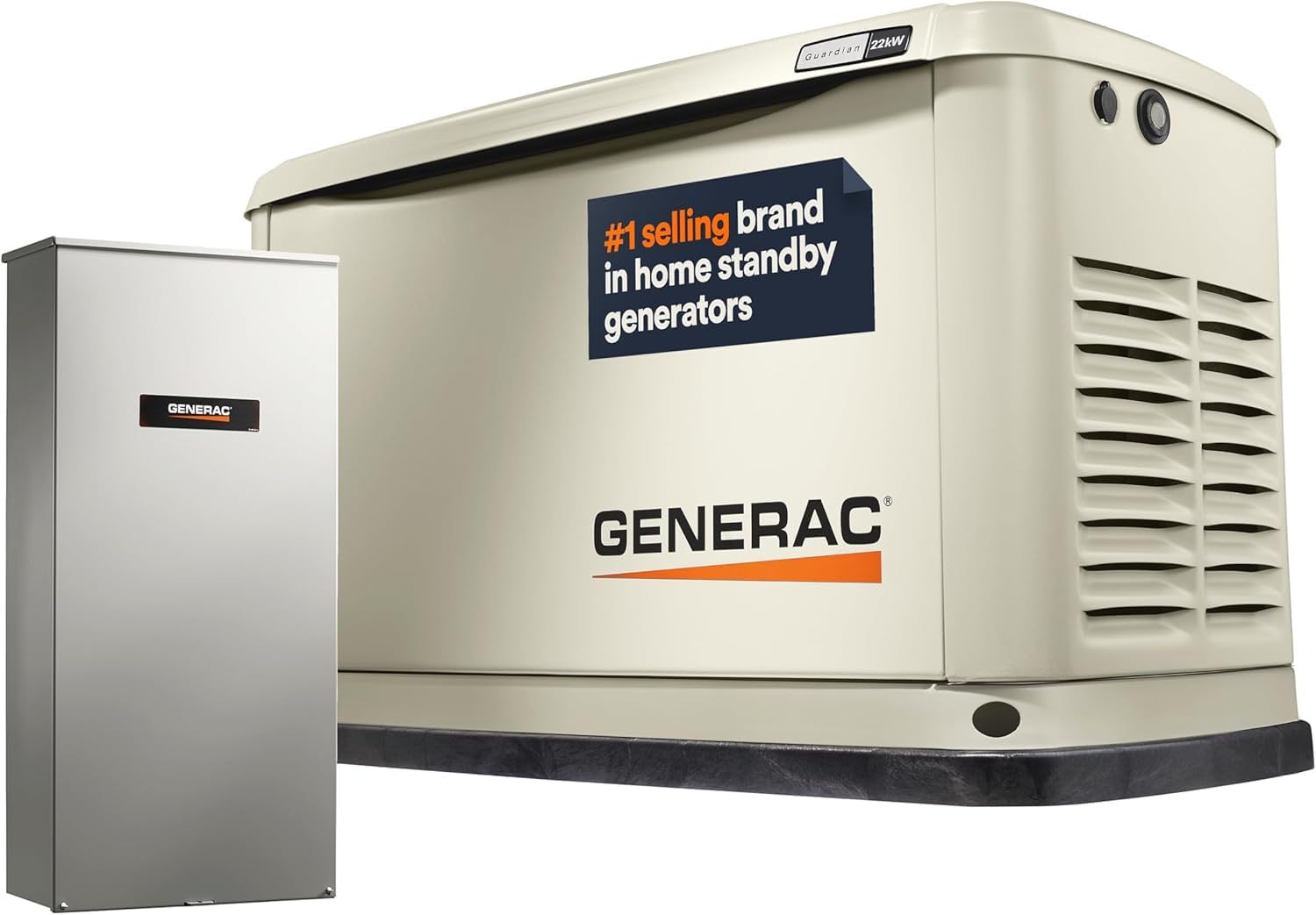
Generac Guardian 22kW (7043/70432) Large permanently-installed generators that switch to replace grid power automatically without the need for manual intervention Our pick for best automatic standby generator, the Generac Guardian 22kW has the capacity to power multiple large appliances (including HVAC units) and the design to do it without any manual intervention.
Key advantages:
- Automatic transfer switch supplies backup power without interruption
- Continuous NG/propane fuel supply enables lengthy runtimes
- Onboard air-cooling prevents overheating under sustained high demand
No manual startup, no fuel run, no rushing around at 2 a.m. When Hurricane Helene knocked out power to 4.79 million customers across the Southeast in September 2024 — with some western North Carolina households going 14+ days without power — automatic standby owners didn’t have to think about their generator.
Best portable for home backup via 50A inlet
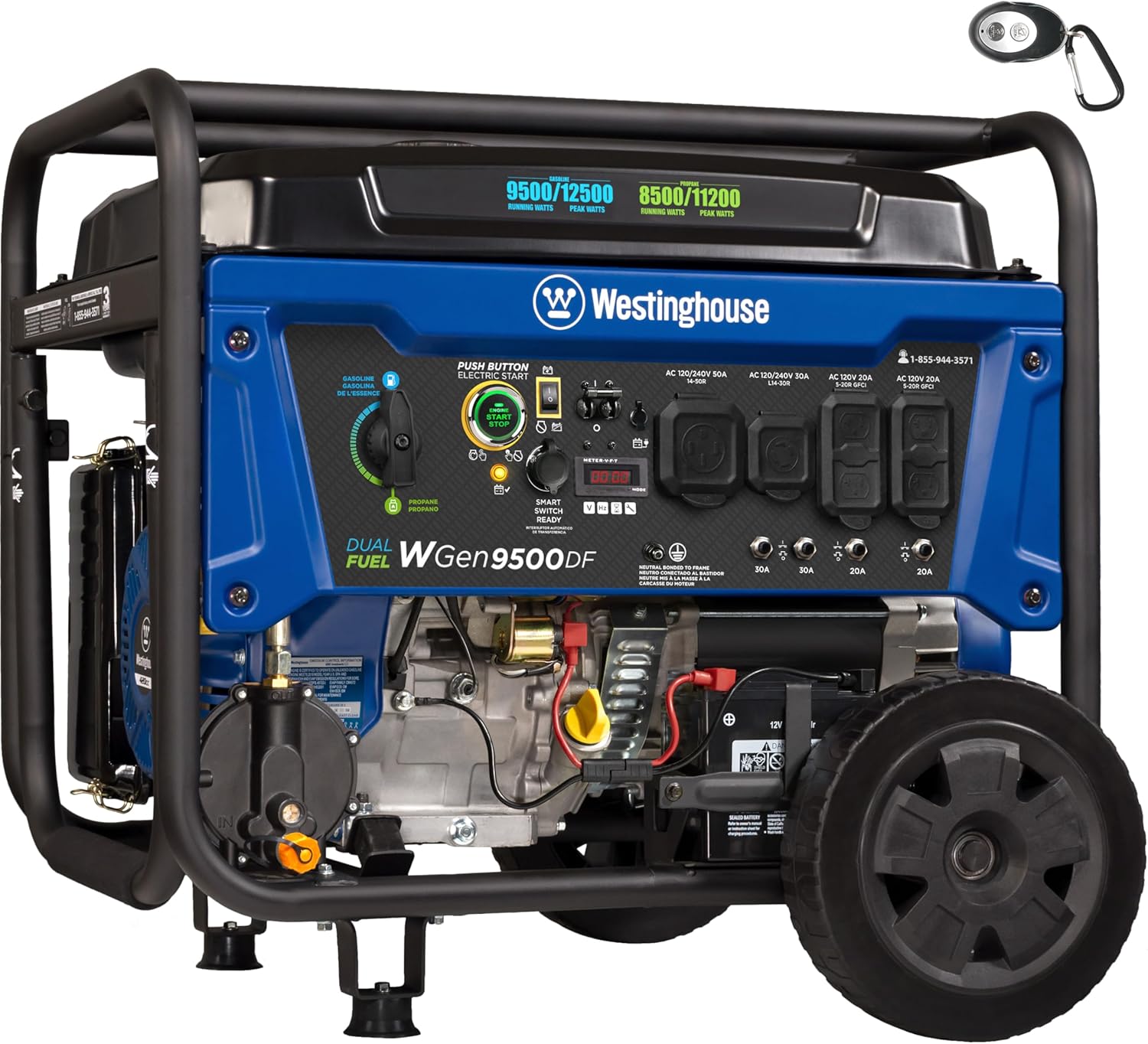
High-capacity portable generators that can connect to a home's electrical panel to provide electricity to hardwired fixtures, appliances, and outlets The WGen9500DF hits the sweet spot of flexibility and capability for home backup. It connects to a standard 50A inlet via transfer switch or interlock, functioning as a true standby unit, while remaining portable and requiring no permanent installation. For households that want a capable gasoline-powered generator for house backup without fixed installation costs, it represents strong value.
- Dual-fuel (gas/LP) with both 120V and 240V outlets
- Large, consistent review base showing trouble-free startups and easy setup
- One caveat: open-frame design means no inverter and less clean power output
Best quiet, clean power for essentials and electronics
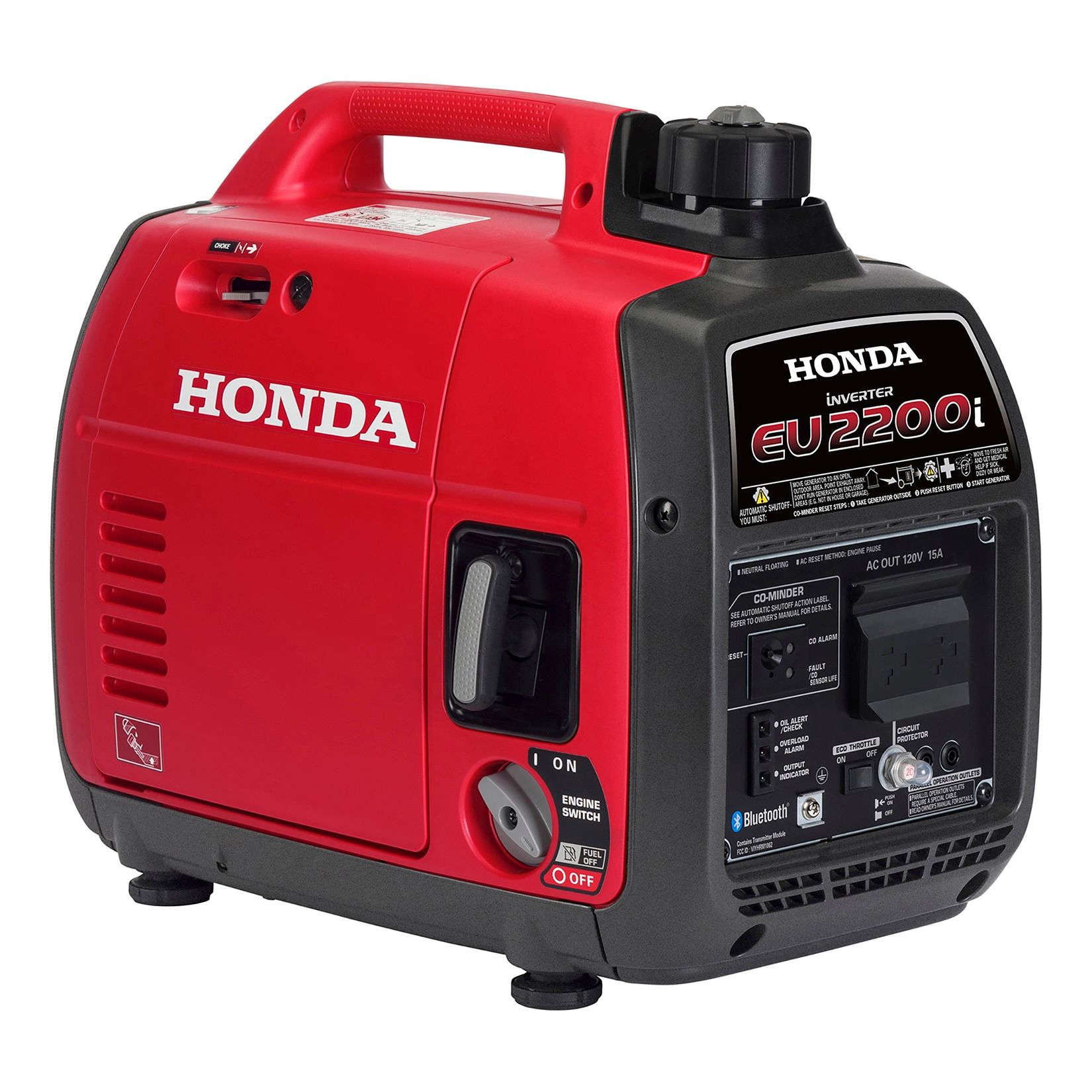
Low-noise generators that provide a consistent current that doesn't risk damaging sensitive electronics
Honda's quiet generator delivers up to 2,200W (1,800 running watts) of inverter-clean power while never exceeding normal conversation volume, even at full load. It's the go-to for safely powering computers, networking gear, and other sensitive electronics.
- Exceptionally low noise; highly portable and easy to store
- Clean, stable inverter output safe for sensitive devices
- Limitation: 120V only (no 240V support, so no HVAC, electric oven, or dryer)
Best dual-fuel inverter for home essentials
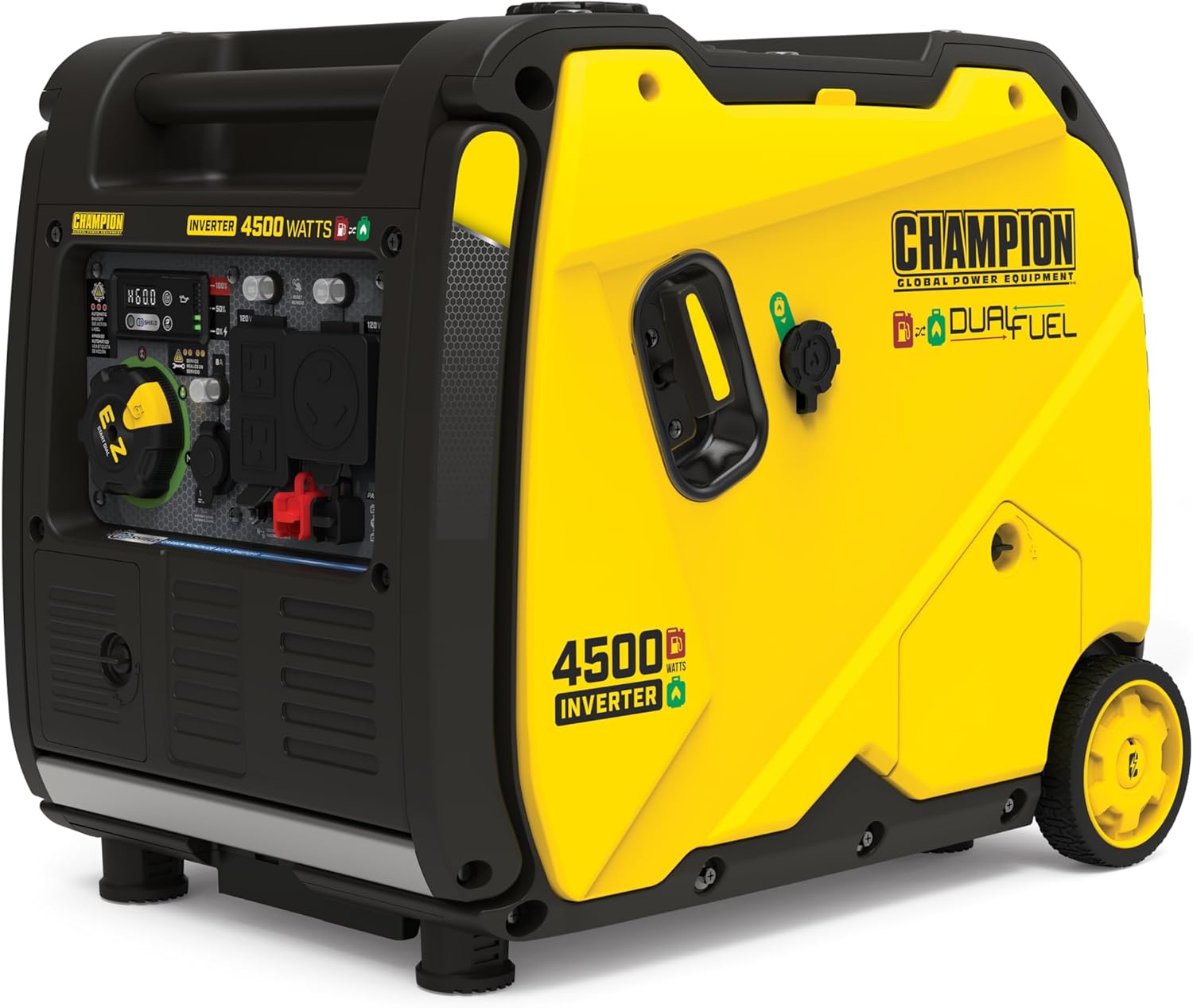
Flexible generators that supply enough safe, clean electricity to keep a home's most important appliances and fixtures running during outages
The Champion 4500W is a Goldilocks solution: quiet, inverter-clean, and dual-fuel. It’s capable of running several priority items across multiple days without the bulk or cost of a larger unit.
- Runs on gasoline or propane; propane stores indefinitely and stays available when gas stations run dry (as they did during Hurricane Helene's 14+ day outages across the Southeast)
- Inverter output is safe for electronics
- Requires careful load planning — know what you're running to avoid overloads and protect runtime
Best tri-fuel portable for natural gas convenience
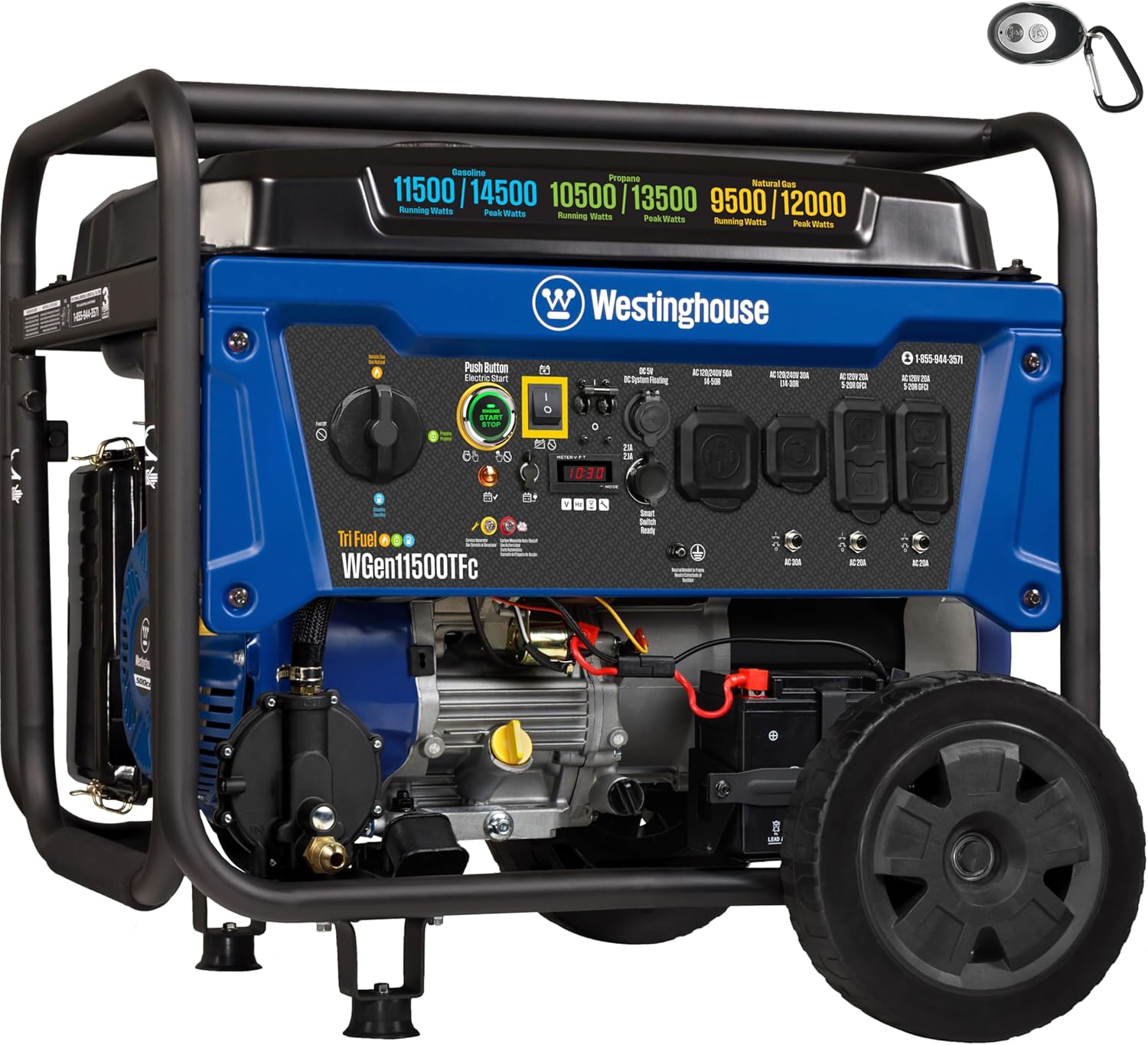
Natural-gas compatible generators that are mobile and don't require a permanent, fixed installation
The WGen11500TFc gives homeowners natural gas convenience without a fixed installation, and backs it up with gasoline and propane as fallback options. Output is strong enough to cover most or all of a home's needs.
- Tri-fuel (gas/LP/NG) with 120V and 240V support
- Connects to home electrical infrastructure via transfer switch or interlock
- Natural gas is the standout advantage: during Winter Storm Uri, PowerOutage.us tracked 4+ day outages across Texas while gasoline lines stretched for hours statewide, NG line pressure held, making natural gas the only frictionless fuel option for millions of affected households.
How the best home generators were evaluated
We evaluated popular home generators based on factors such as performance, safety, and customer sentiment to determine the best options for several common use cases. We detail those criteria in the following sections.
Generator technical specifications
Our researchers compared technical specifications of the generators in our study to evaluate performance. Since manufacturers vary in how they list specifications, we used a normalization formula to allow for a consistent head-to-head comparison between models.
The normalized specifications we compared include: running watts (by fuel, where applicable), starting/surge watts, voltage (120V vs 120/240V), outlet class (20A, 30A, 50A), fuel type(s) and published derating figures, runtime claims at stated loads, and weight and overall form factor.
We also took into account that there are significant performance differences between fuel types among generators. In cases of multi-fuel generators, our team analyzed each fuel mode individually, since choice of fuel has a significant impact on backup capability.
Fuel choice affects variables such as output capacity, potential runtime, outage friction, and refueling risk. It's important to note that manufacturer specifications are used only for relative comparison and not as guarantees of real-world performance.
Customer review sentiment
Our researchers conducted a broad-scale evaluation of customer reviews for home generator models across several major online vendor platforms. Anecdotes in individual reviews were not treated as evidence on their own. Instead, we analyzed the sample sets of reviews to identify patterns of positive comments and complaints, paying specific attention to issues that include startup reliability, fuel system issues, noise levels, cold-weather performance, and warranty experience.
Safety certification
To compare the relative safety of the home generators in our study, we checked each model for third-party safety certifications from Underwriters Laboratories (UL) and Intertek ETL (ETL). Certification by one or both of these agencies was regarded only as an indicator of reduced risk and not as an assessment of real-world performance.
Finally, our evaluation of the home generators in our study was based on information available at the time of our research. It is possible that new information or developments that would impact our ratings and assessments may arise after publication.
Scoring: How "best" is defined here
This guide uses the term "best" to identify which model is the ideal fit among those in our study for a specific use case. It is not meant to suggest overall superiority for all time. Our picks for the best home generator for each use case are based on measurable criteria and ownership experience signals from our customer review analysis.
Researchers compared performance using the following review categories:
- Use-case fit: Voltage (120/240V), outlet class (30A/50A), running watts by fuel, and whether it supports the intended backup method (standby ATS vs portable inlet).
- Safety and usability: CO shutdown, overload protection, electric start, accessibility of controls, and practical refueling or fuel-connection setup.
- Reliability signals: Recurring themes in large-sample reviews plus warranty clarity. Not perfection, just fewer repeated red flags.
- Ownership friction: Noise expectations, maintenance burden, fuel storage logistics, weight/portability, and "will you actually use it" factors.
Our analysis takes the combined performance of each model into account. For example, a home generator model can be extremely powerful and still not earn our pick if it's hard to operate, hard to maintain, or regularly criticized online for avoidable failures.
How to size a generator for home backup
While many have the idea of a whole-home generator, that kind of capacity and throughput often isn't necessary. For most people, a generator that can power a short list of circuits reliably and consistently for several hours at a time is more than sufficient.
Follow the steps outlined below to find the right size generator for your home backup needs.
1. Choose what you want to back up
The first step is to consider what you want to provide backup energy for in your home. You can think about your backup goals as falling into one of three categories:
- Essentials-only: Fridge/freezer, lights, outlets, internet, furnace fan, microwave
- High-demand loads: Well pump, sump pump, multiple refrigerators, shop tools, or partial HVAC
- Whole-home backup: Most or all of the appliances, fixtures, and devices you regularly use in your home under normal conditions
2. Determine your energy needs
Once you've decided what you want to be able to power during an outage, the next step is to calculate the electrical load of each item on your list. There are three figures that are important to check:
- Continuous load: Normal operational power draw (what you run at the same time). Essential circuits in a small home could draw 800 to 1,000 W, while a medium or large home could range from 1,500 to 3,000 W.
- Starting surge: A power spike that occurs when some motor-based appliances are turned on.
- Voltage requirements: Most appliances run on a 120V supply, but larger appliances like HVAC units require a 240V supply.
You can find these figures listed in the owner's manual of the appliances you want to power. Another option is to look up the specifications online using the model numbers.
3. Choose the type of home generator
After you've calculated your energy needs, you can use that information to select the kind of generator that best suits those needs and other preferences. There are two main categories of generators to choose from:
- Standby generator: Highest capacity, typically connected through an automatic transfer switch, but has the highest cost and requires professional installation in a fixed location.
- Portable generator: Lower capacity, requires more frequent refueling, but has a lower cost, doesn't require a permanent installation, and can often still connect with a transfer switch.
Fuel choice for home generators
The fuel your generator uses is more than just a preference. Different fuel types vary in terms of cost, efficiency, convenience, and other factors.
Gasoline
- Advantages: High energy density, widely available
- Disadvantages: Degrades in storage, can cause engine issues if neglected
Propane
- Advantages: Stores well over long periods of time, safe, and easy to handle
- Disadvantages: Lower energy output, space considerations for tanks
Natural gas
- Advantages: No manual refueling, consistent supply
- Disadvantages: Requires gas line infrastructure; service may be interrupted during outages
Why a home generator is worth it: Real outage events
It's easy to think of a home generator as insurance you'll never need, right up until the moment you do. The outage data PowerOutage.us has collected since 2016 tells a different story. Major power disruptions affecting hundreds of thousands of households happen multiple times a year, and restoration timelines routinely stretch far beyond what most people expect.
Winter Storm Fern (January 2026): 1 million+ customers, 6+ days
When a catastrophic ice storm swept a 2,000-mile corridor from New Mexico to New England in January 2026, PowerOutage.us tracked peak outages exceeding 1 million customers. Tennessee bore the worst of it, with 306,700 customers losing power for six or more days as ice-laden trees collapsed onto power lines faster than crews could respond.
For the nearly half of Nashville residents living in large apartment buildings, that meant no elevator access, no heat in subfreezing temperatures, and no way to keep food from spoiling. A generator could mean the difference between enduring the storm at home and abandoning it entirely.
Hurricane Helene (September 2024): 4.79 million customers, 14+ days in hardest areas
Hurricane Helene was the largest outage event PowerOutage.us tracked in 2024, cutting power to 4.79 million customers across the Southeast at its peak. In western North Carolina's mountain counties, infrastructure had to be rebuilt from scratch, and some areas remained without power for more than two weeks.
A 14-day outage shows what generator usefulness means: maintaining refrigerated medications, running a sump pump, keeping a furnace fan operational, and preserving some normalcy for children and elderly family members over an extended period.
Winter Storm Uri (February 2021): 4.4 million Texas customers, grid near collapse
Winter Storm Uri pushed the Texas ERCOT grid to within minutes of total collapse, triggering multi-day rolling blackouts and a cascading failure that took water systems down with it. At least 246 people died.
Some residents went without power for four or more consecutive days in temperatures as low as -19°C (-2.2°F). Uri is the clearest case for why fuel flexibility matters, given that gasoline lines stretched for hours across the state while natural gas and propane remained available.
What the data tells us
| Event | Peak customers affected | Worst-case duration | Primary generator need |
|---|---|---|---|
| Winter Storm Fern (Jan 2026) | 1,005,641 | 6+ days (Nashville metro) | Heat, refrigeration, phone charging |
| Hurricane Helene (Sep 2024) | 4,790,000 | 14+ days (western NC) | Extended capacity, fuel flexibility |
| Winter Storm Uri (Feb 2021) | 4,400,000 | 4+ days (rolling blackouts) | Heat, water pump, NG/propane fuel access |
No outage looks exactly like another. What the PowerOutage.us event database consistently shows is that the question isn't whether a major outage will affect your area, it's whether you'll be ready when it does.
Generator safety: What you need to know
A generator that's improperly used is a serious hazard. Portable generators produce carbon monoxide (CO) — an odorless, colorless gas that kills without warning. The safety rules below are drawn from CDC guidance and apply to every generator on this list.
Carbon monoxide (the primary risk)
CO poisoning is the most common cause of generator-related deaths, and it happens fast. Early symptoms (headache, nausea, dizziness) are easy to mistake for stress or illness. By the time symptoms are obvious, it may be too late to act.
- Never use generators inside your home, in basements, in garages, or near windows — the fumes are deadly.
- Generators should be located at least 20 feet from any window, door, or vent. Research cited by the CDC and NIST suggests even 15 feet may not be sufficient.
- A covered porch or carport is not a safe alternative. Trapped air funnels exhaust directly back toward the home.
- Install a battery-operated CO detector to protect against carbon monoxide poisoning Place one on every level of the home and near sleeping areas.
- If your CO alarm sounds, get outside immediately and call 911.
Electrical safety
- Make sure the main circuit breaker is off and locked out before starting a generator. This protects utility workers from electrocution via feedback current.
- Never plug a generator directly into a wall outlet. Without a proper transfer switch, power can backfeed onto utility lines, creating a lethal hazard for lineworkers making repairs.
- Have a licensed electrician install any transfer switch or permanent wiring connection.
- Plug appliances into the generator using individual heavy-duty, outdoor-rated extension cords. Do not use the generator or appliances if they are wet.
Fueling safely
- Always turn the generator off and let it cool before refueling. Fuel spilled on a hot engine or exhaust can ignite immediately.
- Do not store gasoline indoors where the fumes could ignite.
- Unplug all connected appliances before shutting the generator down.
General operation
- Keep the generator dry and on a stable, non-combustible surface clear of leaves and other debris.
- Never operate a generator with wet hands or while standing in water.
- Keep children away from the generator at all times and store fuel out of their reach.
Bottom line on home generators
There is no single overall best home generator. The best option for you and your home depends on your energy needs, your budget, space and infrastructure considerations, your personal preferences, and other factors.
A generator for your home can be a wise investment, providing you with comfort, security, and peace of mind during emergencies. However, it is important to take the time to carefully consider your decision before spending money on a generator in order to get the most value out of your purchase. Choosing the right generator before the next major event is one of the most practical investments a homeowner can make.